This eleventh of October marked the 29th anniversary of the Indigenous Peoples’ Day since the City Council of Berkeley renamed the day from its original form ‘Columbus Day’ in 1992. The day, established to restore agency to the people indigenous to the Americas marginalised in the colonialist rhetoric of ‘Columbus Day,’ received particular interest this year as U.S. president Joe Biden formally signed a presidential proclamation Indigenous Peoples’ Day to become a national holiday, becoming the first-ever president to recognise Indigenous Peoples’ Day. Though the need for the incorporation of indigenous peoples into the historical narrative should be a pretty straightforward one even without approval from a white president, the long-overdue recognition does imply a pressing need to contemplate the perceptions we have unquestioningly held about the past and their Eurocentricity. In the light of such events in October, in this month’s article, I will introduce a brief history of how discourses around the environment and environmentalism have put a white ‘Europe’ at its centre, marginalising the voices of BIPOC (Black, Indigenous, and People of Colour) communities.
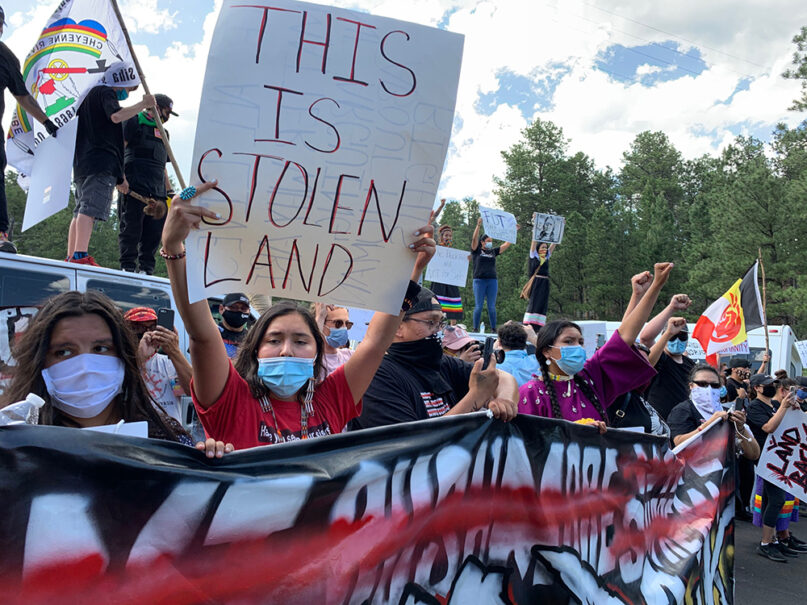
How non-white communities were more vulnerable to the effects of western environmental degradation
Environmentalism has existed before we found the language to express it from a European viewpoint. Though we often associate the incorporation of environmental factors in building our social spheres of life as a modern concept, the history of non-European environmental thought predates the invention of European ‘science’ modern environmentalism. Moreover, the dichotomous way of categorising nature as an external ‘environment’ as opposed to a ‘social’ sphere of human life is a European way of conceiving the structures around us. As those privileged enough to have their stories heard were often white activists, the ideas and accounts for environmental justice of BIPOC communities were often ignored and silenced.
This Eurocentric way of thinking about the environment is problematic as it precisely leaves out the very people who are most severely impacted by climate change and environmental degradation from the environmental discourse. As history unfolded into the 19th century and European empires went through mass industrialisation, the benefits of capitalist developments were exclusively reserved for WASP (White Anglo-Saxon Protestant) men, whereas non-white communities often had to deal with the consequences of industrialisation through the destruction of the environment. For instance, in the United States, cities were ‘colour-coded’ in order to regulate the kinds of housing you could purchase based on the colour of your skin. Even as the U.S. federal government created the Federal Housing Administration to provide loans so that the average person could own a home, ‘green’ coded homes that were of the highest value were all-white neighbourhoods, whereas districts that were coded ‘red’ were preserved exclusively for either integrated or all-black communities in the working-class. These red coded homes would be located where unregulated industrial production and waste emission affected life standards most severely (Melin Oliver, 2020).
Environmental degradation frequently threatened the lives of non-white workers in the agricultural sector as well. as Mexican workers deployed in the U.S. under the Bracero program were sprayed with DDT (Dichlorodiphenyltrichloroethane, a chemical compound used as insecticide famously introduced in Rachel Carson’s Silent Spring for its hazardous effects on the environment and human health) before they were sent to their contractors. Even today, dump fields and industrial sewages are located in places populated predominantly by Black and Brown communities who were chosen, in the words of a North Carolinian environmental protester Almena Myles, ‘because we were rural and poor and they thought we couldn’t fight’ (Bergman, BBC, 2019). Ironically, Black, Hispanic, Indigenous, and Asian migrant communities were being exploited to accelerate environmental destruction, from which they themselves would suffer the consequences. The glorious narrative of ‘progress’ and ‘rationality’ we often associate with capitalist development often erase and silence the histories of these people, upon whose labour and sacrifice of living conditions Western industrial development fundamentally relied.
Why we should think intersectionally when thinking about the environment
The importance of thinking about intersectional histories of the environment and climate change comes from the fact that the obstacle to solving the climate crisis is a man-made one rather than a scientific one, in which certain individuals hold more responsibility than others. Merely directing the majority of the solutions to climate change to individualistic consumerism-based lifestyle reforms cannot address the bigger structural forces responsible for creating the climate crisis, while alienating people who are not affluent or privileged enough to maintain a consumerist “sustainable” lifestyle. Apocalyptic prognoses not based on sufficient scientific evidence that ‘we’re all doomed to die no matter what we do’ are bigoted and unhelpful, as such statements disregard the fact that climate change will first impact the peoples and societies least responsible for it. Environmentalism and the struggle for environmental justice can only be sustainable when people of all races, ethnicities, genders, sexualities, classes, and nationalities have an equal voice in the solution. Such inclusivity can only be achieved by considering the environmental history and the intersectional history of environmental thought, and this is where we as historians, not scientists, can contribute to the struggle for environmental justice.

 The Green Ideology