
On 30 August I visited Gwanaksan again. The following records provide a straightforward account of what was seen that day.
Pine Tree with Dense Needle Clusters
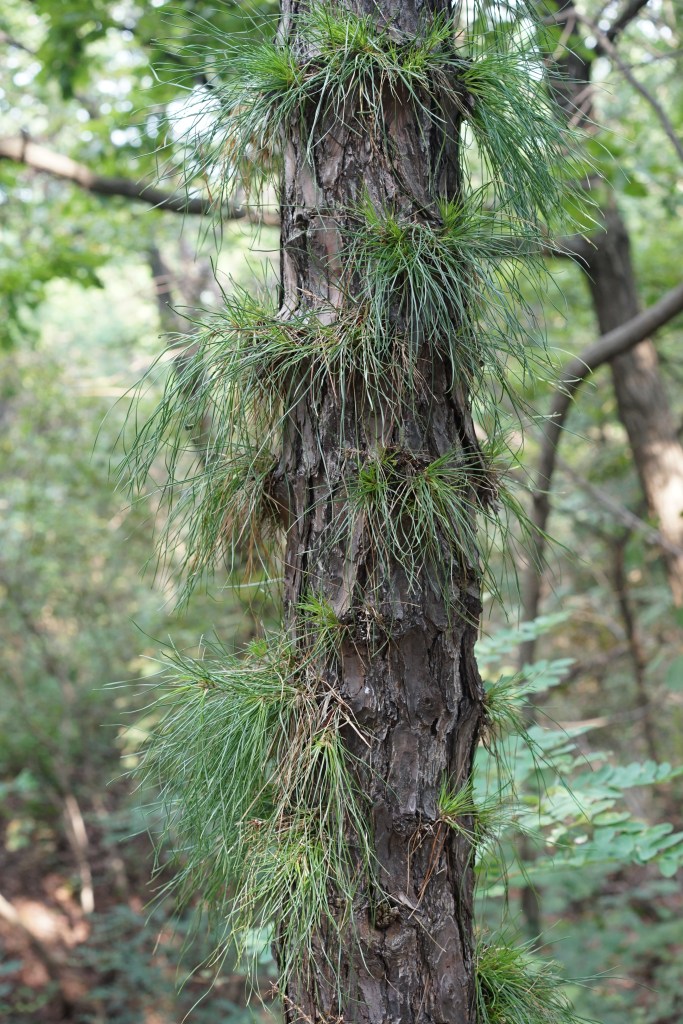
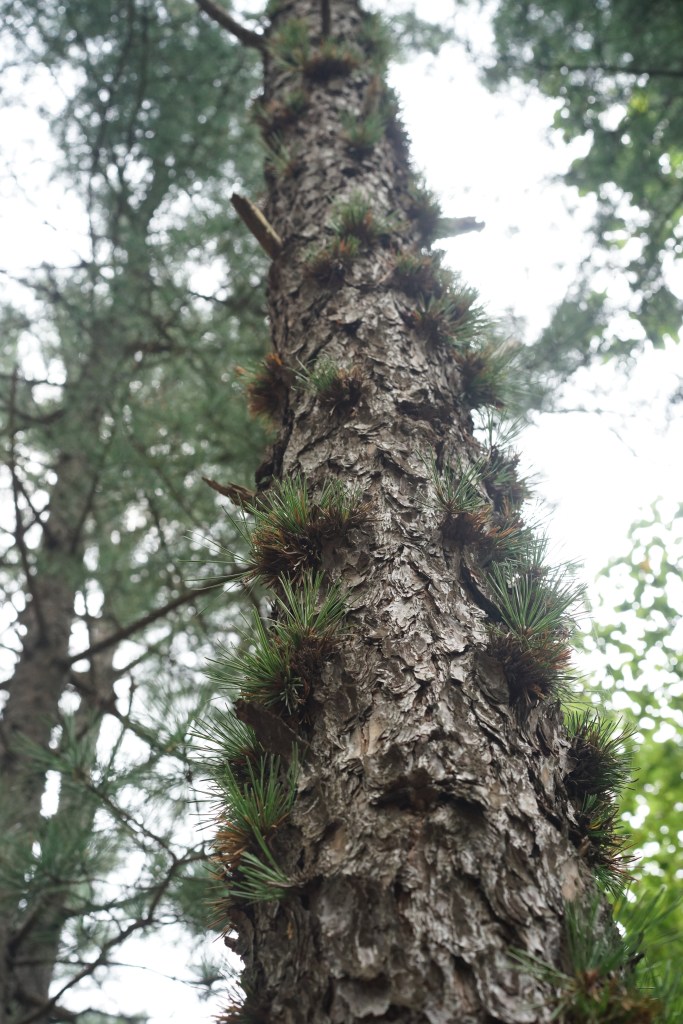
A Korean red pine (Pinus densiflora) was observed with unusually dense clusters of needles sprouting directly from the trunk. These formations likely result from adventitious buds breaking through after the tree experienced stress or partial injury.

Such regrowth is often a response to physical damage or suppression of apical growth.
Withered Sapling in Metal Post

Near the trail, a small sapling, already withered, was growing inside a metal support post filled with tar or asphalt-like material. The leaves were curled and dried. This suggests that the planting was unsuccessful, likely due to insufficient soil and toxic substrate.

Orb-Weaver Spider
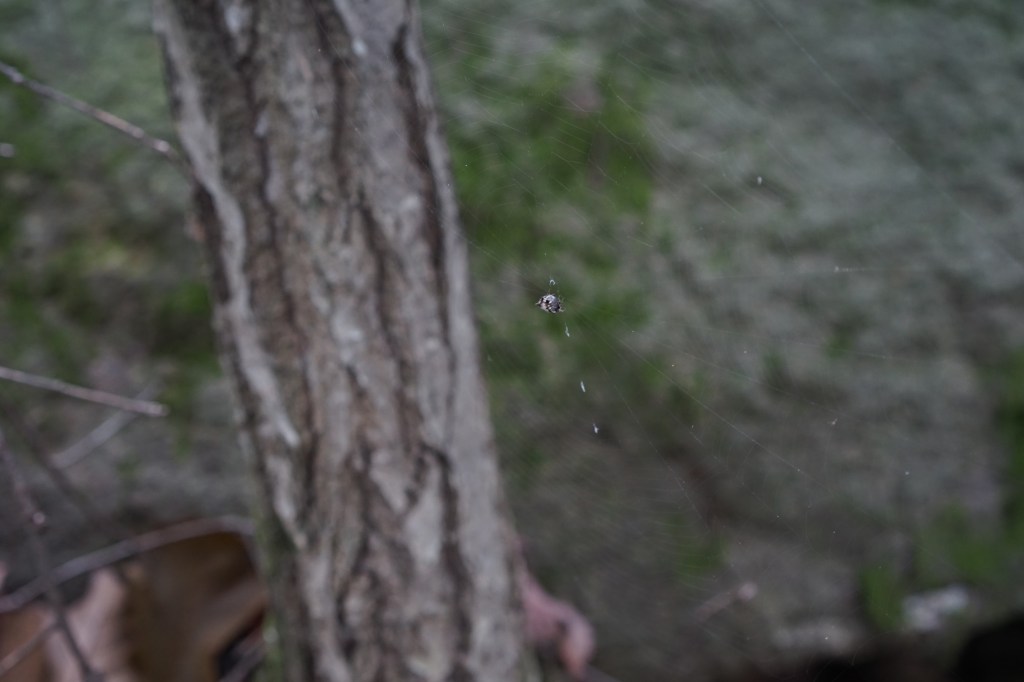
A small orb-weaver spider (family Araneidae) was documented suspended in its web. The species could not be precisely identified from the image, but its orb-shaped web and central position are characteristic of this family.
Purple Wildflower
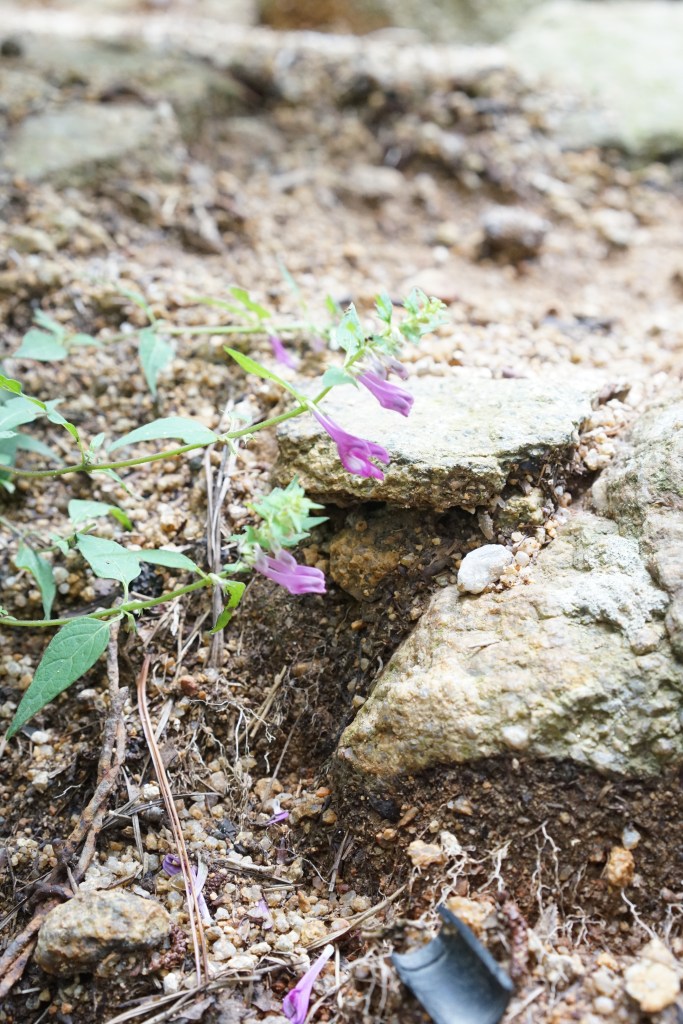
On rocky soil, a wildflower with tubular purple blossoms was growing close to the ground. This plant is identifiable as a species of Scutellaria, most likely Scutellaria indica, which is common in Korean mountain understories.
Mongolian Oak with Acorn
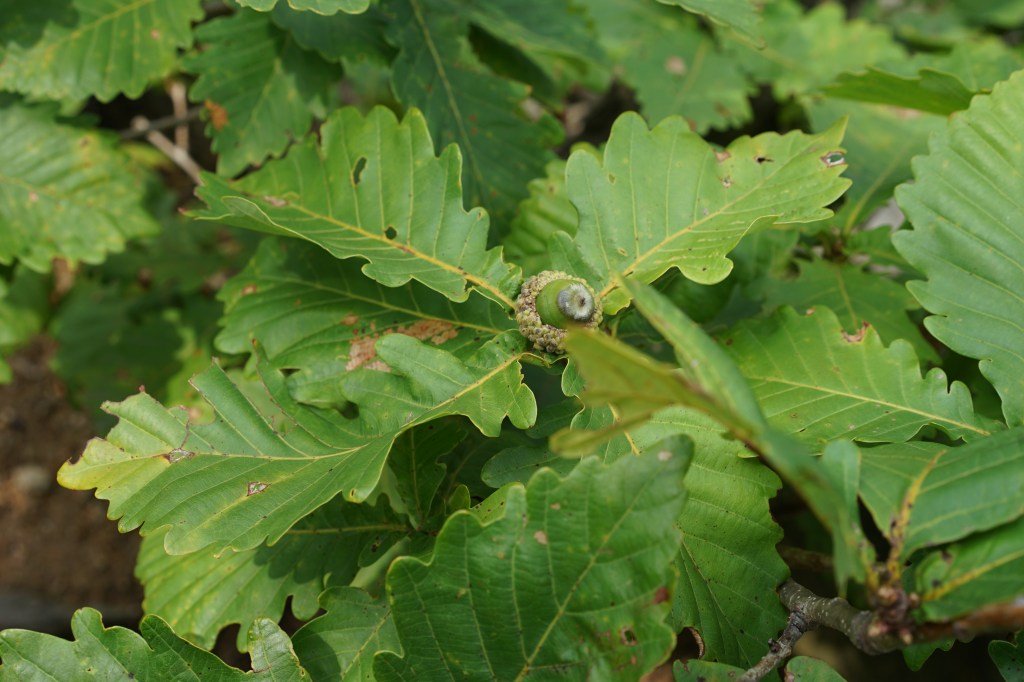
A Mongolian oak (Quercus mongolica) was photographed with developing green acorns. This species dominates much of the mid-elevation forest on Gwanaksan and provides critical mast for wildlife in autumn.
Pumpkin Vine
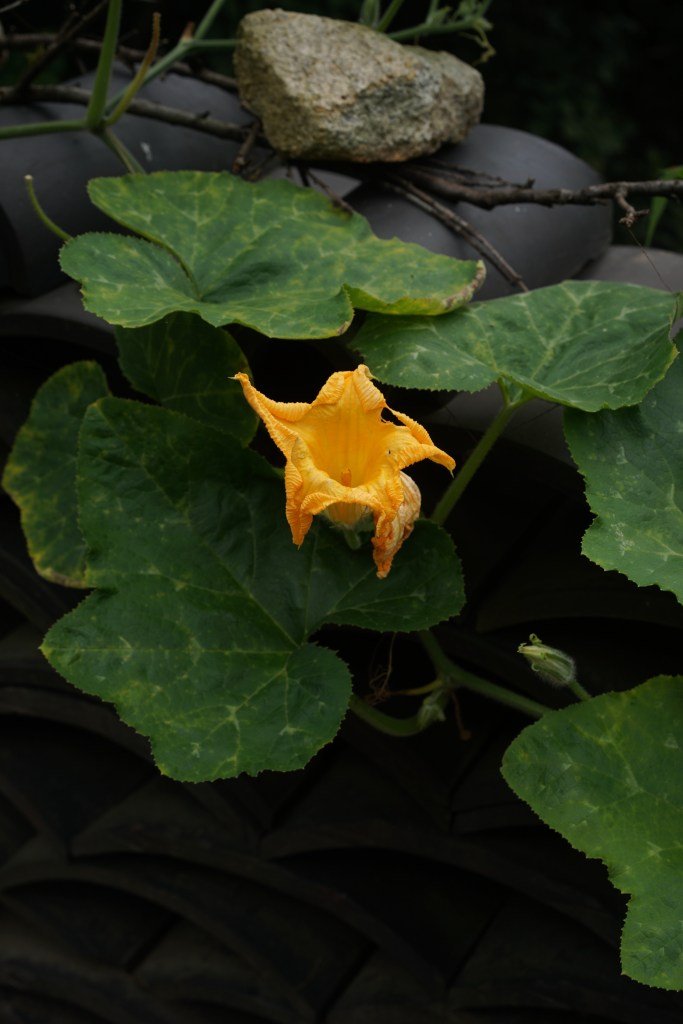
Along a traditional tiled wall, a pumpkin (Cucurbita moschata) vine was found in flower. Its large yellow blossom was prominent against the dark roof tiles. This plant is not native but grows around settlements and temple gardens.
White Mushrooms
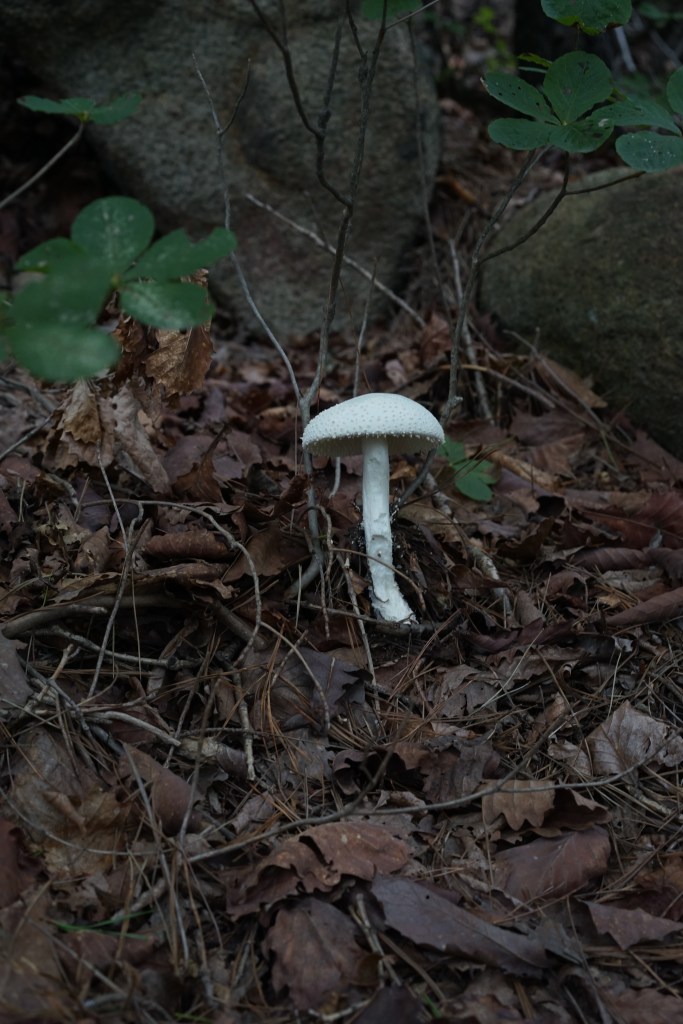
Several mushrooms were observed in shaded understory sites. One photo shows a white-capped fungus, possibly an Amanita species. Another shows a tall, white-gilled mushroom with a spotted cap, likely Amanita citrina or a close relative.
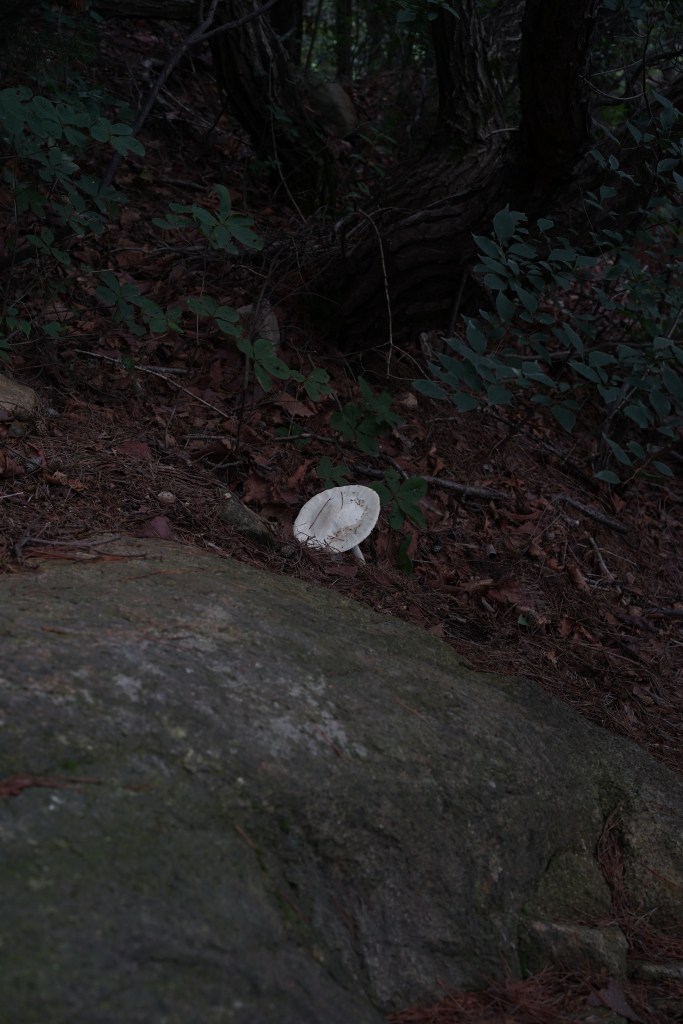
Red-Capped Fungus
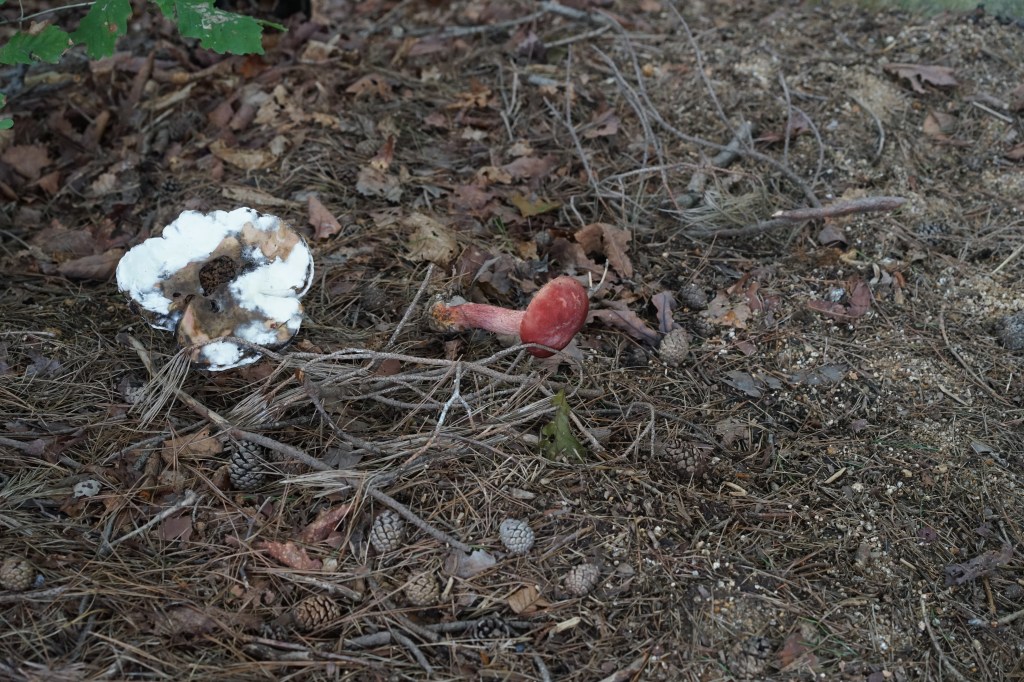
A red-capped mushroom with a thick stipe was found alongside the remains of another white fungus. This specimen resembles Russula emetica, a toxic but common species in Korean oak-pine forests.
Dead Pine Branches

Some pine trees showed heavy dieback. One image depicts Pinus densiflora with large sections of brown, dead needles still bearing cones. The death of these branches may result from snow damage during the previous winter or pine wilt disease caused by Bursaphelenchus xylophilus. The retained cones indicate sudden mortality rather than gradual senescence.
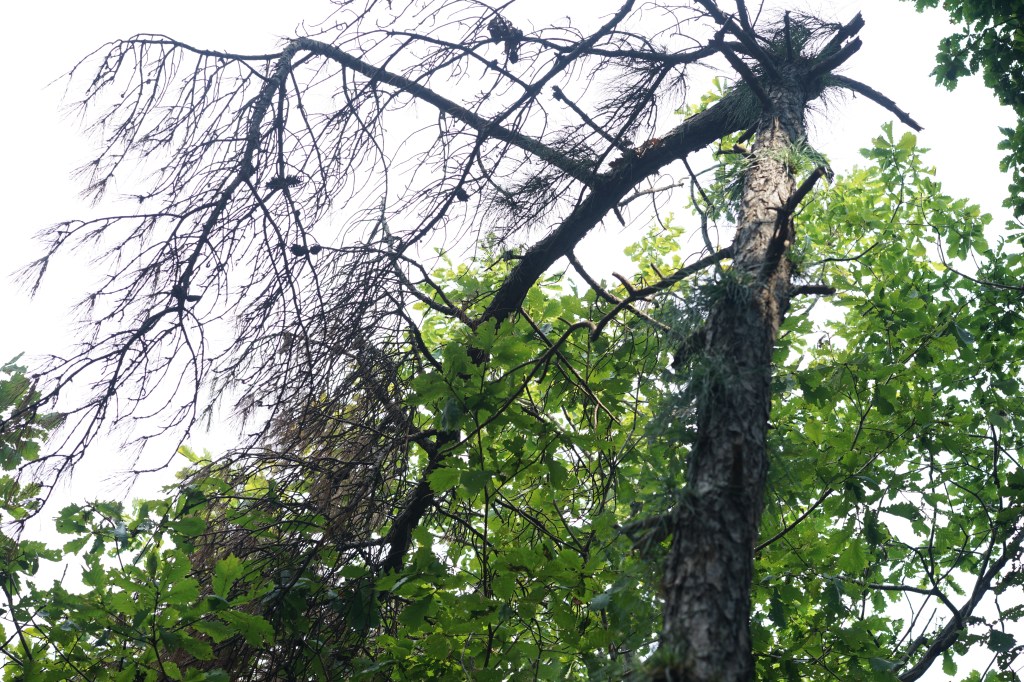
Another tree, also Pinus densiflora, was completely dead, its branches bare among the surrounding living Mongolian oaks (Quercus mongolica). Such dead standing pines are potential fire hazards due to accumulated dry fuel. They can also eventually fall, altering canopy structure. Despite this, they serve as ecological substrates for insects and cavity-nesting birds.
Conclusion
The 30 August Gwanaksan survey revealed a range of ecological conditions. Healthy regrowth was observed in pines, while other individuals showed significant mortality, potentially linked to past snow damage or pine wilt disease. The understory supported common wildflowers such as Scutellaria indica, and fungi including Russula and Amanita species were prominent. Human activity was also visible in the planted pumpkin vine and withered sapling. The forest continues to reflect both natural dynamics and anthropogenic influence.

 The Green Ideology