On 30 August I visited Gwanaksan again. The following records provide a straightforward account of what was seen that day.
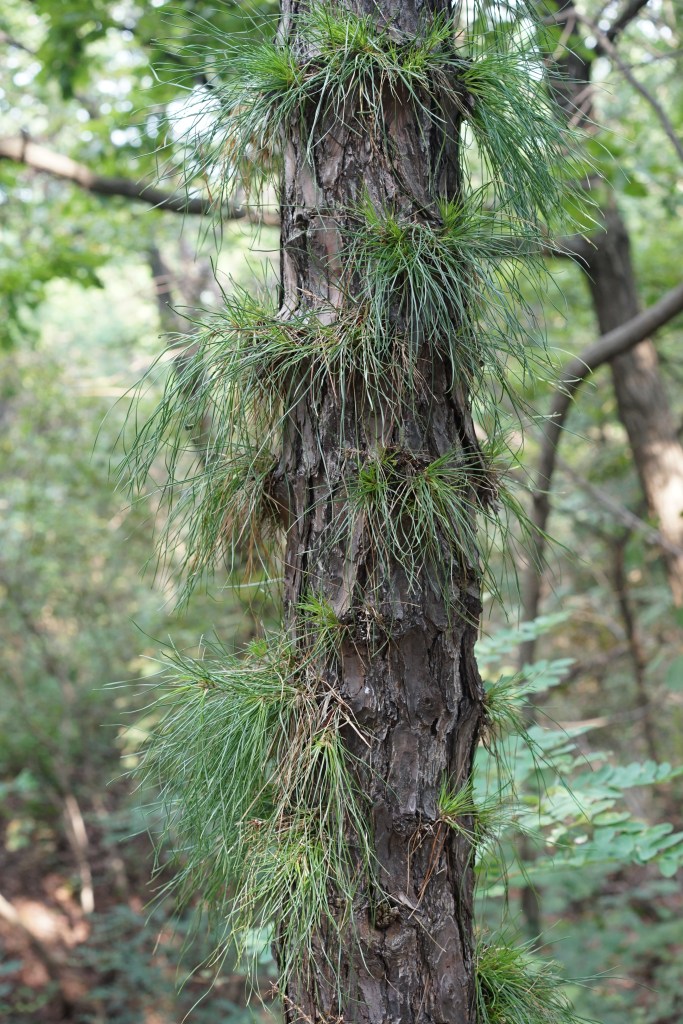
Pine Tree with Dense Needle Clusters
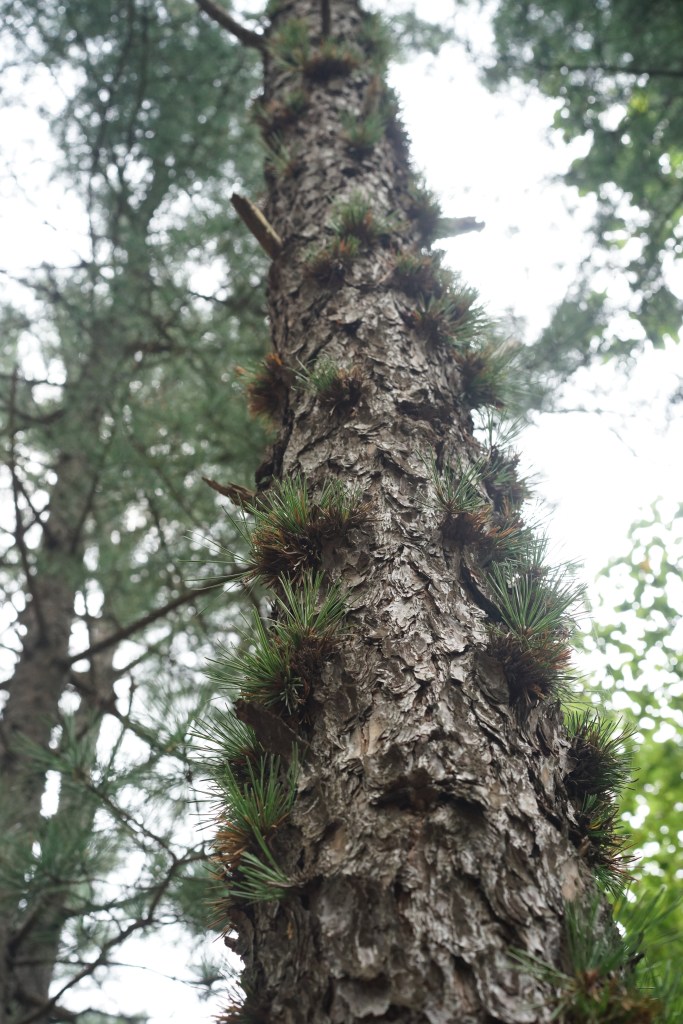
A Korean red pine (Pinus densiflora) was observed with unusually dense clusters of needles sprouting directly from the trunk. These formations likely result from adventitious buds breaking through after the tree experienced stress or partial injury.
Such regrowth is often a response to physical damage or suppression of apical growth.
Withered Sapling in Metal Post
Near the trail, a small sapling, already withered, was growing inside a metal support post filled with tar or asphalt-like material. The leaves were curled and dried. This suggests that the planting was unsuccessful, likely due to insufficient soil and toxic substrate.
Orb-Weaver Spider
A small orb-weaver spider (family Araneidae) was documented suspended in its web. The species could not be precisely identified from the image, but its orb-shaped web and central position are characteristic of this family.
Purple Wildflower
On rocky soil, a wildflower with tubular purple blossoms was growing close to the ground. This plant is identifiable as a species of Scutellaria, most likely Scutellaria indica, which is common in Korean mountain understories.
Mongolian Oak with Acorn
A Mongolian oak (Quercus mongolica) was photographed with developing green acorns. This species dominates much of the mid-elevation forest on Gwanaksan and provides critical mast for wildlife in autumn.
Pumpkin Vine
Along a traditional tiled wall, a pumpkin (Cucurbita moschata) vine was found in flower. Its large yellow blossom was prominent against the dark roof tiles. This plant is not native but grows around settlements and temple gardens.
White Mushrooms
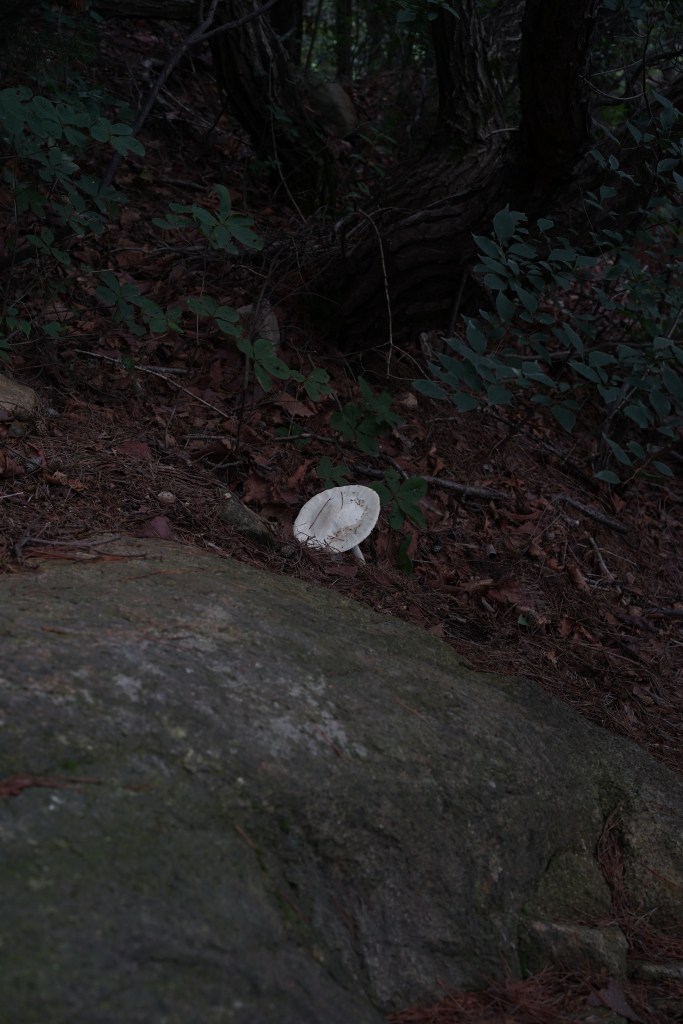
Several mushrooms were observed in shaded understory sites. One photo shows a white-capped fungus, possibly an Amanita species. Another shows a tall, white-gilled mushroom with a spotted cap, likely Amanita citrina or a close relative.
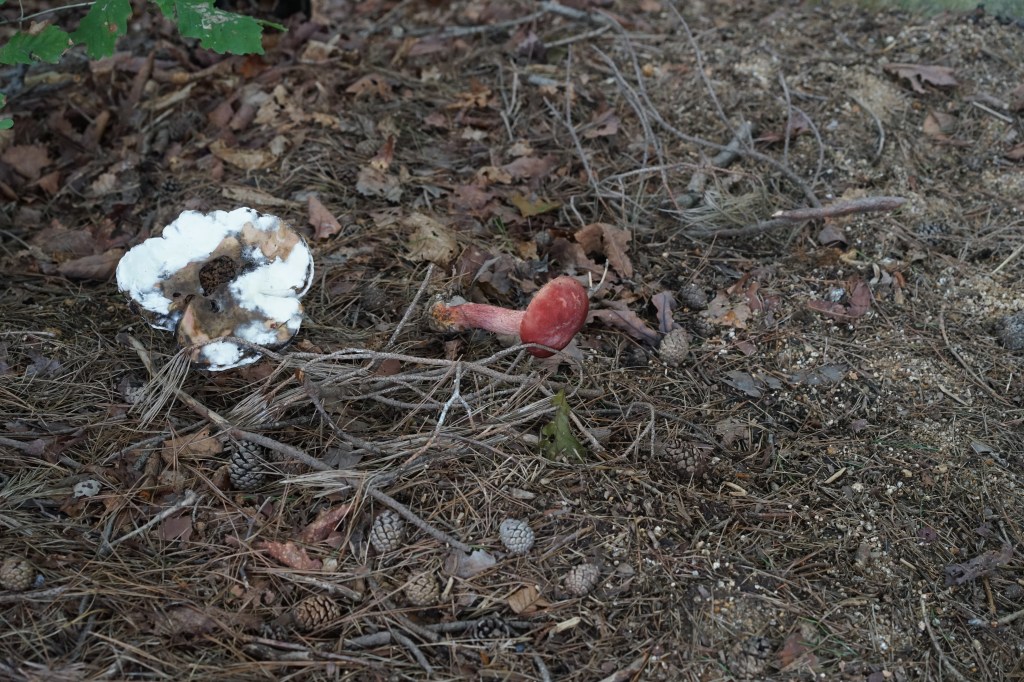
Red-Capped Fungus
A red-capped mushroom with a thick stipe was found alongside the remains of another white fungus. This specimen resembles Russula emetica, a toxic but common species in Korean oak-pine forests.
Dead Pine Branches
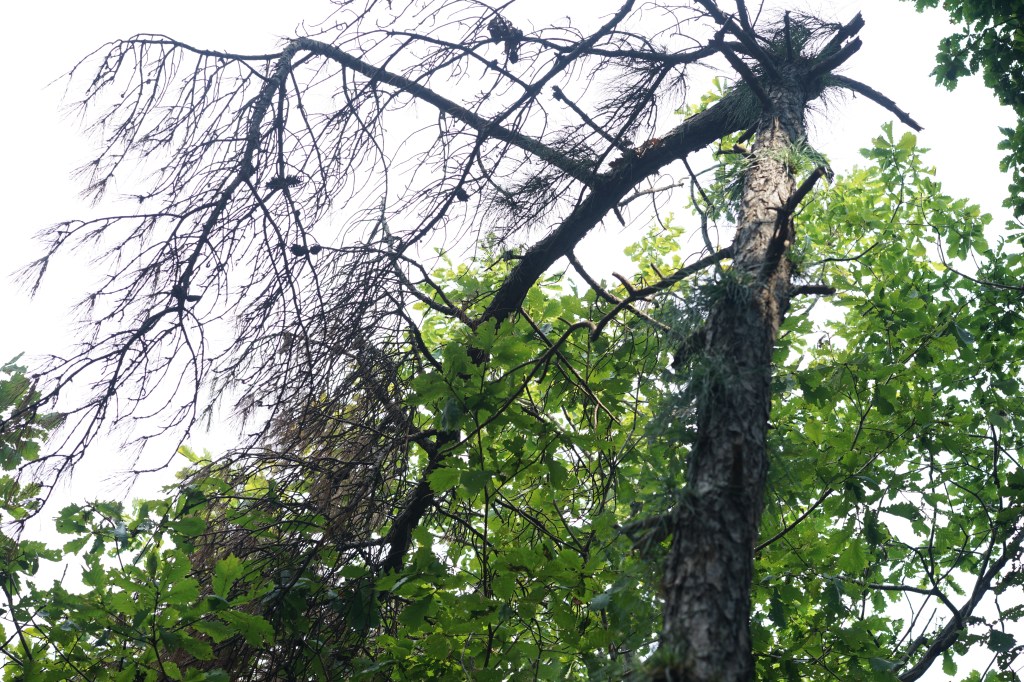
Some pine trees showed heavy dieback. One image depicts Pinus densiflora with large sections of brown, dead needles still bearing cones. The death of these branches may result from snow damage during the previous winter or pine wilt disease caused by Bursaphelenchus xylophilus. The retained cones indicate sudden mortality rather than gradual senescence.
Another tree, also Pinus densiflora, was completely dead, its branches bare among the surrounding living Mongolian oaks (Quercus mongolica). Such dead standing pines are potential fire hazards due to accumulated dry fuel. They can also eventually fall, altering canopy structure. Despite this, they serve as ecological substrates for insects and cavity-nesting birds.
Conclusion
The 30 August Gwanaksan survey revealed a range of ecological conditions. Healthy regrowth was observed in pines, while other individuals showed significant mortality, potentially linked to past snow damage or pine wilt disease. The understory supported common wildflowers such as Scutellaria indica, and fungi including Russula and Amanita species were prominent. Human activity was also visible in the planted pumpkin vine and withered sapling. The forest continues to reflect both natural dynamics and anthropogenic influence.
Gwanaksan is a popular mountain near Seoul, known for its hiking trails, temples, and diverse wildlife. On this visit, I documented some notable sights in sequence, focusing on the mix of cultural structures and species observed along the way.
Temple Structure
One stop along the trail was a traditional Korean temple located on the mountain slope. The building has a long facade with red pillars and a tiled roof decorated with dancheong patterns. Visitors were resting under the eaves, some with umbrellas set aside, taking shelter from the light rain.
Large-Billed Crows (Corvus macrorhynchos)
Two individuals were perched on the edge of the temple roof, interacting by touching beaks. This behavior may indicate food sharing or pair bonding.
Onggi Storage Area
Behind the temple was a storage yard with dozens of onggi, large earthenware jars traditionally used for fermenting food such as kimchi, soybean paste, and chili paste. The jars were arranged in rows and wet from the rain.
Quiet Sign at the Temple Bridge
The first photo shows a small sign in Korean that reads: “기도 중이오니 조용히 해주세요” (“Prayer in progress, please be quiet”). It is positioned at the entrance to a stone bridge near the temple grounds, asking visitors for silence. The placement reflects the area’s dual role as both a public hiking route and a place of religious practice.
Domestic Cat (Felis catus)
A calico-patterned domestic cat was observed emerging from vegetation near the trail. It remained alert and quickly moved away, indicating a wary, possibly feral or semi-feral disposition.
Eurasian Magpie (Pica pica sericea)
On a stone bridge railing, a single magpie was perched and stationary. This subspecies is common in Korea and is easily recognized by its black, white, and iridescent blue plumage.
Joro Spider (Trichonephila clavata)
A spider web was observed suspended between a tree twig and a utility pole. The web structure was large and orb-shaped, with a female Joro spider positioned at the center.
Chinese Yellow Swallowtail (Papilio xuthus)
In a clearing with wildflowers, a Chinese Yellow Swallowtail butterfly was feeding from blossoms. The species is identified by its black and yellow wing patterns and relatively large size.
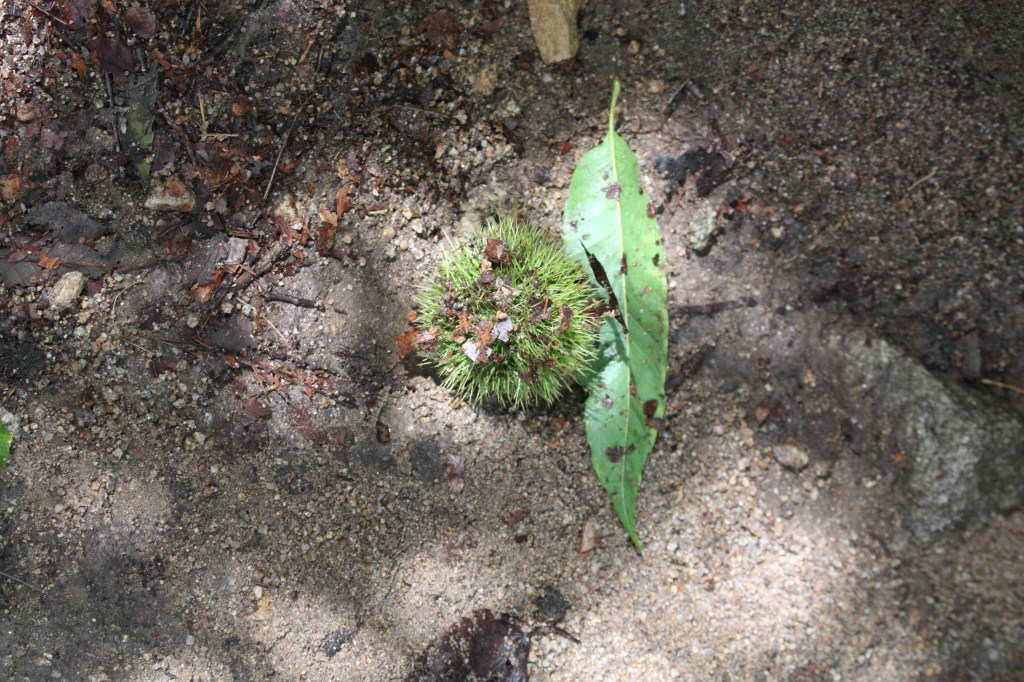
Japanese Chestnut (Castanea crenata)
A chestnut burr was found on the ground near a fallen leaf. The burr was green, indicating an unripe stage.
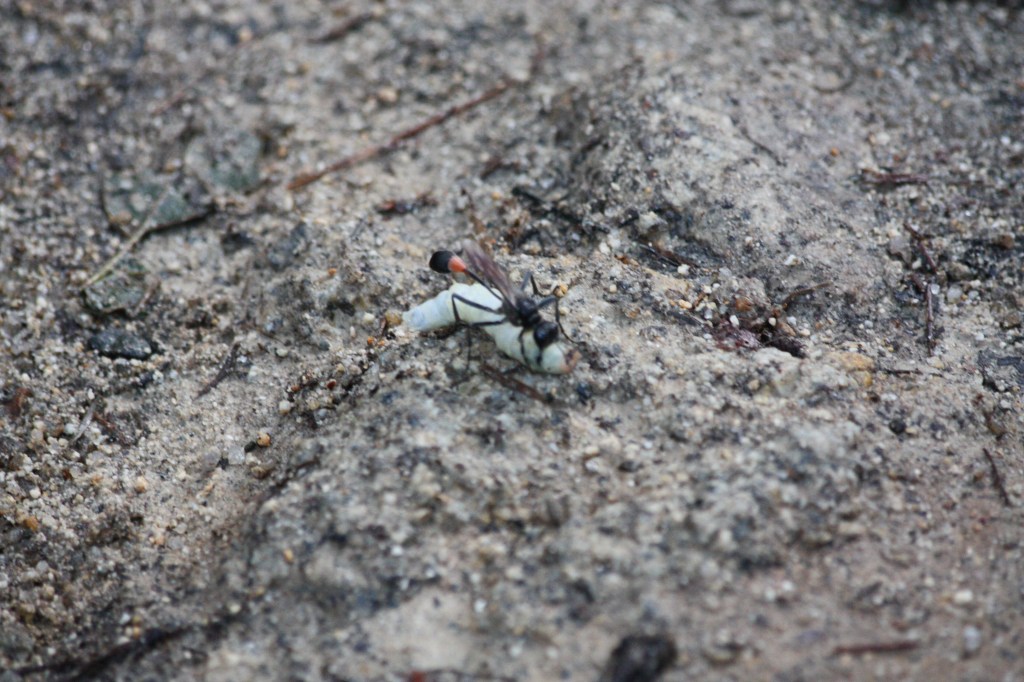
Red-belted Sand Wasp (Ammophila sabulosa) with Silkworm Moth Larva (Bombyx mori)
A Red-belted Sand Wasp was documented dragging a silkworm moth larva across a dirt path. This behavior is consistent with prey transport for nesting purposes.
Large Brown Cicada (Graptopsaltria nigrofuscata)
On the trunk of a tree, a large brown cicada was observed in a resting position. This species produces one of the dominant calls in Korean summer environments.
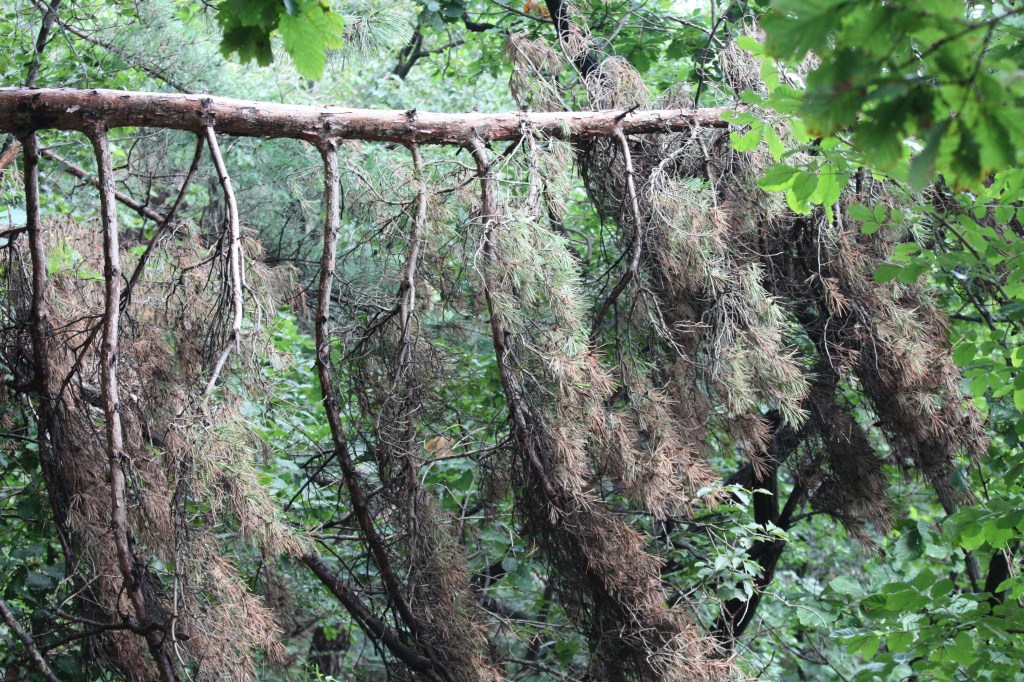
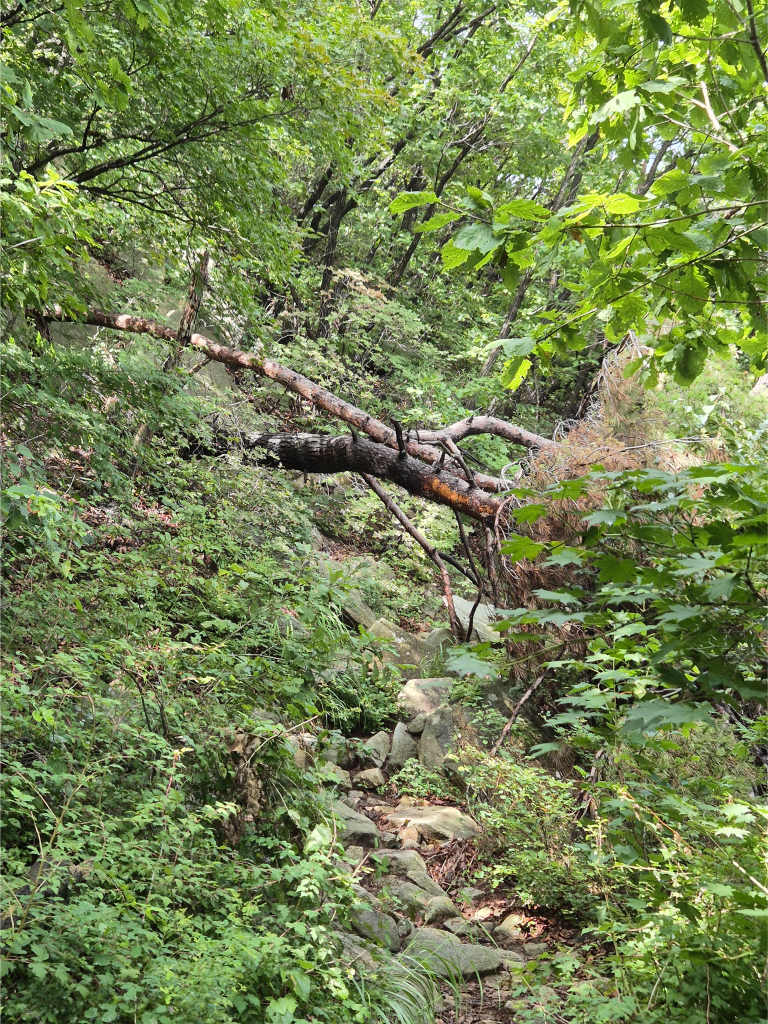
Fallen Pine Tree (Pinus densiflora)
This photo shows a large pine tree bent under stress, with its branches hanging downward. This tree reportedly fell during a heavy snowfall in November. When snow accumulates on evergreen foliage, the added weight can exceed the tree’s structural tolerance, especially if the snow is wet and heavy. Such fallen trees often remain suspended above the forest floor, creating piles of dry branches that can serve as ladder fuels — material that allows fire to climb from the ground into the canopy.
Fallen pine trees like this one can become a significant fire hazard. As time passes, the branches shed dry needles, which ignite very easily and can accelerate the spread of flames. The dense tangle of branches resting on the ground increases the amount of available surface fuel, meaning that if a fire starts, it has far more material to consume. The position of the tree, with its trunk leaning and branches hanging low, can also create a “ladder effect,” which enables ground-level fires to climb upward into the canopy where they become much more destructive. Finally, because Korea’s winters are relatively dry and decomposition occurs slowly, fallen trees can persist for several years without breaking down, leading to an accumulation of combustible material over time.
Ground Beetle (Carabus sp.)
The fourth photo depicts a dark, metallic ground beetle moving across the forest floor. These beetles are important predators of smaller invertebrates and play a role in decomposition cycles. Their presence around decayed logs highlights the link between fallen timber and invertebrate biodiversity.
Inside the Herbarium at Changgyeong Palace, South Korea
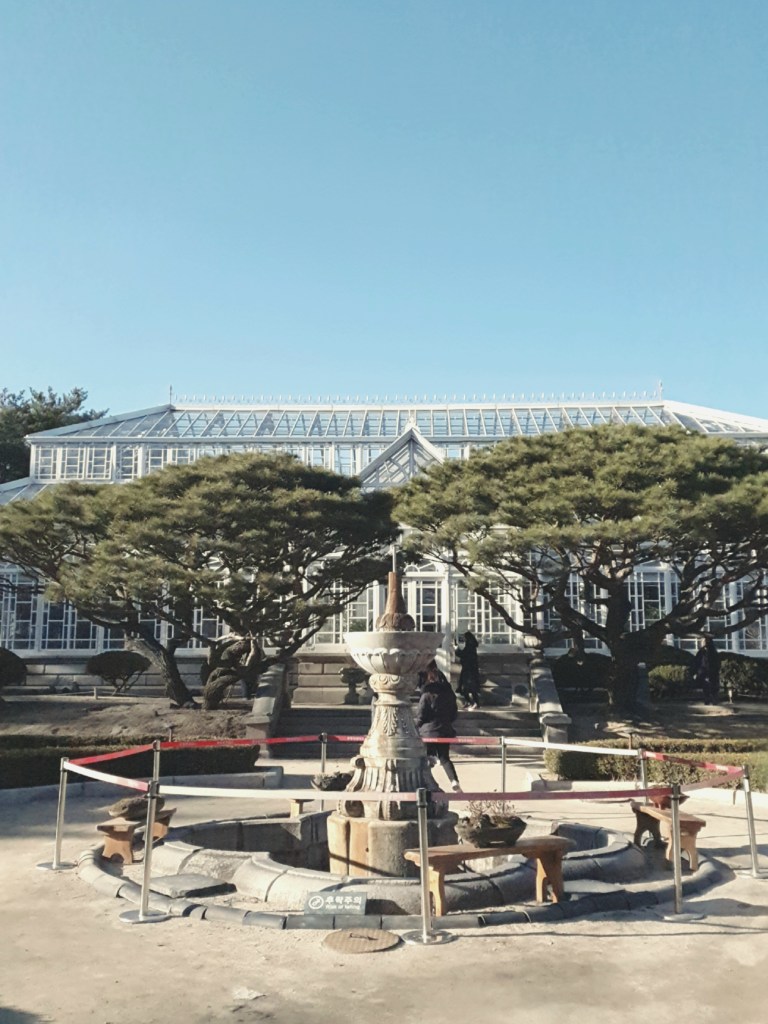
The Herbarium (Dae On Sil) at a distance
Along the courtyards of Changgyeong Palace (창경궁, one of the five royal palaces of South Korea), an oddly modern anomaly stands out from its early modern background. The herbarium, named the ‘Dae On Sil’ (대온실, which literally translates to ‘Great Greenhouse’), is a relic that contains a history of Japanese colonialism that signalled the end of Korea’s Kingdom.
Changgyeong Palace, 2024
In 1909, the Japanese Imperial government installed this herbarium along with a zoo inside Changgyeong Palace. This was a highly nuanced move made as an attempt to erase the identity of the Korean monarchy. By 1909, the last Korean King was confined to the palace, deprived of any political sovereignty through a series of coerced treatises. The Dae On Sil and the Imperial Zoo were to serve as ‘entertainments’ for the dispossessed King while serving as a symbol of Japanese occupation in the heart of one of the 500-year-old dynasty’s Royal Palaces.
The Entrance to the Dae On Sil
Initially, the herbarium was a collection of tropical plants and specimens from the Southeast Asian regions of the Japanese Empire. Many British visitors familiar with the structure of the Palm House in Kew’s Royal Botanic Gardens, or even the Crystal Palace during the Great Exhibition of the 1850s, would notice the resemblance between it and the Dae On Sil.
Gardens are nature cultivated by humans, presented in the form humans consider the most ‘ideal’ state of nature.
For more on gardens and natural thought, read Emma Spary’s Utopia’s Garden: French Natural History from Old Regime to Revolution (Cambridge, 2000).
Mandarin Duck in Changgyeong Palace (Khan, 2012)
It is interesting to see how nature is assembled in the Dae On Sil in comparison to its surroundings. Gardens are nature cultivated by humans, presented in the form humans consider the most ‘ideal’ state of nature. In most parts of the palace, nature is melded with the architecture of the buildings in a way that provides a sort of symbiosis. Shades from the tall pines and the pond in the middle of the palace provide adequate cooling for the palace’s inhabitants during the summer. Meanwhile, endangered animals find refuge within the palace’s greenery, such as the Mandarin Duck that now resides in the palace pond all year-long (Khan, 2012).
Strelitzia reginae in the Dae On Sil (Native to South Africa)
On the other hand, nature presented in the Dae On Sil is somewhat the opposite. Nature is contained and considered as something to be preserved by means of separation from human life. The stark architectural contrast between the Dae On Sil and the rest of the palace suggests that the Japanese Empire was imposing something more than simply just a herbarium through the Dae On Sil: a fundamentally different way of viewing man’s relationship with nature. Quite fittingly, the Japanese Empire enacted policies that deforested much of Korea’s forestry and drove many native large mammals (including the Siberian Tigers, the Amur Leopards, and the Sea Lions) to extinction. To read more about Korea’s industrialisation and deforestation under Japanese Imperial control, look at Conrad Totman’s Pre-Industrial Korea and Japan in Environmental Perspective (2004).
The Pomegranate tree (Punica granatum)
The Dae On Sil today retains little to nothing of what it did in the colonial era. The herbarium has been rebranded to house various endangered plant specimens native to the Korean peninsula. The greenhouse that once symbolized the demise of a country’s monarchy now holds many of the nation’s most treasured specimens for precious scientific research.
The ‘total,’ it seems, is more of a myth to the historian nowadays. Although many historians have attempted to brand their work to capture the ‘total’ in the names of world history, global history, macro history, l’histoire total, the dream to capture the entirety of the human past seems a little far-fetched to be more than a flashy catchphrase. Quantitatively speaking, historians may never capture the total, as history is never about the entirety of past-times but about selectively categorising the past into present inquiries. Hence, the ‘total’ has existed in the minds of historians than anywhere in the real world among many schools of historical thought. As the idea of ‘total history’ has changed over time to indicate different types of histories, total history is not defined by a particular spatial or temporal range or a specific scale of analysis; rather, it exists as a heuristic value according to what historians regard as the ‘total’ compared to their conventional frameworks of historical analysis.
What is Total History?
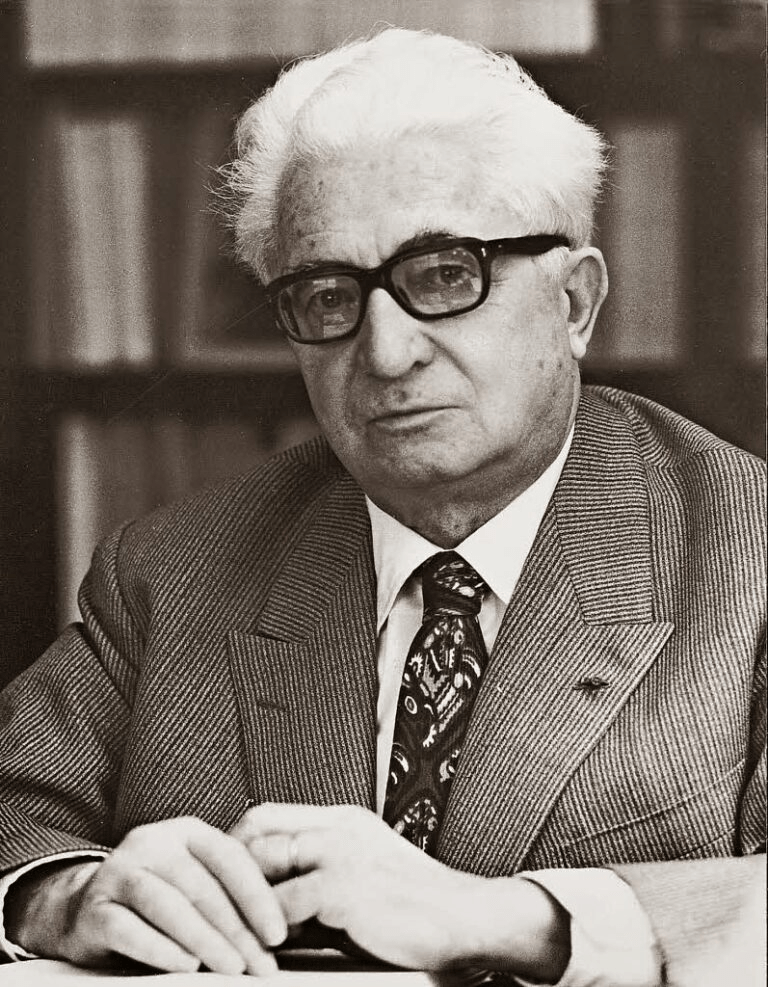
Fernand Braudel (Instituto Fernand Braudel de Economia Mundial)
Total history’ has changed to encompass different meanings over time. Historians, as early as in the twelfth century (Bernard Itier, Chronicle), have generally assumed their works to account for the totality of their subject matter. However, ‘total history’ as an outspoken historical subdiscipline began with the Annales school of French historians in the early twentieth century. Early Annales historians like Fernand Braudel distinguished their practise of the ‘total external’ – the deep, slowly-changing geographic and economic structures – from the ‘event-based’ histories of the short-term political (Mediterranean, 1949). Other historians like March Bloch or later historians of the Italian microstoria school put forth the idea of ‘the total internal,’ arguing that the total only existed inside people’s minds and social relations. Recently, environmental historians have advocated for a total history of humankind as a geological agent, as the concept of the Anthropocene encouraged historians to consider nature as a historical protagonist. As such, the idea of ‘total history’ has constantly changed according to what historians have regarded as the ‘total’ as opposed to conventional frames of analysis used by their contemporaries. Hence, total history is a subdiscipline that aims to expand the frameworks in which historians conduct their analysis, rather than a term that denotes a particular type, scale, or spatial range of historical writing.
The term ‘total’ is often misunderstood. J.H. Elliott, in his review of Braudel’s Mediterranean, criticised that total history is ‘not dissimilar to total war’ as ‘in both instances, you throw in everything you’ve got,’ implying that the ‘total’ did not mean anything more than a mere aggregate of different types of histories without any distinctive features of its own (1973). Moreover, certain microhistorians, especially those who embraced the postmodern ‘incredulity toward master-narratives of all types’ (Jean- François Lyotard, The Postmodern Condition, 1979), have critiqued the very notion of a ‘total’ history. Sigurdur Magnússon commented that by focusing on the uniqueness of the individual, microhistory denied the possibility of any overarching narratives (‘The Singularity of History’, 2003), while Giovanni Levi critiqued that the purpose of microhistory is to reduce the scale of analysis to undermine large-scale paradigms (‘Frail Frontiers?’, 2019).
However, these criticisms towards total history assume the ‘total’ is interchangeable with the ‘macro’ or the ‘global.’ Though colloquial uses of the word ‘total’ may have similar meanings to the macro (macroscopic analysis conducted on large groups of individuals) or the global (an extensive spatial range across geographic ranges), total history is not necessarily associated with large scales nor wide spatial ranges.
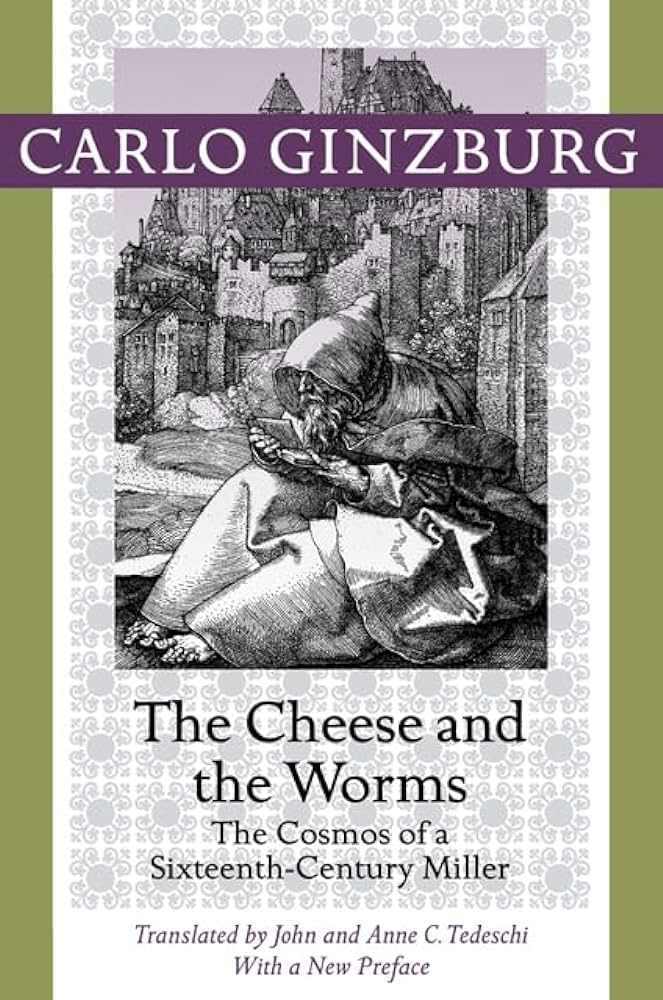
In terms of scale, the ‘total’ does not necessitate historians to focus on the macro. In The Cheese and the Worms (1976), Carlo Ginzburg wrote about the peasant culture during the Inquisition in sixteenth-century Italy from a microscopic scale of a single individual, a miller named Menocchio. From the fragments left by one idiosyncratic individual, Ginzburg constructed the totality of an unwritten peasant culture obscured from the view of previous historians.
Moreover, total history has also been written in small spatial spheres. Take, for example, Emmanuel Le Roy Ladurie, who wrote the total history of a single village by examining the ecological, cultural, religious, and sexual relations of its occupants (Montaillou, village occitan, 1978). Though certain total histories do cover wide spatial or temporal ranges, total history itself is not related to a particular scale nor any temporal or spatial range. These criticisms misunderstand total history as a field that quintessentially aims to establish definitive meta-narratives across wide spatial frames or macroscopic scales: neither of which concerns the aim of total history.
The Total External
History does not aim to establish a definitive ‘totality’ of the past; rather, historians seek to expand the frameworks of historical analysis to one in which their contemporaries are not accustomed to operating. To understand what frameworks historians try to expand requires considering the historiographical context in which different types of ‘total histories’ were written. To historians of the ‘total external’ such as Braudel, the ‘total’ meant considering structural factors external to human relations – the geographical and economic structures that shaped human interactions in the Longue Durée.
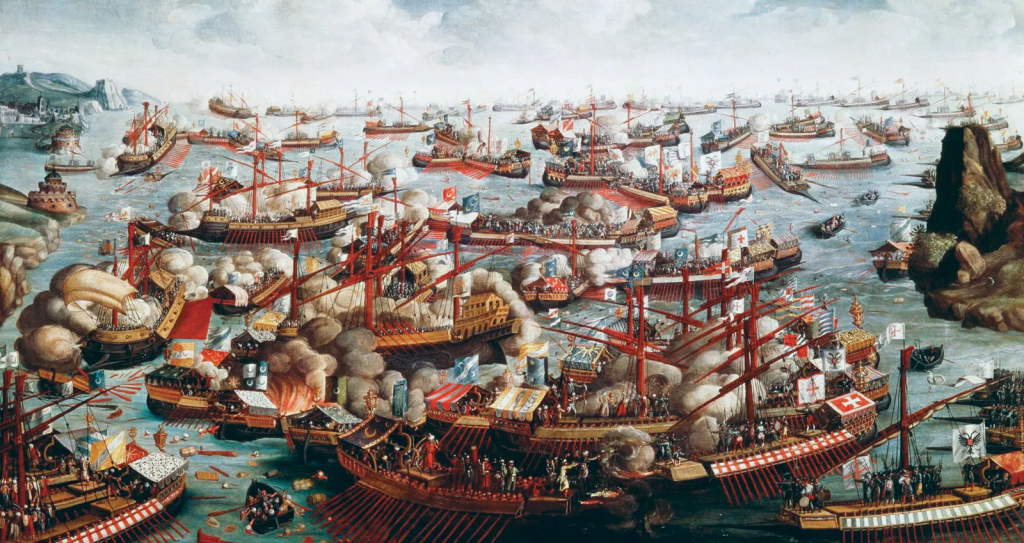
The Battle of Lepanto, October 7, 1571, in which the fleets of Spain, Venice, and the Papal States defeated the Turks in the last great sea battle involving galleys; in the National Maritime Museum, London.
For instance, in writing about the Battle of Lepanto in The Mediterranean, Braudel challenged the human-centricity of the Histoire événementielle (narrative-based history focused on historical events) practised before him. As he downplayed the importance of the event itself as ‘surface disturbances’ and ‘crests of foam’, Braudel emphasised the deep, underlying structures that preconditioned the battle before its occurence (1949). Moreover, in Out of Italy, Braudel opposed the historian Jacob Burckhardt in interpreting the Italian Renaissance (1974). While Burckhardt periodised the Renaissance as a two-hundred-year conjuncture characterised by unique individuals, Braudel sought to identify a deeper explanation of the Italian Renaissance as a continuity of long-term historical change. As such, the Braudelian ‘total history of the external’ sought to bring the historian’s attention to the deep, structural factors beyond the fleeting, ‘short-sighted’ human relations in political and diplomatic history.
The Total Internal
This ‘expansion of frameworks’ stands the same for another school of total history: the ‘total internal.’ Historians of the French Mentalités school focused on the collective ideas that escaped individuals to form the total. Jacques Le Goff characterised this mode of total history as studying ‘that which is common to Caesar and his most junior legionary… Christopher Columbus and any one of his sailors’, thus constructing the ‘total internal’ from the collective ideas between human relations (Mentalités, 1983).
Carlo Ginzburg, The Cheese and the Worms (1976).
This mode of total history gained prevalence, especially after the ‘Cultural Turn’ of the 1970s. In this period, historians began focusing on the microscopic scale of individuals and small grassroots groups in their research. Whereas cultural historians before this period, such as Burckhardt or Johan Huizinga, tended to focus on high cultures of the elite while assuming high culture ‘trickled down’ to people at the grassroots level of society, microhistorians like Carlo Ginzburg established how historians could construct the entirety of the social relations within a whole peasant culture by looking at the records left by a single individual (1976). To these historians, the total could only be observed by reducing the scale of analysis to single individuals who served as ‘keyholes through which to view the world in which individuals lived’ (Tonio Andrade, 2010). Thus, the ‘total internal’ expanded the boundaries in which historians operated by incorporating these people marginalised from the top-down narratives of history before the Cultural Turn.
Total History Today
Likewise, environmental historians today – though the word ‘total history’ itself has generally fallen out of usage – have reinvented the old ambition to write a total history of humankind for the twenty-first century. Although historians practising Braudel’s structural analysis of the geological and the economic and Ginzburg’s small-scale archival research – both of which have generally become the norm of historical research today – claimed to be writing ‘total’ histories of their own, historians have only recently recognised the role of nature as an active agent in historical change.
However, as the concept of the Anthropocene (the current geological age in which human activity has been the predominant influence on the environment) quickly arose along with the ongoing climate crisis (Nicola Davison, The Anthropocene epoch, 2019), historians have questioned whether the conventional boundaries in which they operated were too human-centred. In 1996, William Cronon revealed that historians tended to dichotomise the relation between human society and nature in a naïve way that underwrote human society as where the ‘significant’ acts occurred and portrayed the environment as a passive ‘untouched nature,’ underestimating the degree to which human activity affects the natural environment (‘The Trouble with Wilderness’). Thus, the rise of nature as a driver of historical change challenged the portrayal of nature as a passive, theatrical background on the historian’s canvas upon which humans were the sole actors.
Accordingly, ‘total’ historians of the environment have challenged our place as central ‘human’ agents of historical change. Works that focus on the history of germs, animals, or pathogens and their relations to humans have redefined the place of human agents in the historian’s canvas and have expanded the boundaries of historical analysis to non-human agents. In Can the mosquito speak?, Timothy Mitchell (2019) analysed how disease and malaria shaped warfare and economic change, undermining the idea that humans were in command of the environment as fully active agents. As Bruce Campbell emphasised in ‘Nature as historical protagonist’ (2010), it has only been since the enlightenment era that humans saw themselves as omnipotent agents against a passive, benign natural environment. Like Campbell, many ‘total historians’ today aim to expand the twenty-first-century historian’s scope of research to non-human actors and the environment by recognising the role of nature as a historical protagonist.
Both Anna Lownhaupt Tsing’s The Mushroom at the End of the World (Left) and J.R. McNeill’s Mosquito Empires (Right) are excellent examples of how history can be expanded to include the non-human.
All of this is not to say history establishes a definitive ‘totality’ of the past. Every historian inadvertently prioritises some aspects of the past in choosing what better represents the ‘total.’ Historians of the ‘total external’ prioritise unchanging geographic and economic structures than short-term events, while historians of the ‘total internal’ disregard some parts of the past that are beyond the individual’s cognition in pursuit of a total history of the mental world. Nevertheless, the objective of total history has always been to achieve a comparative total by expanding the frameworks upon which historians operate. This is demonstrated by an active interest in interdisciplinary approaches shared by total historians of the ‘external’ and the ‘internal’ alike (Marc Bloch; Lucien Febvre, 1929). As total historians incorporate methods used in geography, economics, anthropology, or the natural sciences to the historian’s toolbox, they challenge the conventional frameworks in which historians view the past. Thus, the aim of total history is to expand the boundaries in which historians operate, not to claim their works to be definitive ‘totalities’ of the past.
Emmanuel Le Roy Ladurie (1929-2023).
In 1973, Le Roy Ladurie stated, ‘by the year 2000, historians will either be computer programmers or will no longer exist.’ In his remark, Le Roy Ladurie assumed historians had already expanded on all possible frameworks and that the only thing left of historical research would be the job of digital computers and quantitative analysis, which operate within the frameworks established at the time (‘L’historien et l’ordinateur’) Living in the twenty-first century, we know this has certainly not been the case. As conventional ideas of the ‘total’ are challenged, historians have been confronted by the elements to which they had been turning a blind eye: first to the ‘total external’ that revealed factors beyond the sphere of human relations and politics; then the ‘total internal’ which revealed the grassroots totality that had been marginalised by the top-down narratives before the Cultural Turn; lastly, the environmental total that redefined our position as human agents in relation to the environment and non-human agents around us. Thus, the historian’s work is only ‘total’ as they seek to expand the frameworks in which historical research is conducted.
With the rise of Women’s history and Social history in the 1960’s, history since then has often reflected the interests of activist agendas. One such document that presented present-day activists with much resonance is Abigail Adams’ series of letters to John Adams, more commonly referred to as ‘The Adams’ Letters.’
On 31st March 1776, Abigail Adams wrote a letter to her husband, John Adams, in an attempt to persuade John of the need for women’s protection by law. As John was making his way to draft what would later be called the U.S. Declaration of Independence, Abigail’s words to one of the nation’s so-called ‘Founding Fathers’ bares particular weight on how we view the constitution in relation to the cause of women’s rights in today’s context, not to mention her own.
Abigail’s words echo an ongoing political discourse of her time: a discourse on individual liberty and autonomy with which her audience, John, was directly involved. Although her logic was too far from that of the mainstream to be endorsed by John, Abigail makes several significant points that extend the revolutionary cause to women, drawing upon multiple intellectual traditions that strengthen the authority of her non traditional reasoning. Primarily, metaphorical allusions to two political concepts allow Abigail to link the cause of women to that of the founding fathers: independence and slavery.
Abigail opens her letter with an appeal to the revolutionary cause of independence. A direct response to the news that a declaration of independence was soon to come, Abigail’s letter unfolds with a sympathetic gesture (that she longs ‘to hear that you have declared an independency) towards a cause for which John is striving. In doing so, Abigail succinctly casts metaphors that associate the image of the patriarch with an absolute monarch.
For instance, Abigail predicates that ‘all men would be tyrants if they could’, advising that John should not endow ‘unlimited power’ to men. Using metaphorical language that equates the state of women to that of the American colonies in relation to the monarch, Abigail makes a subtle yet compelling case to extend the revolutionary cause to women. Hence, Abigail implicitly suggests that it would be contradictory for John to support the revolutionary cause while not addressing women’s legal protection.
Abigail Adams, “Letter to John Adams” (31 March 1776)
Abigail’s Letter to John (Massachusetts Historical Society, 1776)
“I wish you would ever write me a Letter half as long as Iwrite you; and tell me if you may where your Fleet are gone?
What sort of Defence Virginia can make against ourcommon Enemy?Whether it is so situated as to make an able Defence?
Are not the Gentery Lords and the common people vassals,are they not like the uncivilized Natives Brittain representsus to be?
I hope their Riffel Men who have shewen themselves verysavage and even Blood thirsty;are not a specimen of the Generality of the people.
I am willing to allow the Colony great merrit for havingproduced a Washington but they have been shamefullyduped by a Dunmore.
I have sometimes been ready to think that the passionfor Liberty cannot be Eaquelly Strong in the Breasts of thosewho have been accustomed to deprive their fellowCreatures of theirs.
Of this I am certain that it is not founded upon thatgenerous and christian principal of doing to others as wewould that others should do unto us. . . .
I long to hear that you have declared an independancy— and by the way in the new Code of Lawswhich I suppose it will be necessary for you to make I desire you would Remember the Ladies,and be more generous and favourable to them than your ancestors.
Do not put such unlimited power into the hands of the Husbands.
Remember all Men would be tyrants if they could.
If perticuliar care and attention is not paid to the Laidies we are determined to foment a Rebelion,and will not hold ourselves bound by any Laws in which we have no voice, or Representation.
That your Sex are Naturally Tyrannical is a Truth so thoroughly established as to admit of no dispute,but such of you as wish to be happy willingly give up the harsh title of Masterfor the more tender and endearing one of Friend.
Why then, not put it out of the power of the vicious and the Lawlessto use us with cruelty and indignity with impunity.Men of Sense in all Ages abhor those customs which treat us only as the vassals of your Sex.
Regard us then as Beings placed by providence under your protectionand in immitation of the Supreem Being make use of that power only for our happiness.”
The Language of Women’s Protection
Another concept that Abigail invokes to argue her case is slavery. Repeatedly utilising metaphorical language, this time between the patriarch and the enslaver, Abigail portrays harsh husbands as ‘Masters’ and those sympathetic to the cause as ‘friends’. This linkage between the state of slaves and women is cleverly designed to touch upon ongoing political tensions among Abigail’s contemporaries, including John’s own views on slavery and the conflict of interests among the Northern and Southern colonies.
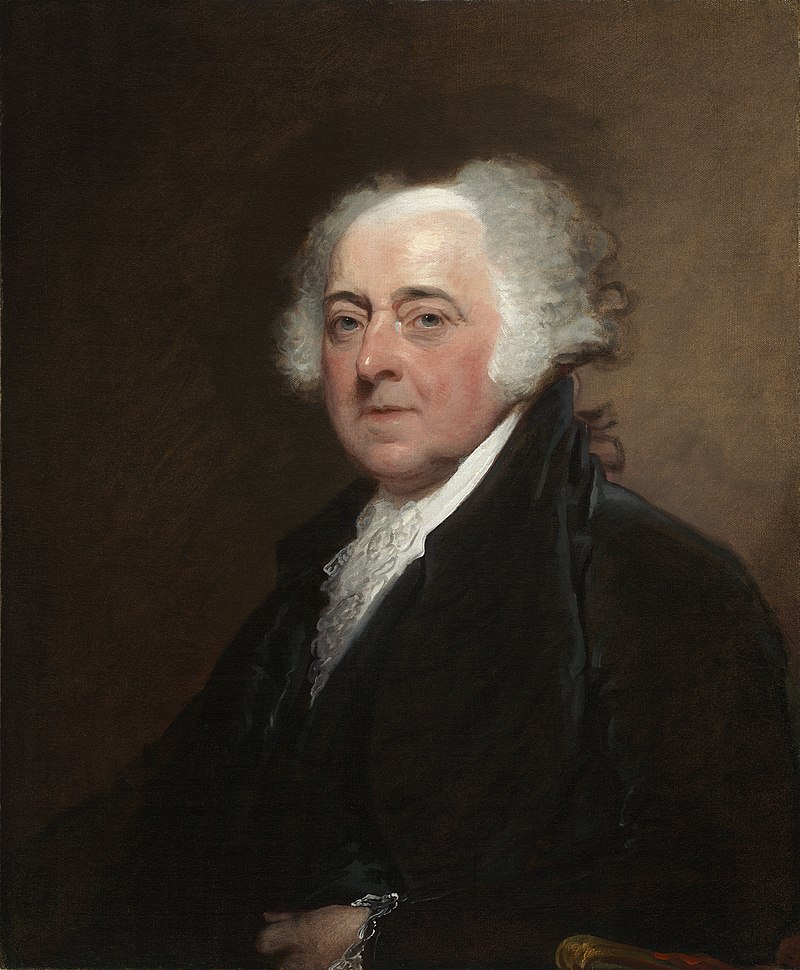
John Adams (Gilbert Stuart, c. 1800-1815)
During the creation of the Declaration, the founding fathers avoided directly mentioning the issue of slavery for fear of alienating the slave owners in the Southern colonies. John Adams, for one, was opposed to the use of slaves in favour of freemen labourers. Abigail, knowing John’s position on slavery, also exploits this fact to argue that the revolutionary cause should be extended to women. Abigail then expounds on how women would be determined to ‘foment a rebellion’ under laws that do not cater to the unequal state of women.
Appealing to the same concerns that confronted her husband regarding the possibility of factions over the issue of slavery, Abigail uses John’s logic against himself to persuade him that women’s legal protection was, in fact, ‘rational’ under his logic. For Abigail, it is essential to include a clause that reflects women’s interest in the new code of laws, as much as it is essential for John to concede to the interests of the Southern slave owners to prevent a rebellion.
Radical or Moderate: Was Abigail Adams “Feminist”?
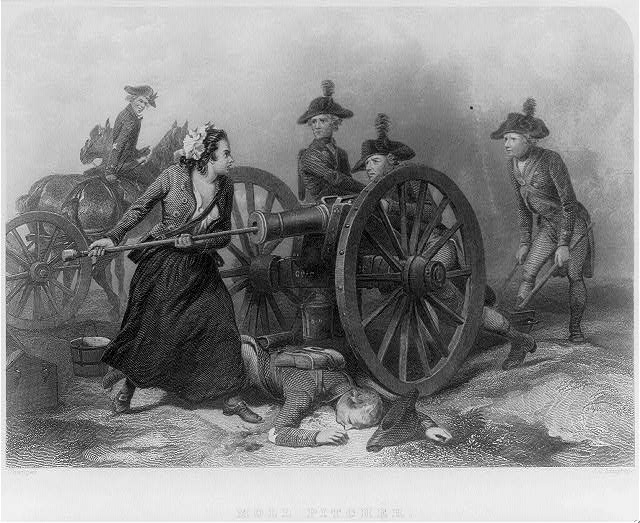
Molly Pitcher [i.e. Molly McCauley loading cannon at Battle of Monmouth, 1778]
It is worth discussing the extent to which Abigail is advocating for a sort of “women’s rebellion” when she mentions its possibility. As radical as Abigail’s suggestion for women’s legal protection was, a manifesto for a social movement against patriarchal governance in Abigail’s time would be unthinkable. However, the private character of the document, designed for the readership of a single John Adams, demonstrates that Abigail’s purpose could not have been to deliver a public manifesto. Without additional sources to clarify her motives, Abigail’s true intentions about a women’s rebellion remain obscure.
Nevertheless, it is certain that, as far as this document is concerned, her intentions were never to foment thousands but to persuade a single audience, her husband. Abigail’s true purpose of mentioning a women’s rebellion here is to argue that women be recognised ‘voice, or Representation’ in the new code of laws.
Abigail’s argument for legal recognition takes on a religious language towards her proposed solution. Towards her final remarks, Abigail asks John to think of women as beings that are to be protected by men under ‘providence’ and to use the power of men for women’s happiness, as does God, or ‘the Supreem Being’. Abigail does not concern her solution with voting rights nor equality between the sexes; she accepts that women are subjects to be protected by men and argues for this ‘protection’ to be legally stipulated in the new nation. According to Abigail, laws were to protect women as subjects of God from unrestricted masculine power. Hence, Abigail concludes that men, as the ruling sex, must legally recognise women’s need for protection.
Abigail’s letter has attained much social and scholarly attention in posterity, especially by activists who read Abigail as a feminist thinker. However, from her Letter to John Adams, we see that Abigail herself did not intend to advocate for a change in inequality through social action. Even the very nature of the document (a private letter) tells us that Abigail could not have foreseen her writing gaining the social significance it did over the centuries. To avoid imposing present values on past subjects, we must treat ideas as articulations against their respective historical contexts, not as disembodied beings independent from time and space.
In this sense, Abigail is addressing the cause for women in a distinctly different way from the feminist thinkers of the twentieth century. In the present, her resolution for the legal recognition of women as subjects to be ‘protected’ is no longer radical nor deemed necessarily appropriate. To meaningfully place Abigail’s ideas into our present debates would require a critical interrogation into the late-eighteenth-century political environment, not a unilateral ‘application’ of her words into our own.
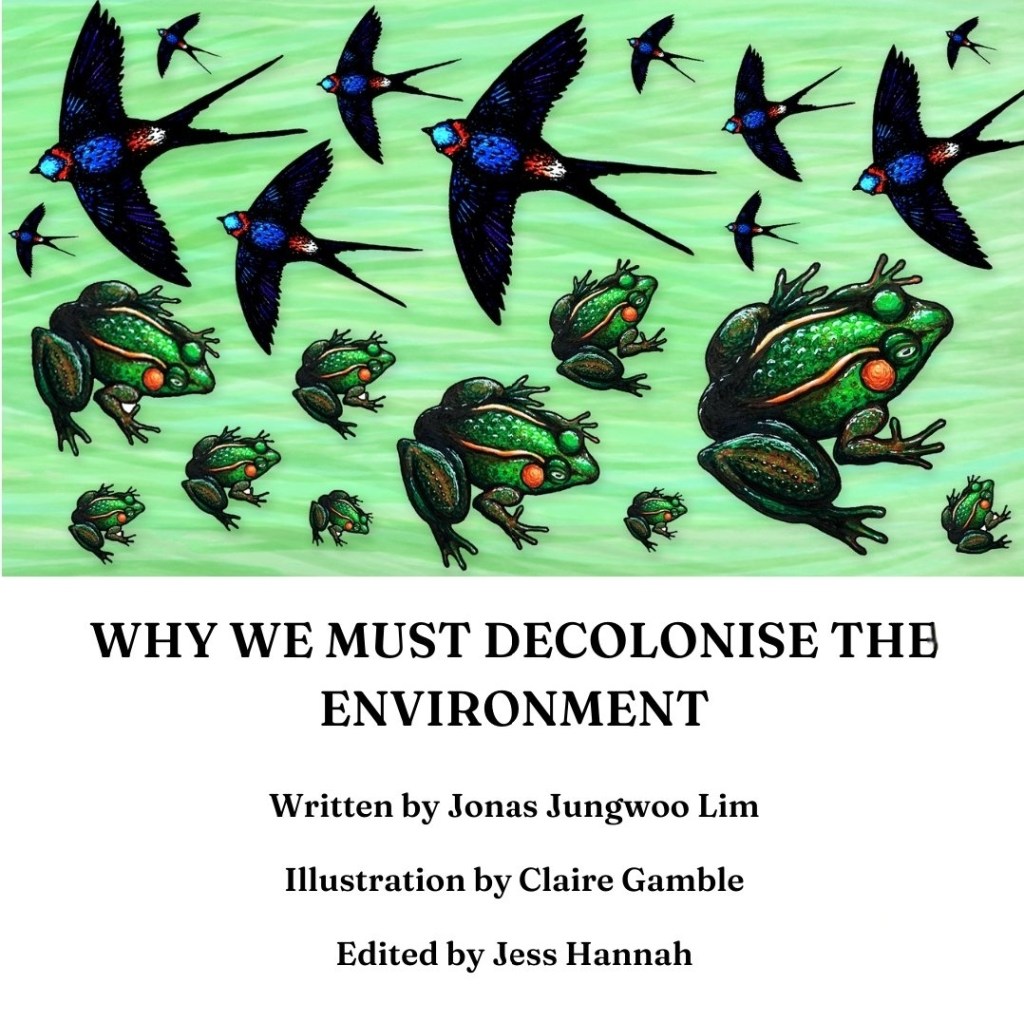
My piece entitled ‘Why We Must Decolonise the Environment’ for Project Myopia is out now!
Project Myopia is a decolonising project dedicated to diversifying university curricula and transforming teaching practices. It is a platform for works created by women, non-binary people, differently-abled people and people of colour – as well as radical approaches to teaching and learning and is currently funded by the London Arts and Humanities Partnership (LAHP).
‘Why We Must Decolonise the Environment’ is a semi-academic publication that focuses on the oppressive politics of the environment, bringing personal recollections from my experience in the DMZ. To quote my favourite line(s) in this piece:
“To bring things back to my hometown experience, the reason why nature flourished in the DMZ was not because it was devoid of humans, but because humans had fostered the conditions necessary for natural ecosystems to regrow, albeit unintentionally. In other words, humans are not intruders or conquerors of nature. They are one of many members belonging to the ecological community who must strive to sustain it. …
As some voices still mistakenly suggest that humankind as a whole is a species ‘parasitic’ on the Earth and its resources, historians can contribute by interrogating and specifying precisely who had and still has the power to define and shape the environment.“
As historians, we are familiar with the narrative of modern progress. Throughout our undergraduate studies, we are taught about the liberties enabled by modern development: the freedom to speak, to commerce, and to eat. According to this narrative, the colourful array of goods we see in a supermarket is a glorious product of modernity.
However, at what cost? As historians, we know freedom always comes with a cost and, consequently, a responsibility. Isaiah Berlin distinguishes these two sides of freedom as positive liberty and negative liberty (1958). To put it succinctly, positive liberty is the ‘freedom to’ control one’s actions, while negative freedom is the ‘freedom from’ the control of others. While we always focus on our’ freedom to’ when discussing modern progress, we rarely talk about our’ freedom from’.
Isaiah Berlin (Financial Times, 2015)
What did we lose in exchange for our freedom to eat? What exactly have modern humans gained our freedom from?
It is from nature that modern humans have gained our freedom to eat. Hannah Arendt described modern history as a story of humanity gaining an ‘increasing mastery over nature’ (1961). Our modern freedom to eat is also the freedom from the constraints of nature. As we no longer plough our own fields to eat, we imagine that modern progress has liberated us from nature.
Egg shortages (BBC, 2022)
However, recent events have made us question this narrative. Amid a cost-of-living crisis and a nation-wide shortage of eggs, we find it harder to believe that modern progress led us to ‘the best of all possible worlds’ (Leibniz, 1710). Can we be assured that modern progress will take care of our dietary needs? In other words, how sustainable is our freedom to eat?
Are we eating in the best of all possible worlds?
I spent my pre-adult years in a place classified as a ‘food desert.’ A food desert is a region too distant from food supply chains that it is impossible to buy anything but ultra-processed food. Living in a school in the mountainous regions of Korea, my schoolmates and I would walk over an hour to visit the nearest supermarket, a highway rest stop in the middle of nowhere. Our only regular food source was the truck that brought food to be served in the cafeteria. On days with severe snowfall, there would be none.
Snow removal in Hoengseong so that trucks may come in (2018)
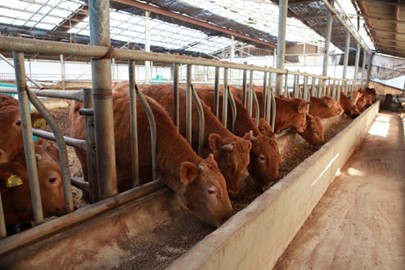
It was not that my region was an absolute ‘desert.’ The surrounding mountains were full of greenery. And strangely enough, our region was the nation’s foremost producer of cows. An hour’s walk away from my school was a cow factory or, what experts call, an ‘intensive livestock farm.’
Cow factory (Hoengseong News, 2020)
In it would be cows packed into confined spaces. Walking to the highway rest-area, we saw cows assembled like products at a factory line. However, the beef served on our platters every dinner would be Australian. Why? Because it was simply cheaper.
But something didn’t add up. Why were we fed factory-produced Australian beef from across oceans when there was a cow farm in our region?
Beef in Korean society has a curious politics intertwined with a history of nationalism and, to a lesser extent, anti-imperialism. When news of the zoonotic disease Bovine Spongiform Encephalopathy, more commonly known as the Mad Cow Disease (MCD) hit the beef industry in the early 2000’s, Koreans were quick to respond to the import of American beef with hostility, reading it as a sign of U.S. imperialism (Choe, 2008).
Protests against the import of US beef in Seoul (KyungHyang, 2008)
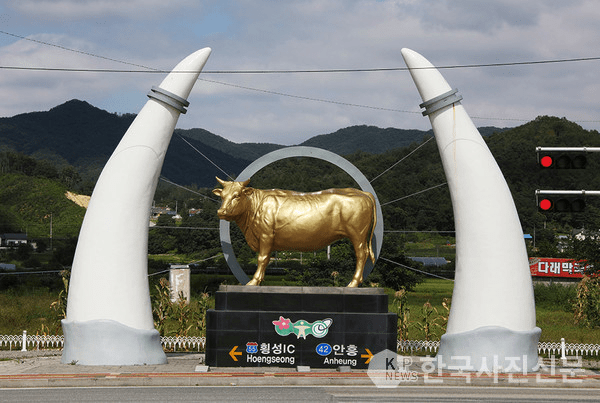
Although the uproar against anti-U.S. imperialism gradually faded away during the 2010’s, nationalist sentiments about the superiority of Korean agriculture over others remained. Responding to such sentiments, my region Hoengseong quickly branded its beef as gourmet and, more importantly, ‘Hanwoo’, meaning ‘Korean beef’ (See image on left-hand side). Since then, my region has maintained its reputation as the nation’s supplier of high-quality beef from its free-range pastures. The cow factories that I witnessed were thus a rather recent installation. As rural pastures were gradually reforested since the 1990’s, cows were moved into intensive livestock farms. Although no longer entirely free-range, the beef’s prestige as the Korean beef remained. As the ‘gourmet’ Hanwoo was exported to the cities for high-end consumption, it was only affordable for our school to feed us processed meat from overseas exports.
Cow statue at the entrance to Hoengseong (KP News, 2020)
Hence, modern progress had not freed me from nature. Although surrounded by forests, we had no choice but to relegate our diets to the hands of corporations. To think that the result of all that progress was only the freedom to be fed factory-produced processed meat from depressed cows in a food desert was underwhelming, if not disheartening.
Did modern progress make our diet freer?
Modern agricultural progress did not exactly make us ’freer.’ Intensive agriculture has decreased food diversity by 75% in the last century (Hauter, 2014). Intensive agriculture, the most widely practised form of agriculture today, is the practice of farming to maximise the production of agricultural goods. Chemical fertilisers, soil depletion, and zoonotic diseases usually accompany this practice.
So, what’s the problem? We may have less freedom than we think, but that doesn’t mean you would want to exchange your liberty to make a late-night Tesco run with the burden of having to farm your own food, right?
Well, the trade-offs are harsher than that. Intensive agriculture is not only harmful to livestock but for the resilience of our food supply. Currently, only twelve crops supply 80% of the global plant-based dietary energy (Hauter, 2014). What happens to our food supply if, for instance, a disease wipes out even one of these crops? The abundance enabled by intensive agriculture may look liberating, but, in reality, we are paying the price in other ways.
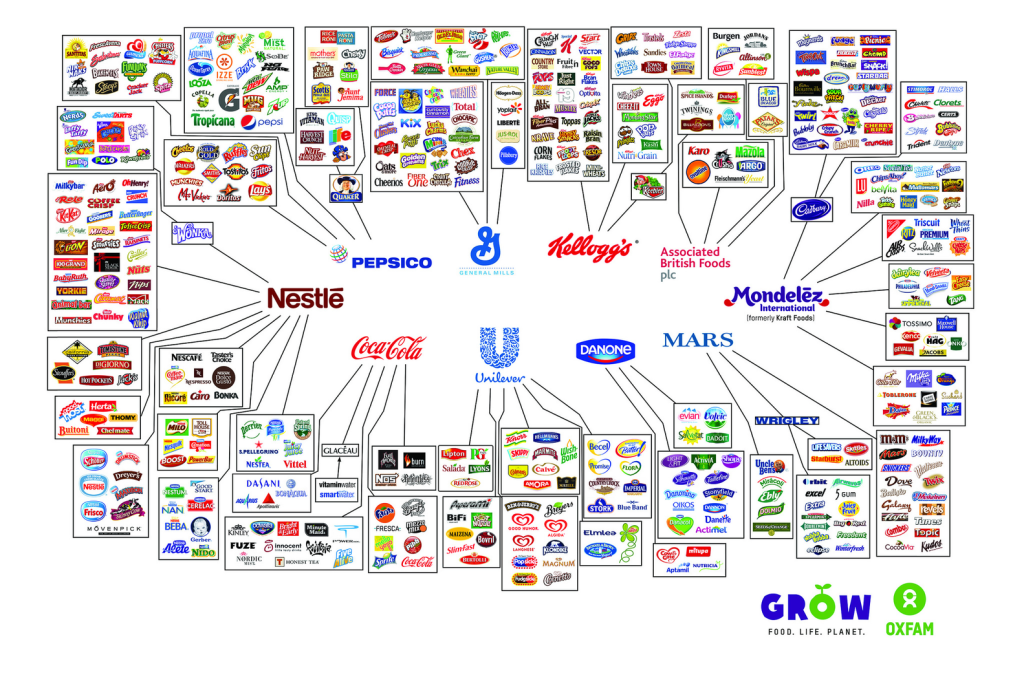
Most problematic of all is that most of us living in cities do not base our diet on foodstuffs gathered directly from the farm. Instead, we depend on processed food manufactured by corporations whose primary interest is to maximise profit, rather than public health. Nearly all processed foods currently sold in the market come from 10 giant food companies that dominate the market (Oxfam, 2014). Whatever “free choices” we think we are making when we are at our local supermarket, we are probably buying food from these ten firms. This is the result of our progress – the freedom to relegate our dietary needs to the hands of 10 companies.
The narrative of modernity as a ‘liberation’ from nature is delusive. We have not necessarily become free from the constraints of nature: far from it. As corporate-led intensive agriculture decimates our environment, we are slowly paying the price of our freedom to destroy the planet.
The Quest for a Solution
Then, if our freedom to eat is not sustainable, how can we history students contribute to finding a solution?
Luckily, there is an ongoing debate on possible alternatives to intensive agriculture (Swade, 2021). One side argues that we should save nature by removing humans from it, while intensively farming from only limited amounts of farmland. The other argues that we should farm by sharing land with our non-human neighbours.
Eco-modernism
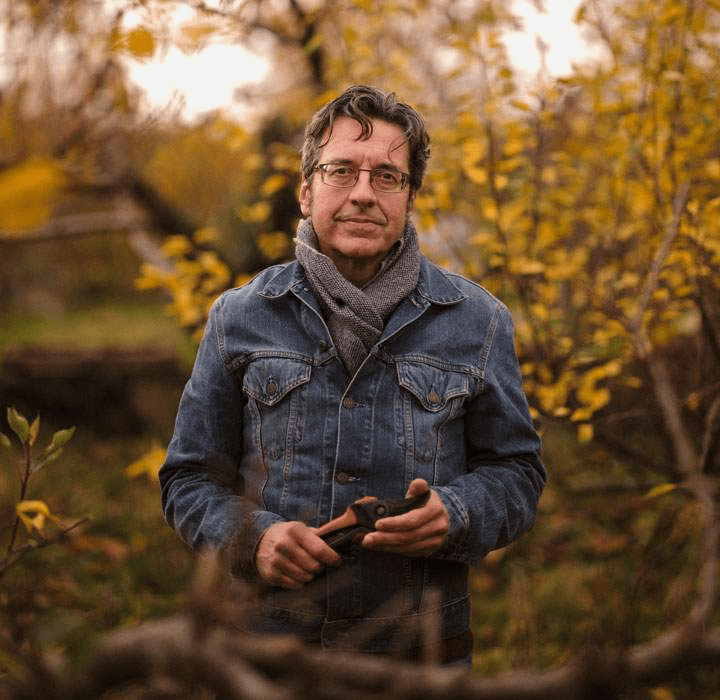
The former is the ‘Eco-modernist’ approach. Eco-modernism is the belief that modern technology holds the key to our environmental problems. In 2022, George Monbiot famously proclaimed his eco-modernism to declare that human agriculture is destroying the planet. As a solution, Monbiot proposes that we should only consume factory produced foodstuff, while returning 75% of our farmland back to nature. The remaining 25% would be used for intensive agriculture to feed humans.
George Monbiot (Guardian, 2022)
What does Monbiot’s eco-modernism mean for humans and their relationship with nature? Eco-modernism assumes that human agriculture is parasitic to the land, and the only way to protect nature is to rid humans of it. In essence, for Monbiot, humans are separate beings from nature.
Monbiot’s dichotomy between nature and humans echoes the logic of modern industrialists. Concretely, his solution to ‘preserve’ nature by ridding it of humans echoes the logic of late 19th century progressivists of the U.S.
Roosevelt at Yosemite (Sagamore Hill, 1903)
From the 1890s, progressive U.S. politicians advocated to ‘preserve’ nature in national parks (Roosevelt, 1908). This led to the establishment of five national parks in Theodore Roosevelt’s presidency. The purpose of this act, however, was not to ensure biodiversity or sustainability, but to ensure that the ‘American Spirit’ was preserved in nature while the U.S. could grow as an industrial power. Consequently, in Roosevelt’s period, the U.S. experienced the highest rates of urban industrial development and a severe degradation of nature. Ironically, ‘preserving’ nature justified the logic that humans could do anything outside of the fences of national parks.
Humans are, and always have been, part of the natural environment. Monbiot’s argument that humans need be kept separate to protect the ‘environment’ sounds good in theory. Yet, in practice, it gives a moral leeway for people to think that we can do anything with the ‘human’ parts of our land.
Regenerative Farming
The latter solution, ‘regenerative agriculture’, focuses on ‘sharing’ nature with our non-human neighbours. Regenerative agriculture rejects the use of chemical fertilisers, weed killers, and insecticides in favour of natural processes that do the same job, albeit on smaller scales (Langford, 2022). Isabella Tree aptly proposes that farming is only a by-product of a natural process, and the farmer’s role is to create conditions for nature to carry out this process at its best (2018). Ultimately, regenerative farming aims to produce food in a sustainable way that does not damage the ecosystem for human benefit.
Isabella Tree (IEMA, 2022)
Eco-modernists like Monbiot remain sceptical of regenerative agriculture, as it yields lower output than modern intensive farming. Still, it is not like we do not have enough food in the planet. Hauter shows that 30% of the food we produce goes to waste. Meanwhile, nations with the highest starvation and malnutrition rates are also the ones that export large amounts of food to the Global North (Hauter, 2014). The problem is not that we are not producing enough, but that we do not give it to those who need it the most.
How can historians help?
The uncritical faith in modern progress is, in this sense, misleading and dangerous. Modern progress did not promise the freedom to eat for all, nor did it ‘free’ humans from nature. The debate between eco-modernist and regenerative solutions shows us that people, even environmentalists like Monbiot who seek to improve the status quo left by modern development, still uncritically accept ‘modernity’ to a positive concept, when it assumes a strict divide between humans and nature.
This is where a historian’s perspective can be useful. History is a powerful discipline because it teaches us how to be critical of power structures that enable societal oppression. Histories of environmental injustices, indigenous land appropriation and violence can help us think critically about our food systems today. As historians, we must critically engage in these debates on the potential solutions to the food crisis, while dissuading people from the myth that modern growth is a process of gaining freedom from nature.
Only then will our freedom to eat become truly be sustainable.
Arendt, H. (1961). Between Past and Future. Penguin Classics
Berlin, I. ‘Two Concepts of Liberty’. lecture delivered at University of Oxford (31 October 1958).
Hauter, W. Foodopoly: The Battle Over the Future of Food and Farming in America (NY: New York, 2014)
Langford, S. (2022). ‘Peter and Charlie’ in For the Love of the Land : Stories of farming’s past, present and future, Viking. pp.19-59.
Leibniz, & Farrer, A. (1710). Theodicy: essays on the goodness of God, the freedom of man, and the origin of evil edited by Austin Farrer (1985); translated by E.M. Huggard from C.J. Gerhardt’s edition of the Collected philosophical works, 1875-90. Open Court.
George Monbiot (2022) Regenesis: Feeding the World without Devouring the Planet. Penguin Books Ltd.
Swade, K. (2021) “Shared Assets: inclusiveness, agroecology and municipal ownership in land use” Renewal 29 (3).
Image 1: Russell, R. (30 November 2022). ‘Egg shortages: What’s causing the problem and how long will it last?’ in BBC (accessed 10 January 2023 through https://www.bbc.co.uk/news/explainers-63778665)
Image 2: Snow removal in Hoengseong so that trucks may come in, taken by me (2018)
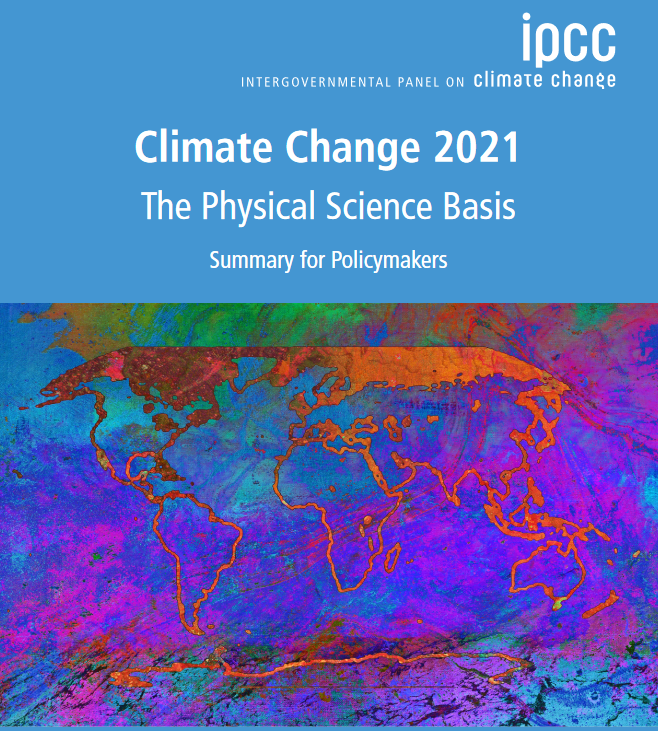
Time is running out. Temperatures have gotten hotter and sea levels higher. Scientists in the IPCC’s 6th Report have told us we have less than a decade to cross the 2°C point-of-no-return. Although we are keenly aware of ‘what’ we are supposed to battle, we seem to be completely lost on ‘how’ to bring about these changes that scientists remind us about. As we frown upon climate-change deniers while turning to science for objective solutions, we cannot help but ask: “Is there nothing we can do to help?” As non-specialists, are we meant to stand by and watch until the scientists come to save the day? In other words, what do history, politics, or ethics have to offer for the current climate crisis?
The history of environmentalism may offer an insight. From the early-twentieth century, conservationist movements started arguing against the devastating effects of human technology on nature. Thanks to this first wave of activists, the familiar narrative of human destruction of the natural environment became increasingly popular.
However, not all environmentalists were satisfied with this narrative. Aldo Leopold, a U.S. ecologist, was one of them. In his Land Ethic, Leopold argued that people were not thinking ‘ethically’ enough about the land.
Aldo Leopold:1887-1948
For Leopold, ‘ethics’ is a cooperative mechanism that limits individual freedom for the sake of existence in a community. Simply put, if we slapped any random person we met, we would be exercising unlimited freedom. However, such disruptive acts are seen as intolerable to peaceful coexistence. To prevent this, we place a moral high ground on the act of ‘not slapping others.’ This enables any institutional penalties that may follow actions that cross this rule. Ethics is the mechanism behind this process that curtails our freedom to slap anyone to maintain our community.
Here, Leopold asks: “Do we ever restrict our freedom when taking from the land?” As humans, we are not only members of the social community but also the biotic community. However, there was no concept of ‘ethics’ when people imagined their relationship with nature, unlike that with humans. Particularly, Leopold was discontent with how people only thought of the land in economic terms: an exploitable resource, not a base of human life.
This ‘unethical’ way of thinking did not only result in environmental destruction. It also complicated the solution by shaping the language conservationists used to argue their case. As activists at the time argued only for the “economic” benefits of conservation, the non-profitable parts of nature (deserts, marshlands, etc.) were often disregarded, even though the “profitable” parts depended on these “non-profitable” parts for ecological regeneration.
Once we think of ourselves as members, not conquerors, of the ecological community, it only makes sense to limit our power to exploit the environment as its most powerful member. (Just as we wouldn’t punch someone weaker than us on the street for economic gains.) For Leopold, the land was where ethics ended and where economics started.
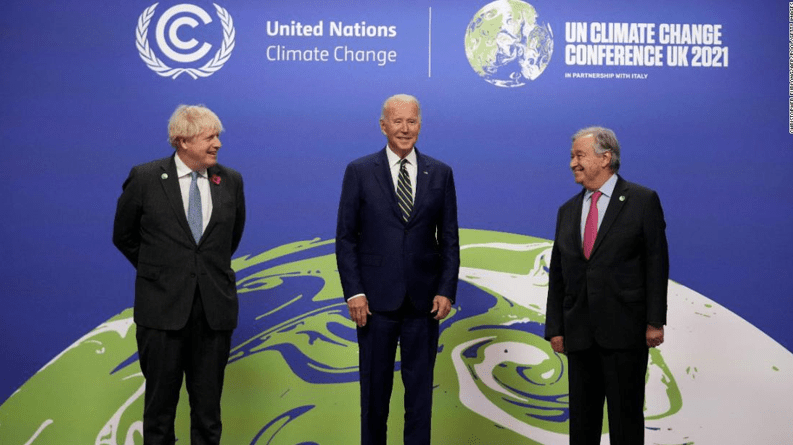
Then, is our perception of the current crisis any less problematic? Are we regarding the environment as we should? A look at the final pact of the Glasgow COP26 summit should tell us something about our current state.
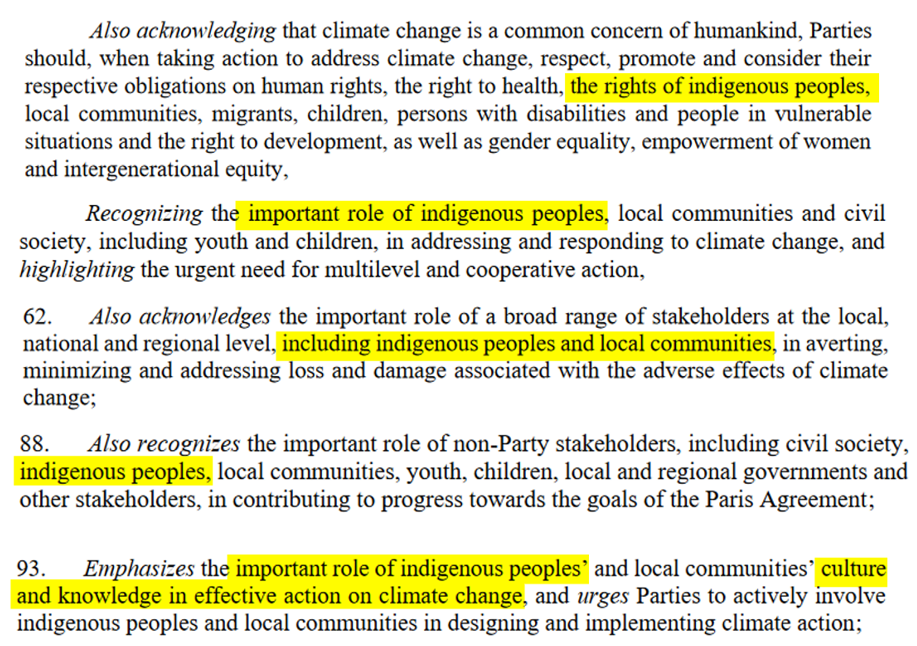
Articles mentioning ‘Indigenous peoples’
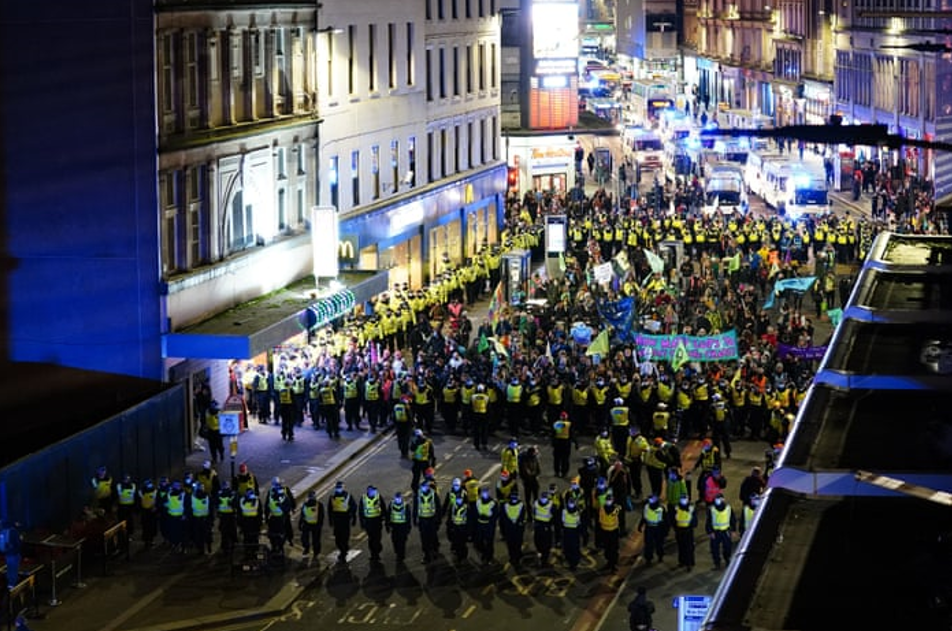
The COP26 summit addressed various issues, including the incorporation of indigenous people when consulting environmental issues. However, what is not mentioned is sometimes more important than what is. Nowhere do they mention who they mean by “indigenous peoples.” How they will consider the opinions of these people remains a mystery. Most absurdly, just outside of the gates of COP26 in Glasgow, a group of indigenous activists were protesting for representation. Ironically, COP26 was blocking out the exact people they promised to listen to.
The dictionary definition of indigenous is to “originate naturally from a particular land.” Under this definition, no race is indigenous to America: we all have migrated from Africa at some point in history. However, only people present in America before Columbus are considered “indigenous.” (We wouldn’t call a white person born in New York an “indigenous New Yorker.”) This implies how “indigenous” is a term coined from a European viewpoint that swipes numerous tribal nations under the carpet.
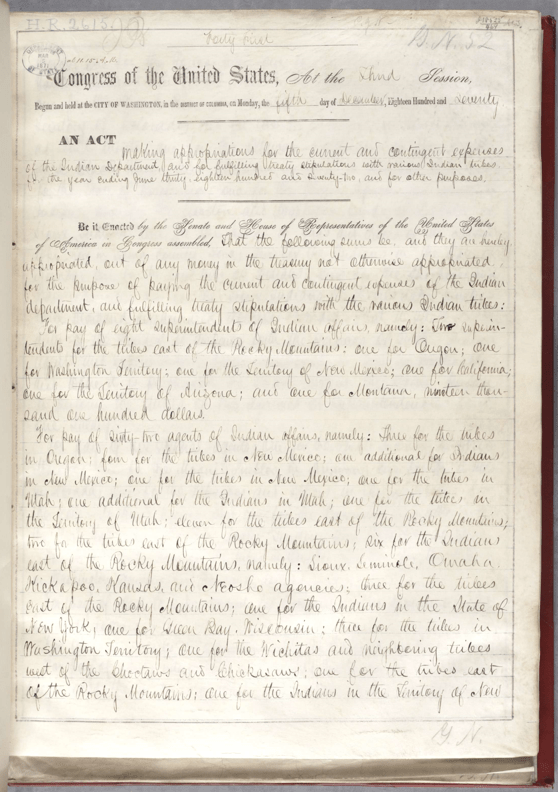
The biggest problem with this term is that, historically, “indigeneity” was used to oppress non-white people. In the nineteenth century, U.S. officials used the fact that these people maintained a lifestyle closer to nature to suggest that they were “backwards” and “primitive.” These racist assumptions were then used to appropriate their lands for U.S. benefit. Policies like the Indian Appropriations Act (1871) were justified on the basis that the “savages” of the tribal nations were not “civilised” enough to rationally use the land. The continuing tendency to view indigenous peoples as close to nature, yetnot consider their voices with political weight implies a significant problem in resolving the climate crisis.
We must think more politically when speaking of the environment. The history of environmentalism shows us that climate justice cannot be achieved by fighting within the conventional concepts made to separate nature from human life. As the conservationists of Leopold’s era were not thinking ethically enough about nature, the Glasgow Climate Pact shows us that we ourselves are not thinking politically enough about the human frameworks that underline the natural, scientific aspects of climate change. The failure of COP26 to represent grassroots protesters proves that we cannot rely on “experts” and heads-of-states to do this rethinking for us.
In this, history can be of useful service. History has the power to denaturalise. By looking at the history of how ideas like ‘ethics,’ ‘indigenous,’ or ‘environment’ were constructed, we can challenge traditional concepts that people often tend to assume as given. As the problem of climate change is always structural than individual, it is not enough to address environmental issues without tackling the political agendas that complicate its solution. We must continue to think beyond the categories we have grown accustomed to for so long. Time is of the essence.
Before we begin, what even is the “environment”? We often think of the environment as synonymous with the natural world of animals, plants, and landscapes, where human civilisation hasn’t had its reach yet. A quick search on Google image reveals pictures of green, sublime images of the natural landscape. The dictionary definition of the environment is “the circumstances, objects, or conditions by which one is surrounded.” But such definitions seem a little absurd. Though we colloquially consider forests, mountains, rivers, and the biomes that inhabit it as part of the ‘natural environment,’ the border between what is natural and what is not becomes less clear-cut when we come closer to our own spheres of life. For instance, the pet dogs, domesticated cats, the eggs in the grocery store, roadside trees in the middle of the city… these are all, by right, part of ‘nature,’ yet we rarely think of them as part of the environment compared to their wild counterparts.
There is, however, one consistency in all these vague definitions of the environment:
that our different depictions of the ‘environment’ are all devoid of humans, and
that the closer natural organisms are to humans, they are considered ‘social’ rather that ‘environmental’ (for instance, leaves on a forest are considered to be part of the environment, whereas the parsley on my pasta for lunch today is not)
Google image search on ‘Environment’ – Where are all the humans?
Rather than having a stable definition in itself, we seem to think of the environment in terms of what it is not. In essence, we seem to think of the environment as anything not human.
In today’s blog post, I wish to complicate this dichotomy a bit further. Studying the history of ideas (or ‘intellectual history’ as academics call it) tells us that there is a history to every abstract category. By looking at how categories such as gender, race, class, or ethnicity have been constructed by the ideas that people attribute to them, we can see how the categories we use colloquially today are not natural but artificial and human-made.
But what about the ‘environment’? Some might consider it heretical to even question this categorisation. After all, the (natural) environment should be a pretty natural one, shouldn’t it? Even in the light of the current climate crisis and the wave of environmentalist movement following it, many would probably object to the act of trying to bring in any ‘human’ elements to the untouched, sublime environment. Still, since when did we start thinking of the environment as something separate from humans? Do we necessarily think about our surroundings the same way that people in medieval Europe did? Since when did we start distinguishing ourselves from our plant and animal counterparts to think of ourselves as part of a greater, super-human “society”? In other words, what is the history of the ‘environment’ as an idea?
Constructing the ‘Wilderness’ – The Case of North America
History reveals that there is nothing ‘natural’ about the environment. Our definition of the environment as something separate from human society is, as it turns out, an extremely Western one. Looking at the history of non-European lands, of non-White oppressed races and nations, we see that the environmental space was constructed with concretely political aims.
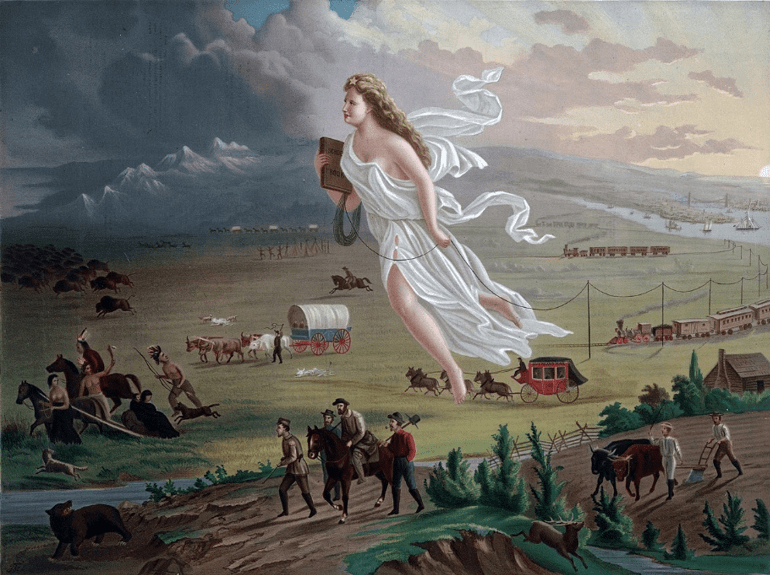
John Gast’s American Progress (1872) embodies the narrative of ‘Manifest Destiny’ as a destined expansion of U.S. civilisation upon the American wilderness.
The history of U.S. expansion in North America is a representative example of one such environmental space was constructed. From the 19th century onwards, the ‘wilderness’ beyond the U.S. Western border was seen as a sublime land untouched by human civilisation. As religious ideals of ‘God within nature’ grew stronger in transcendentalist movements of the 19th century, the North American wilderness became a glorified project for U.S. expansionist politicians. At the heart of this conceptualisation was the idea of an environmental space of the American ‘wilderness’ – a land thought to be untouched, untainted, and thus had yet to be developed by U.S. civilisation.
The problem of ‘wilderness’ is that the lands west of the U.S. were not untouched at all. In reality, the Western part of North America was densely populated by sophisticated societies of non-white tribes and rural farmers. Still, conquering an untouched ‘wilderness’ was easier than acquiring control over a land densely populated by diverse local peoples. As the wilderness was thought to be separate from human society, people in the U.S. did not oblige U.S. expansionist politics regarding the area as a matter of politics. Thus, depicting the western lands as an untouched wilderness enabled a depoliticization of a process that was, in fact, highly political and oppressive.
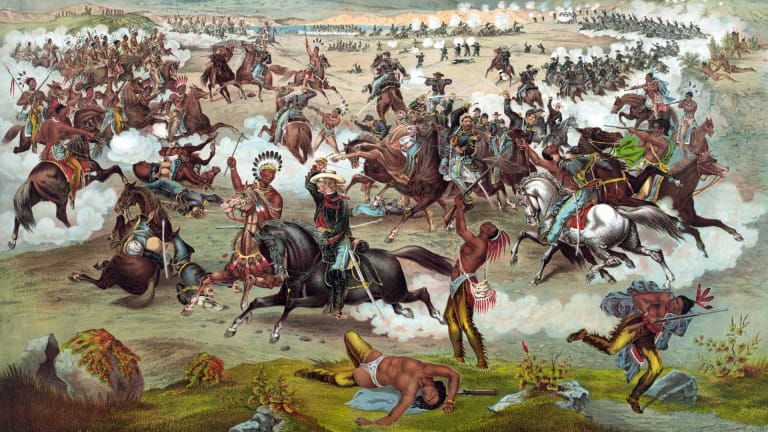
Brief footage of European “discoverers” conquering the American “environment.” (The Battle of Little Bighorn/credit: Buyenlarge/Getty Images)
Claiming an untouched ‘environment’ was easier than claiming a land densely populated by local non-white populations.
The history of ‘indigenous’ land appropriation shows how this ‘environment’ was not natural but in fact had very political repercussions (be mindful that the term ‘indigenous’ is an umbrella term that imposes a Western viewpoint that masks the variety of local tribal nations in the Americas). In 1871, the Indian Appropriations Act declared that ‘no Indian nation or tribe within the United States shall be acknowledged or recognized as an independent nation.’ The 1871 act mandated the forced relocation of these tribes to Indian reserves where they would be segregated and culturally ‘preserved’ from the influence of U.S. civilisation. In the solidification of U.S. nationhood, the existence of ‘savage’ tribal peoples in a ‘civilised’ nation like the U.S. was unacceptable. The frontier between the environmental ‘wilderness’ and society was actually one between diverse local non-whites and the U.S. empire.
Why we should think intersectionally when thinking about the environment
Therefore, environmental history is just about the ‘environment’ per se. The very definition of ‘environment’ (the surroundings in which an actor lives or operates) assumes that there is another subject that is central to its characterisation. Ignoring this component of environmental history by treating it as a discipline that only records facts about nature, biomes, and climates degrades the potential that history holds in an age such as ours. In essence, excluding humans from environmental history dehumanises and, consequently, depoliticises the discipline.
The current climate crisis is a distinctly human-made one and solving the crisis will require distinctly human approaches to the historical and political issues that complicate its solution. We cannot just wait for scientists to save the day. History has revealed that certain individuals or groups hold more responsibility than others in this crisis; ironically, those groups are also the ones that hold more power to bring about change for the better. Environmentalism and the struggle for environmental justice can only be sustainable when people of all races, ethnicities, genders, sexualities, classes, and nationalities have an equal voice in the solution. This is why we must think historically when thinking about the environment.
In 2003, Charles Clarke, the Secretary of Education of the UK, dismissed medieval historians as “ornamental” as he stressed the supposed needlessness of public funding towards the humanities. Although Clarke’s dismissal of medieval history is by no means an accurate survey of the public opinion towards the profession, it does reflect a widespread public sentiment – a sentiment that history is remote and inaccessible for present society. This sentiment is founded upon derogations of history to a no-longer-needed past and the idea that the historian’s role is to simply gather historical facts with little purpose for the present. Of course, anyone involved in producing historical research in academia or well versed in the latest historical writing will know this is certainly not the case. History, even the supposedly “ornamental” periods of ancient and medieval history, inadvertently affects people in the present and is even a matter of life or death to people in several regions where history has been politicised. Historians constantly argue and debate over the different meanings and implications of historical events and documents, rather than staying content with merely “discovering” facts for the sake of discovering them. These claims of history’s supposed “uselessness” are usually made by those outside the discipline, and thus are based on popular perceptions of history gained from a few works of public history in popular media rather than an accurate examination of academic history writing.
New Temporalities: Blurring the Environmental and the Political in a Planetary Age
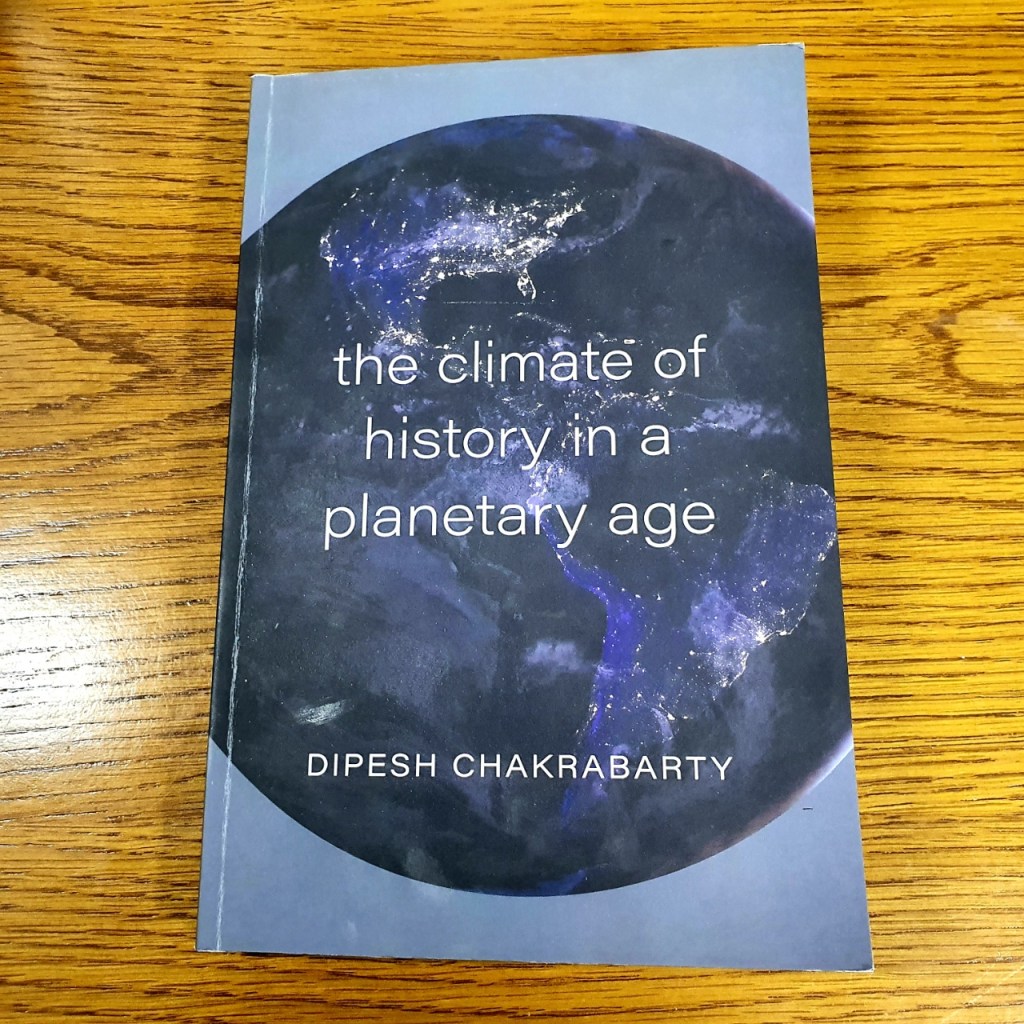
This post is a book review of Dipesh Chakrabarty’s “The Climate of History in a Planetary Age” (2021), with my own opinions on how historians should practice history in a planetary age.
Despite its obvious Eurocentric and parochial shortcomings, the ‘Anthropocene’ is a representative attempt to address the issue of human-induced climate change through history. In his book, The Climate of History in a Planetary Age, Dipesh Chakrabarty proposes that we have entered a new era of writing history as the geological conception of time has converged with the political. According to his thesis, the Anthropocene – the geological definition of our current climactic epoch of humans as geological actors – has coincided with the human-defined periodization of time of ‘modernity’ as the present. As our ability to act as geological agents in the Anthropocene is inseparable from our building of modern political regimes and globalisation, it only makes sense that the geological time of the Anthropocene is also the ‘now time’ of politics and history.
Chakrabarty, Dipesh. The Climate of History in a Planetary Age, 2021.
Such a concept of Anthropocenic ‘temporality’ also reveals the inadequacy of politics under the old definition of ‘time’ to resolve the problem of planetary climate change. The international institutions such as the United Nations made in the twentieth century to combat ‘global’ issues of politics that assume open and indefinite calendars have not at all been designed to deal with planetary climate change which has a finite and definite calendar. Hence, Chakrabarty argues that the convergence of the geological and political ‘present’ requires a reconciliation of the old political concepts that considered politics to be distinctly separate from the environment. Chakrabarty’s book thus promotes a need for thinking beyond the ‘global’ – a human-centric construct – towards a ‘planetary’ in the Anthropocene, a geological time in which historians must begin to think of new ways of writing history.
The Politics of the Environment as a Human Construct
There is nothing ‘natural’ about the environment. The environment is quite an artificial human construct, designed for discrete political purposes. One only has to read works such as William Cronon’s ‘The Trouble with Wilderness’ or Richard Grove’s Green Imperialism to discover that the myth of an untouched natural environmental space as dichotomous to human civilisation was created in the process of exerting European colonial dominion. These ‘untouched’ lands (for instance, the ‘wilderness’ beyond the Western U.S. frontier or the ‘tropical’ environment in Latin America) were, in fact, densely populated by local non-white peoples. However, claiming an ‘untouched wilderness’ was morally more justifiable and convenient than claims upon complex systems of local governance. Thus, the ‘environment’ was used with a distinctly political purpose to depoliticise the imperial subjugation of non-Western civilisations to European empires. The project of Western imperialism necessitated the conceptualisation of an ‘environmental’ space as strictly separate and dichotomous from the ‘social’– a dichotomy whose legacy continues to this day as politicians so easily shrug off the burden of environmental concerns for consumers and individual citizens, while remaining nonchalant about changing their attitudes towards ‘political’ matters of industrial production that lie at the core of our planet’s problems today.
Claiming an untouched ‘environment’ was easier than claiming a land densely populated by local non-white populations. / ‘The Trail of Tears’ (Wikimedia CC)
Rethinking Our Old Conceptions of the ‘Political’
With this in mind, it is not enough for historians to simply do ‘environmental’ history in the wake of the climate crisis. Primarily, thinking of environmental history as a distinct sub-discipline will achieve the exact opposite of what environmental history should and is able to do. By framing the newly-emerging modes of environmental history and the Anthropocene into specialised fields (such as an ‘M.A. or Ph.D. Environmental History’ course), we unequivocally limit the power that environmental thinking promises for history. This is especially the case as the ‘environment’ is so omnipresent in our conceptualisation of every matter that constitutes any historian’s subject of interest. For instance, politics and economics are fundamentally related to questions of how to effectively make out of the land. Race, often expressed through racially-essentialist ideas such as ‘indigeneity,’ took part in the process of ascribing ownership to whoever belongs to that land. Gender was conceptualised from a discourse on who should and could most effectively make out of the land (often through crude definitions of ‘femininity’ and ‘masculinity’) and the power relations that stem from that discourse. Empire was a project of designing a system that could make out of the lands beyond European civilisation for colonial benefit. Hence, we are all inevitably environmentalists in that we are all inseparable from our relationships with the land and our surrounding environment.
Not surprisingly, outspoken ‘environmental’ works of history have often confined themselves to the conventional definition of the environment as a natural space ‘out there.’ Many works of ‘environmental history’ until the 1990s have limited themselves to merely recording histories about human destructions of the natural environment, without critically examining what the categorisation that framed their discipline as ‘environmental’ exactly was. Hence, a distinct sub-discipline of ‘environmental history’ is not something that historians must identify themselves with when thinking about the environment. Ultimately, according to Chakrabarty’s definition of the ‘planetary,’ historians must free themselves from the sub-disciplinary divide of the post-Enlightenment drive of university institutions to examine the environmental underpinnings that nature and science hold for the politics of human affairs.
The Point of History in a Planetary Age
The need to rethink our old conceptions of ‘political’ matters as being exclusively human and discretely separate from the ‘objective,’ ‘value neutral’ spheres of science and the environment is ever more prescient. International institutions designed based on an indefinite conception of time – or a human-centric ‘global’ in the place of a ‘planetary,’ as Chakrabarty puts it – that put excessive faith in humanistic values are not sufficient tools to equip ourselves in the struggle for a sustainable and intersectional climate justice. In this, historians can be at useful service. History has the power to denaturalise. Our discipline does not work with a fixed set of rules of what historians are meant to do; history has the power to question, deconstruct, and ultimately change the concepts that people so often tend to assume as given. Inevitably, all history is the history of the present. Amid a planetary emergency like ours, we as historians must continue to think outside of the Eurocentric, human-centric categories we have inhabited for so long to adapt our ways of political thinking to a ‘planetary’ age of climate change. Time is of the essence.
This eleventh of October marked the 29th anniversary of the Indigenous Peoples’ Day since the City Council of Berkeley renamed the day from its original form ‘Columbus Day’ in 1992. The day, established to restore agency to the people indigenous to the Americas marginalised in the colonialist rhetoric of ‘Columbus Day,’ received particular interest this year as U.S. president Joe Biden formally signed a presidential proclamation Indigenous Peoples’ Day to become a national holiday, becoming the first-ever president to recognise Indigenous Peoples’ Day. Though the need for the incorporation of indigenous peoples into the historical narrative should be a pretty straightforward one even without approval from a white president, the long-overdue recognition does imply a pressing need to contemplate the perceptions we have unquestioningly held about the past and their Eurocentricity. In the light of such events in October, in this month’s article, I will introduce a brief history of how discourses around the environment and environmentalism have put a white ‘Europe’ at its centre, marginalising the voices of BIPOC (Black, Indigenous, and People of Colour) communities.
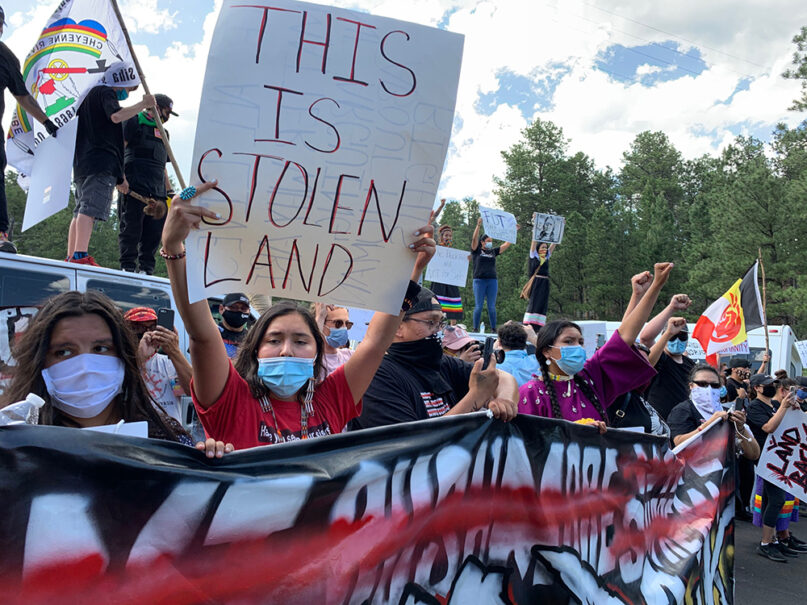
“This is Stolen Land” – Protesters and supporters gather at the Black Hills, now the site of Mount Rushmore, on July 3, 2020, in Keystone, South Dakota. (Photo by Micah Garen/Getty Images)
How non-white communities were more vulnerable to the effects of western environmental degradation
Environmentalism has existed before we found the language to express it from a European viewpoint. Though we often associate the incorporation of environmental factors in building our social spheres of life as a modern concept, the history of non-European environmental thought predates the invention of European ‘science’ modern environmentalism. Moreover, the dichotomous way of categorising nature as an external ‘environment’ as opposed to a ‘social’ sphere of human life is a European way of conceiving the structures around us. As those privileged enough to have their stories heard were often white activists, the ideas and accounts for environmental justice of BIPOC communities were often ignored and silenced.
This Eurocentric way of thinking about the environment is problematic as it precisely leaves out the very people who are most severely impacted by climate change and environmental degradation from the environmental discourse. As history unfolded into the 19th century and European empires went through mass industrialisation, the benefits of capitalist developments were exclusively reserved for WASP (White Anglo-Saxon Protestant) men, whereas non-white communities often had to deal with the consequences of industrialisation through the destruction of the environment. For instance, in the United States, cities were ‘colour-coded’ in order to regulate the kinds of housing you could purchase based on the colour of your skin. Even as the U.S. federal government created the Federal Housing Administration to provide loans so that the average person could own a home, ‘green’ coded homes that were of the highest value were all-white neighbourhoods, whereas districts that were coded ‘red’ were preserved exclusively for either integrated or all-black communities in the working-class. These red coded homes would be located where unregulated industrial production and waste emission affected life standards most severely (Melin Oliver, 2020).
Environmental degradation frequently threatened the lives of non-white workers in the agricultural sector as well. as Mexican workers deployed in the U.S. under the Bracero program were sprayed with DDT (Dichlorodiphenyltrichloroethane, a chemical compound used as insecticide famously introduced in Rachel Carson’s Silent Spring for its hazardous effects on the environment and human health) before they were sent to their contractors. Even today, dump fields and industrial sewages are located in places populated predominantly by Black and Brown communities who were chosen, in the words of a North Carolinian environmental protester Almena Myles, ‘because we were rural and poor and they thought we couldn’t fight’ (Bergman, BBC, 2019). Ironically, Black, Hispanic, Indigenous, and Asian migrant communities were being exploited to accelerate environmental destruction, from which they themselves would suffer the consequences. The glorious narrative of ‘progress’ and ‘rationality’ we often associate with capitalist development often erase and silence the histories of these people, upon whose labour and sacrifice of living conditions Western industrial development fundamentally relied.
Why we should think intersectionally when thinking about the environment
The importance of thinking about intersectional histories of the environment and climate change comes from the fact that the obstacle to solving the climate crisis is a man-made one rather than a scientific one, in which certain individuals hold more responsibility than others. Merely directing the majority of the solutions to climate change to individualistic consumerism-based lifestyle reforms cannot address the bigger structural forces responsible for creating the climate crisis, while alienating people who are not affluent or privileged enough to maintain a consumerist “sustainable” lifestyle. Apocalyptic prognoses not based on sufficient scientific evidence that ‘we’re all doomed to die no matter what we do’ are bigoted and unhelpful, as such statements disregard the fact that climate change will first impact the peoples and societies least responsible for it. Environmentalism and the struggle for environmental justice can only be sustainable when people of all races, ethnicities, genders, sexualities, classes, and nationalities have an equal voice in the solution. Such inclusivity can only be achieved by considering the environmental history and the intersectional history of environmental thought, and this is where we as historians, not scientists, can contribute to the struggle for environmental justice.











































 The Green Ideology
