Why We Must Decolonise the Environment

My piece entitled ‘Why We Must Decolonise the Environment’ for Project Myopia is out now!

Project Myopia is a decolonising project dedicated to diversifying university curricula and transforming teaching practices. It is a platform for works created by women, non-binary people, differently-abled people and people of colour – as well as radical approaches to teaching and learning and is currently funded by the London Arts and Humanities Partnership (LAHP).
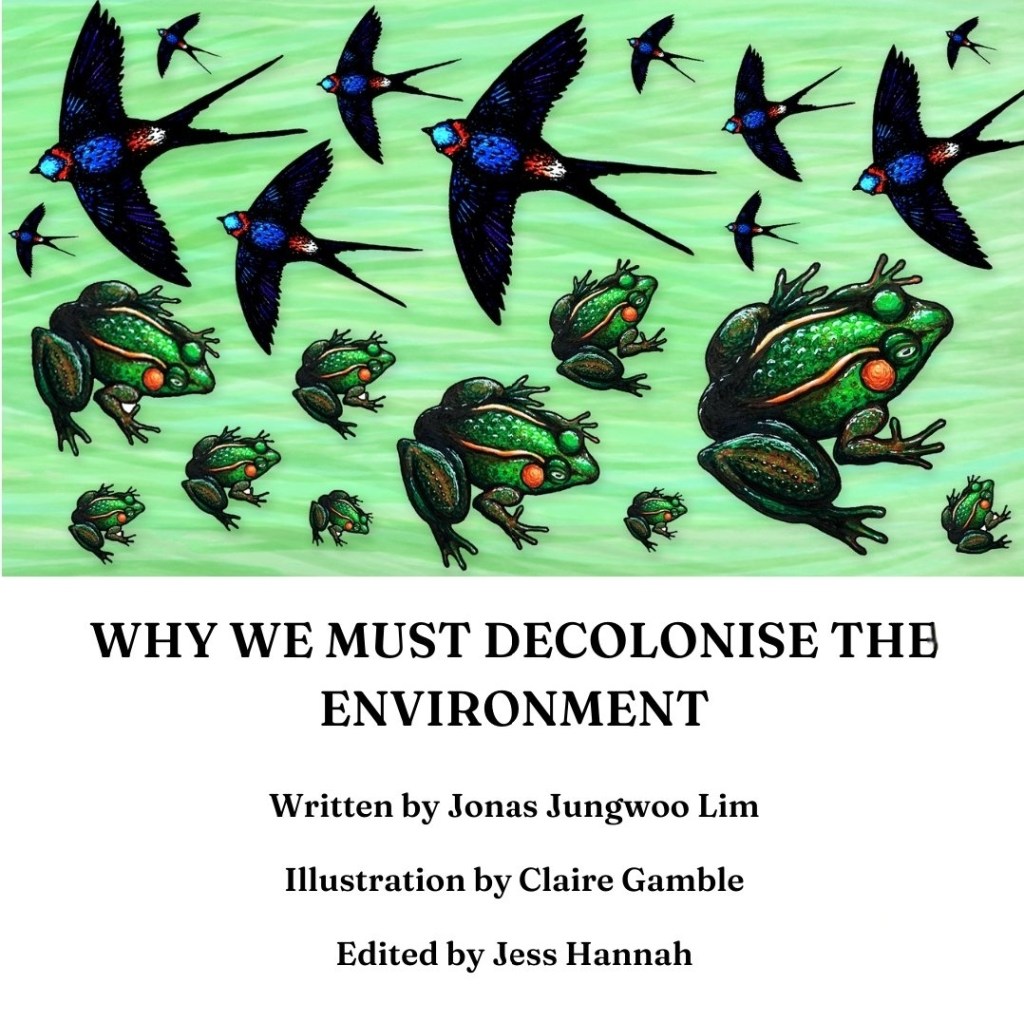
‘Why We Must Decolonise the Environment’ is a semi-academic publication that focuses on the oppressive politics of the environment, bringing personal recollections from my experience in the DMZ. To quote my favourite line(s) in this piece:

“To bring things back to my hometown experience, the reason why nature flourished in the DMZ was not because it was devoid of humans, but because humans had fostered the conditions necessary for natural ecosystems to regrow, albeit unintentionally. In other words, humans are not intruders or conquerors of nature. They are one of many members belonging to the ecological community who must strive to sustain it.

As some voices still mistakenly suggest that humankind as a whole is a species ‘parasitic’ on the Earth and its resources, historians can contribute by interrogating and specifying precisely who had and still has the power to define and shape the environment.

To read the full article, visit: https://projectmyopia.com/why-we-must-decolonise-the-environment/

Has History Become Irrelevant?

History is under scrutiny.

In 2003, Charles Clarke, the Secretary of Education of the UK, dismissed medieval historians as “ornamental” as he stressed the supposed needlessness of public funding towards the humanities. Although Clarke’s dismissal of medieval history is by no means an accurate survey of the public opinion towards the profession, it does reflect a widespread public sentiment – a sentiment that history is remote and inaccessible for present society. This sentiment is founded upon derogations of history to a no-longer-needed past and the idea that the historian’s role is to simply gather historical facts with little purpose for the present. Of course, anyone involved in producing historical research in academia or well versed in the latest historical writing will know this is certainly not the case. History, even the supposedly “ornamental” periods of ancient and medieval history, inadvertently affects people in the present and is even a matter of life or death to people in several regions where history has been politicised. Historians constantly argue and debate over the different meanings and implications of historical events and documents, rather than staying content with merely “discovering” facts for the sake of discovering them. These claims of history’s supposed “uselessness” are usually made by those outside the discipline, and thus are based on popular perceptions of history gained from a few works of public history in popular media rather than an accurate examination of academic history writing.

Is history just the study of the past, then?

To read more, check out my article Has History Become Irrelevant?: Different Meanings of the Past in Academic History, Public
History, and Heritage