Inside the Herbarium at Changgyeong Palace, South Korea
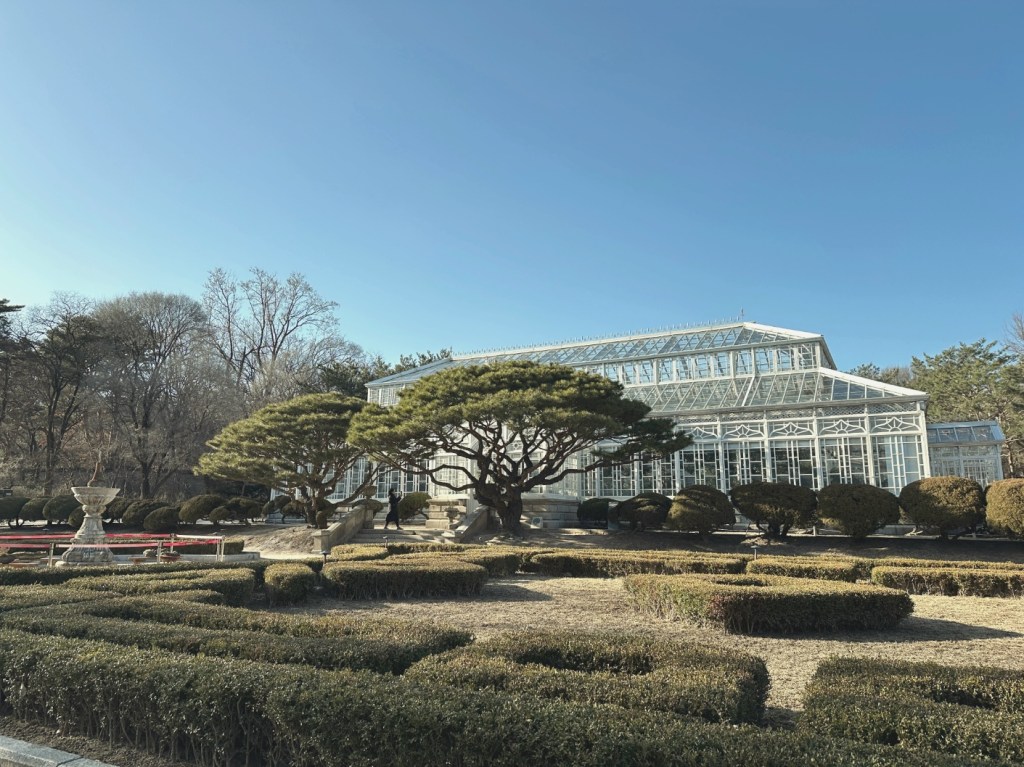
The Herbarium (Dae On Sil) at a distance
Along the courtyards of Changgyeong Palace (창경궁, one of the five royal palaces of South Korea), an oddly modern anomaly stands out from its early modern background. The herbarium, named the ‘Dae On Sil’ (대온실, which literally translates to ‘Great Greenhouse’), is a relic that contains a history of Japanese colonialism that signalled the end of Korea’s Kingdom.
Changgyeong Palace, 2024
In 1909, the Japanese Imperial government installed this herbarium along with a zoo inside Changgyeong Palace. This was a highly nuanced move made as an attempt to erase the identity of the Korean monarchy. By 1909, the last Korean King was confined to the palace, deprived of any political sovereignty through a series of coerced treatises. The Dae On Sil and the Imperial Zoo were to serve as ‘entertainments’ for the dispossessed King while serving as a symbol of Japanese occupation in the heart of one of the 500-year-old dynasty’s Royal Palaces.
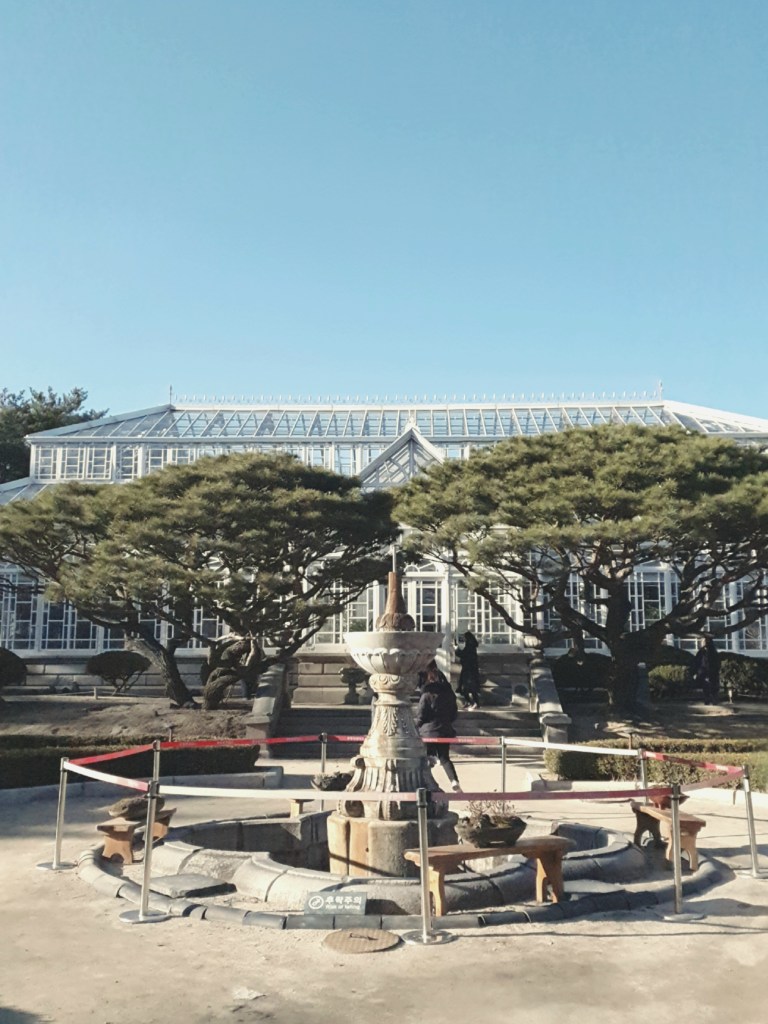
The Entrance to the Dae On Sil
Initially, the herbarium was a collection of tropical plants and specimens from the Southeast Asian regions of the Japanese Empire. Many British visitors familiar with the structure of the Palm House in Kew’s Royal Botanic Gardens, or even the Crystal Palace during the Great Exhibition of the 1850s, would notice the resemblance between it and the Dae On Sil.
Gardens are nature cultivated by humans, presented in the form humans consider the most ‘ideal’ state of nature.
For more on gardens and natural thought, read Emma Spary’s Utopia’s Garden: French Natural History from Old Regime to Revolution (Cambridge, 2000).
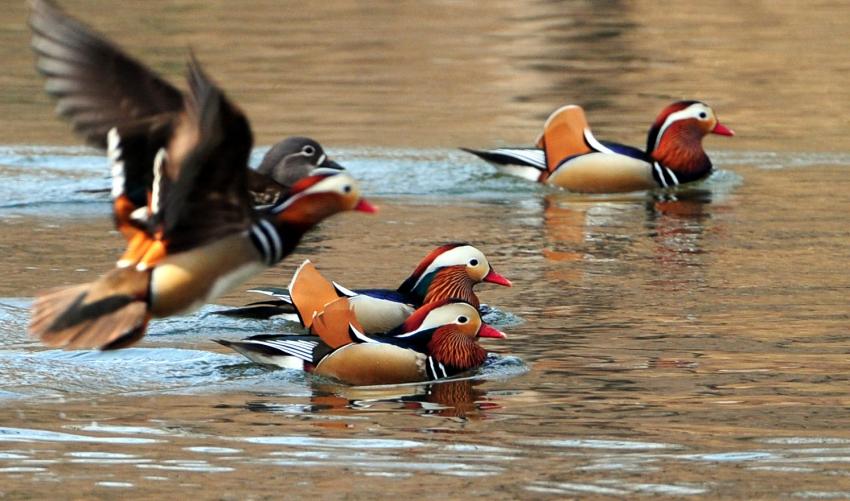
Mandarin Duck in Changgyeong Palace (Khan, 2012)
It is interesting to see how nature is assembled in the Dae On Sil in comparison to its surroundings. Gardens are nature cultivated by humans, presented in the form humans consider the most ‘ideal’ state of nature. In most parts of the palace, nature is melded with the architecture of the buildings in a way that provides a sort of symbiosis. Shades from the tall pines and the pond in the middle of the palace provide adequate cooling for the palace’s inhabitants during the summer. Meanwhile, endangered animals find refuge within the palace’s greenery, such as the Mandarin Duck that now resides in the palace pond all year-long (Khan, 2012).
Strelitzia reginae in the Dae On Sil (Native to South Africa)
On the other hand, nature presented in the Dae On Sil is somewhat the opposite. Nature is contained and considered as something to be preserved by means of separation from human life. The stark architectural contrast between the Dae On Sil and the rest of the palace suggests that the Japanese Empire was imposing something more than simply just a herbarium through the Dae On Sil: a fundamentally different way of viewing man’s relationship with nature. Quite fittingly, the Japanese Empire enacted policies that deforested much of Korea’s forestry and drove many native large mammals (including the Siberian Tigers, the Amur Leopards, and the Sea Lions) to extinction. To read more about Korea’s industrialisation and deforestation under Japanese Imperial control, look at Conrad Totman’s Pre-Industrial Korea and Japan in Environmental Perspective (2004).
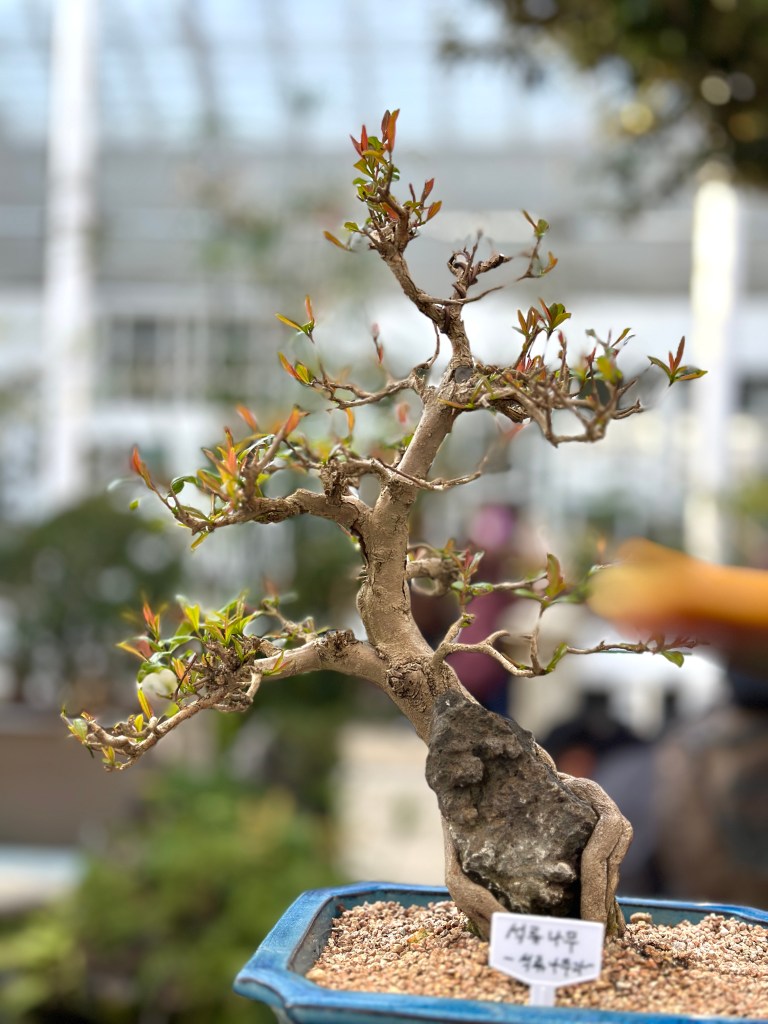
The Pomegranate tree (Punica granatum)
The Dae On Sil today retains little to nothing of what it did in the colonial era. The herbarium has been rebranded to house various endangered plant specimens native to the Korean peninsula. The greenhouse that once symbolized the demise of a country’s monarchy now holds many of the nation’s most treasured specimens for precious scientific research.
As historians, we are familiar with the narrative of modern progress. Throughout our undergraduate studies, we are taught about the liberties enabled by modern development: the freedom to speak, to commerce, and to eat. According to this narrative, the colourful array of goods we see in a supermarket is a glorious product of modernity.
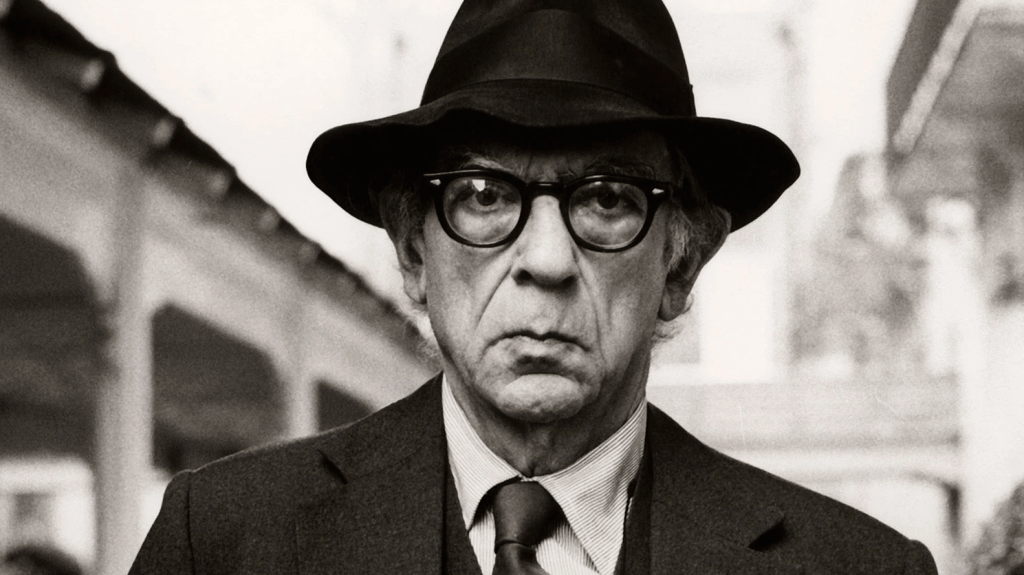
However, at what cost? As historians, we know freedom always comes with a cost and, consequently, a responsibility. Isaiah Berlin distinguishes these two sides of freedom as positive liberty and negative liberty (1958). To put it succinctly, positive liberty is the ‘freedom to’ control one’s actions, while negative freedom is the ‘freedom from’ the control of others. While we always focus on our’ freedom to’ when discussing modern progress, we rarely talk about our’ freedom from’.
Isaiah Berlin (Financial Times, 2015)
What did we lose in exchange for our freedom to eat? What exactly have modern humans gained our freedom from?
It is from nature that modern humans have gained our freedom to eat. Hannah Arendt described modern history as a story of humanity gaining an ‘increasing mastery over nature’ (1961). Our modern freedom to eat is also the freedom from the constraints of nature. As we no longer plough our own fields to eat, we imagine that modern progress has liberated us from nature.
Egg shortages (BBC, 2022)
However, recent events have made us question this narrative. Amid a cost-of-living crisis and a nation-wide shortage of eggs, we find it harder to believe that modern progress led us to ‘the best of all possible worlds’ (Leibniz, 1710). Can we be assured that modern progress will take care of our dietary needs? In other words, how sustainable is our freedom to eat?
Are we eating in the best of all possible worlds?
I spent my pre-adult years in a place classified as a ‘food desert.’ A food desert is a region too distant from food supply chains that it is impossible to buy anything but ultra-processed food. Living in a school in the mountainous regions of Korea, my schoolmates and I would walk over an hour to visit the nearest supermarket, a highway rest stop in the middle of nowhere. Our only regular food source was the truck that brought food to be served in the cafeteria. On days with severe snowfall, there would be none.
Snow removal in Hoengseong so that trucks may come in (2018)
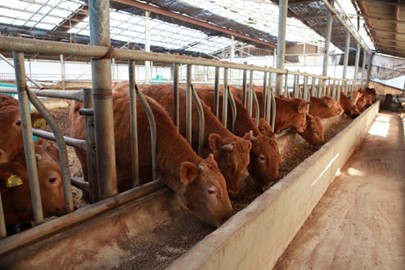
It was not that my region was an absolute ‘desert.’ The surrounding mountains were full of greenery. And strangely enough, our region was the nation’s foremost producer of cows. An hour’s walk away from my school was a cow factory or, what experts call, an ‘intensive livestock farm.’
Cow factory (Hoengseong News, 2020)
In it would be cows packed into confined spaces. Walking to the highway rest-area, we saw cows assembled like products at a factory line. However, the beef served on our platters every dinner would be Australian. Why? Because it was simply cheaper.
But something didn’t add up. Why were we fed factory-produced Australian beef from across oceans when there was a cow farm in our region?
Beef in Korean society has a curious politics intertwined with a history of nationalism and, to a lesser extent, anti-imperialism. When news of the zoonotic disease Bovine Spongiform Encephalopathy, more commonly known as the Mad Cow Disease (MCD) hit the beef industry in the early 2000’s, Koreans were quick to respond to the import of American beef with hostility, reading it as a sign of U.S. imperialism (Choe, 2008).
Protests against the import of US beef in Seoul (KyungHyang, 2008)
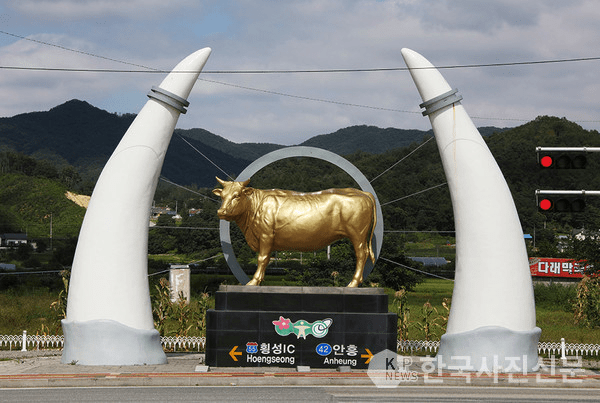
Although the uproar against anti-U.S. imperialism gradually faded away during the 2010’s, nationalist sentiments about the superiority of Korean agriculture over others remained. Responding to such sentiments, my region Hoengseong quickly branded its beef as gourmet and, more importantly, ‘Hanwoo’, meaning ‘Korean beef’ (See image on left-hand side). Since then, my region has maintained its reputation as the nation’s supplier of high-quality beef from its free-range pastures. The cow factories that I witnessed were thus a rather recent installation. As rural pastures were gradually reforested since the 1990’s, cows were moved into intensive livestock farms. Although no longer entirely free-range, the beef’s prestige as the Korean beef remained. As the ‘gourmet’ Hanwoo was exported to the cities for high-end consumption, it was only affordable for our school to feed us processed meat from overseas exports.
Cow statue at the entrance to Hoengseong (KP News, 2020)
Hence, modern progress had not freed me from nature. Although surrounded by forests, we had no choice but to relegate our diets to the hands of corporations. To think that the result of all that progress was only the freedom to be fed factory-produced processed meat from depressed cows in a food desert was underwhelming, if not disheartening.
Did modern progress make our diet freer?
Modern agricultural progress did not exactly make us ’freer.’ Intensive agriculture has decreased food diversity by 75% in the last century (Hauter, 2014). Intensive agriculture, the most widely practised form of agriculture today, is the practice of farming to maximise the production of agricultural goods. Chemical fertilisers, soil depletion, and zoonotic diseases usually accompany this practice.
So, what’s the problem? We may have less freedom than we think, but that doesn’t mean you would want to exchange your liberty to make a late-night Tesco run with the burden of having to farm your own food, right?
Well, the trade-offs are harsher than that. Intensive agriculture is not only harmful to livestock but for the resilience of our food supply. Currently, only twelve crops supply 80% of the global plant-based dietary energy (Hauter, 2014). What happens to our food supply if, for instance, a disease wipes out even one of these crops? The abundance enabled by intensive agriculture may look liberating, but, in reality, we are paying the price in other ways.
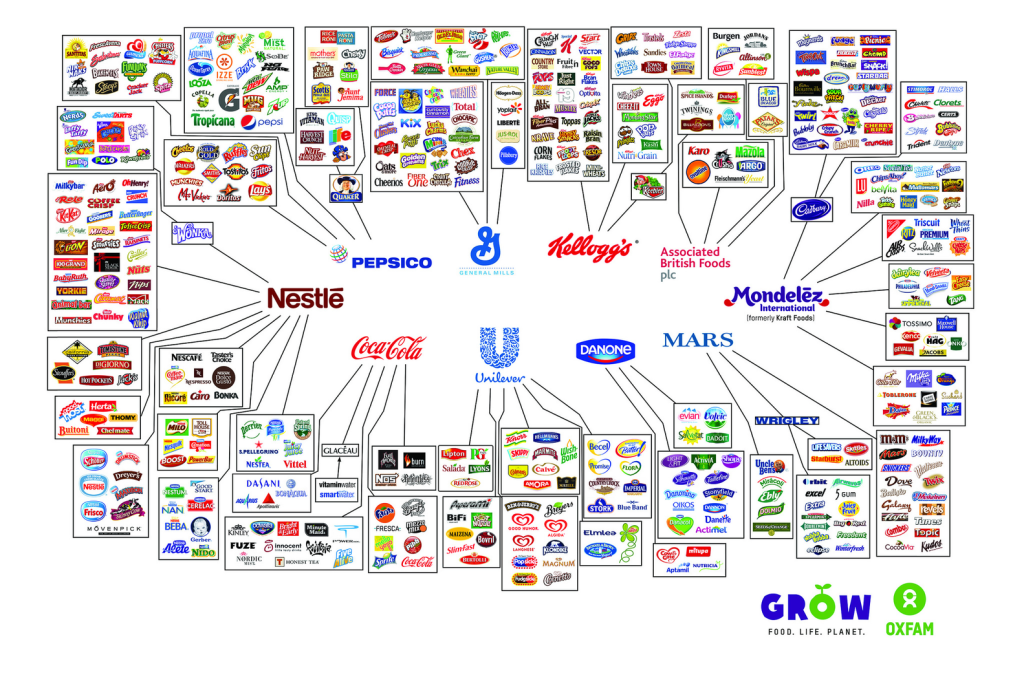
Most problematic of all is that most of us living in cities do not base our diet on foodstuffs gathered directly from the farm. Instead, we depend on processed food manufactured by corporations whose primary interest is to maximise profit, rather than public health. Nearly all processed foods currently sold in the market come from 10 giant food companies that dominate the market (Oxfam, 2014). Whatever “free choices” we think we are making when we are at our local supermarket, we are probably buying food from these ten firms. This is the result of our progress – the freedom to relegate our dietary needs to the hands of 10 companies.
The narrative of modernity as a ‘liberation’ from nature is delusive. We have not necessarily become free from the constraints of nature: far from it. As corporate-led intensive agriculture decimates our environment, we are slowly paying the price of our freedom to destroy the planet.
The Quest for a Solution
Then, if our freedom to eat is not sustainable, how can we history students contribute to finding a solution?
Luckily, there is an ongoing debate on possible alternatives to intensive agriculture (Swade, 2021). One side argues that we should save nature by removing humans from it, while intensively farming from only limited amounts of farmland. The other argues that we should farm by sharing land with our non-human neighbours.
Eco-modernism
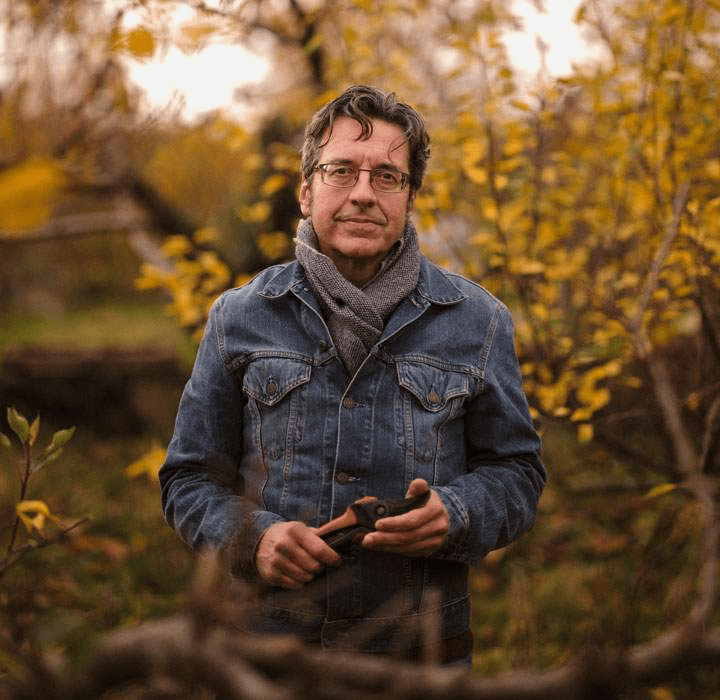
The former is the ‘Eco-modernist’ approach. Eco-modernism is the belief that modern technology holds the key to our environmental problems. In 2022, George Monbiot famously proclaimed his eco-modernism to declare that human agriculture is destroying the planet. As a solution, Monbiot proposes that we should only consume factory produced foodstuff, while returning 75% of our farmland back to nature. The remaining 25% would be used for intensive agriculture to feed humans.
George Monbiot (Guardian, 2022)
What does Monbiot’s eco-modernism mean for humans and their relationship with nature? Eco-modernism assumes that human agriculture is parasitic to the land, and the only way to protect nature is to rid humans of it. In essence, for Monbiot, humans are separate beings from nature.
Monbiot’s dichotomy between nature and humans echoes the logic of modern industrialists. Concretely, his solution to ‘preserve’ nature by ridding it of humans echoes the logic of late 19th century progressivists of the U.S.
Roosevelt at Yosemite (Sagamore Hill, 1903)
From the 1890s, progressive U.S. politicians advocated to ‘preserve’ nature in national parks (Roosevelt, 1908). This led to the establishment of five national parks in Theodore Roosevelt’s presidency. The purpose of this act, however, was not to ensure biodiversity or sustainability, but to ensure that the ‘American Spirit’ was preserved in nature while the U.S. could grow as an industrial power. Consequently, in Roosevelt’s period, the U.S. experienced the highest rates of urban industrial development and a severe degradation of nature. Ironically, ‘preserving’ nature justified the logic that humans could do anything outside of the fences of national parks.
Humans are, and always have been, part of the natural environment. Monbiot’s argument that humans need be kept separate to protect the ‘environment’ sounds good in theory. Yet, in practice, it gives a moral leeway for people to think that we can do anything with the ‘human’ parts of our land.
Regenerative Farming
The latter solution, ‘regenerative agriculture’, focuses on ‘sharing’ nature with our non-human neighbours. Regenerative agriculture rejects the use of chemical fertilisers, weed killers, and insecticides in favour of natural processes that do the same job, albeit on smaller scales (Langford, 2022). Isabella Tree aptly proposes that farming is only a by-product of a natural process, and the farmer’s role is to create conditions for nature to carry out this process at its best (2018). Ultimately, regenerative farming aims to produce food in a sustainable way that does not damage the ecosystem for human benefit.
Isabella Tree (IEMA, 2022)
Eco-modernists like Monbiot remain sceptical of regenerative agriculture, as it yields lower output than modern intensive farming. Still, it is not like we do not have enough food in the planet. Hauter shows that 30% of the food we produce goes to waste. Meanwhile, nations with the highest starvation and malnutrition rates are also the ones that export large amounts of food to the Global North (Hauter, 2014). The problem is not that we are not producing enough, but that we do not give it to those who need it the most.
How can historians help?
The uncritical faith in modern progress is, in this sense, misleading and dangerous. Modern progress did not promise the freedom to eat for all, nor did it ‘free’ humans from nature. The debate between eco-modernist and regenerative solutions shows us that people, even environmentalists like Monbiot who seek to improve the status quo left by modern development, still uncritically accept ‘modernity’ to a positive concept, when it assumes a strict divide between humans and nature.
This is where a historian’s perspective can be useful. History is a powerful discipline because it teaches us how to be critical of power structures that enable societal oppression. Histories of environmental injustices, indigenous land appropriation and violence can help us think critically about our food systems today. As historians, we must critically engage in these debates on the potential solutions to the food crisis, while dissuading people from the myth that modern growth is a process of gaining freedom from nature.
Only then will our freedom to eat become truly be sustainable.
Arendt, H. (1961). Between Past and Future. Penguin Classics
Berlin, I. ‘Two Concepts of Liberty’. lecture delivered at University of Oxford (31 October 1958).
Hauter, W. Foodopoly: The Battle Over the Future of Food and Farming in America (NY: New York, 2014)
Langford, S. (2022). ‘Peter and Charlie’ in For the Love of the Land : Stories of farming’s past, present and future, Viking. pp.19-59.
Leibniz, & Farrer, A. (1710). Theodicy: essays on the goodness of God, the freedom of man, and the origin of evil edited by Austin Farrer (1985); translated by E.M. Huggard from C.J. Gerhardt’s edition of the Collected philosophical works, 1875-90. Open Court.
George Monbiot (2022) Regenesis: Feeding the World without Devouring the Planet. Penguin Books Ltd.
Swade, K. (2021) “Shared Assets: inclusiveness, agroecology and municipal ownership in land use” Renewal 29 (3).
Image 1: Russell, R. (30 November 2022). ‘Egg shortages: What’s causing the problem and how long will it last?’ in BBC (accessed 10 January 2023 through https://www.bbc.co.uk/news/explainers-63778665)
Image 2: Snow removal in Hoengseong so that trucks may come in, taken by me (2018)
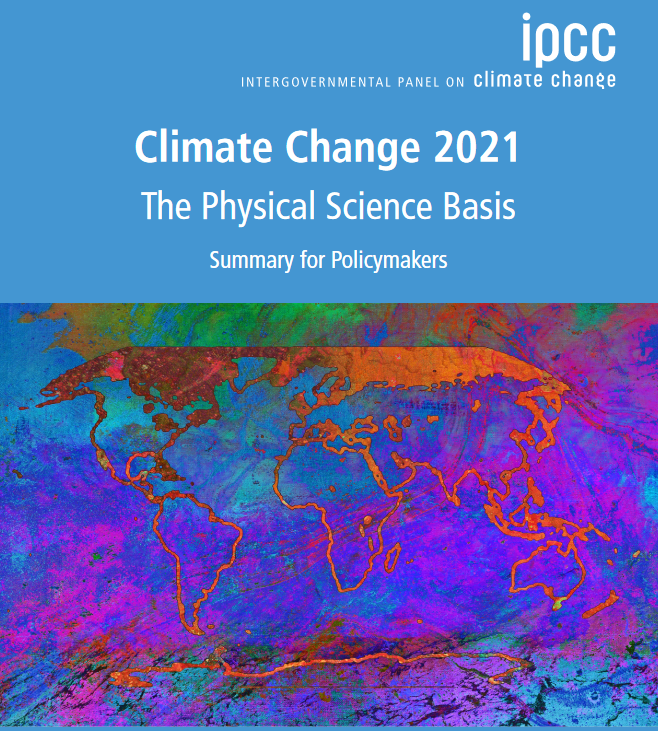
Time is running out. Temperatures have gotten hotter and sea levels higher. Scientists in the IPCC’s 6th Report have told us we have less than a decade to cross the 2°C point-of-no-return. Although we are keenly aware of ‘what’ we are supposed to battle, we seem to be completely lost on ‘how’ to bring about these changes that scientists remind us about. As we frown upon climate-change deniers while turning to science for objective solutions, we cannot help but ask: “Is there nothing we can do to help?” As non-specialists, are we meant to stand by and watch until the scientists come to save the day? In other words, what do history, politics, or ethics have to offer for the current climate crisis?
The history of environmentalism may offer an insight. From the early-twentieth century, conservationist movements started arguing against the devastating effects of human technology on nature. Thanks to this first wave of activists, the familiar narrative of human destruction of the natural environment became increasingly popular.
However, not all environmentalists were satisfied with this narrative. Aldo Leopold, a U.S. ecologist, was one of them. In his Land Ethic, Leopold argued that people were not thinking ‘ethically’ enough about the land.
Aldo Leopold:1887-1948
For Leopold, ‘ethics’ is a cooperative mechanism that limits individual freedom for the sake of existence in a community. Simply put, if we slapped any random person we met, we would be exercising unlimited freedom. However, such disruptive acts are seen as intolerable to peaceful coexistence. To prevent this, we place a moral high ground on the act of ‘not slapping others.’ This enables any institutional penalties that may follow actions that cross this rule. Ethics is the mechanism behind this process that curtails our freedom to slap anyone to maintain our community.
Here, Leopold asks: “Do we ever restrict our freedom when taking from the land?” As humans, we are not only members of the social community but also the biotic community. However, there was no concept of ‘ethics’ when people imagined their relationship with nature, unlike that with humans. Particularly, Leopold was discontent with how people only thought of the land in economic terms: an exploitable resource, not a base of human life.
This ‘unethical’ way of thinking did not only result in environmental destruction. It also complicated the solution by shaping the language conservationists used to argue their case. As activists at the time argued only for the “economic” benefits of conservation, the non-profitable parts of nature (deserts, marshlands, etc.) were often disregarded, even though the “profitable” parts depended on these “non-profitable” parts for ecological regeneration.
Once we think of ourselves as members, not conquerors, of the ecological community, it only makes sense to limit our power to exploit the environment as its most powerful member. (Just as we wouldn’t punch someone weaker than us on the street for economic gains.) For Leopold, the land was where ethics ended and where economics started.
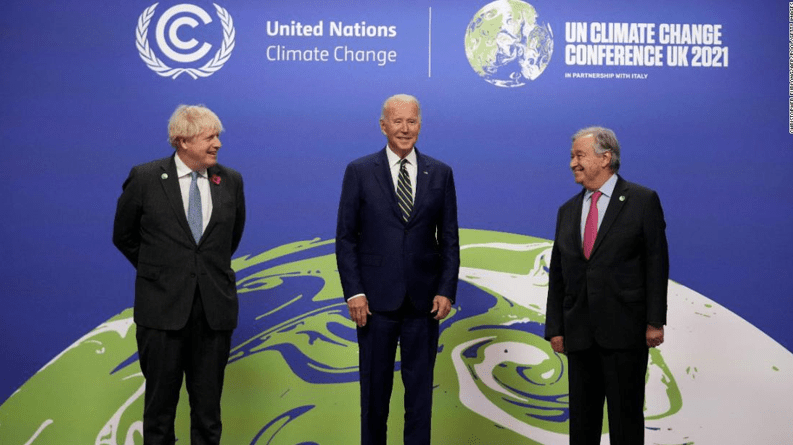
Then, is our perception of the current crisis any less problematic? Are we regarding the environment as we should? A look at the final pact of the Glasgow COP26 summit should tell us something about our current state.
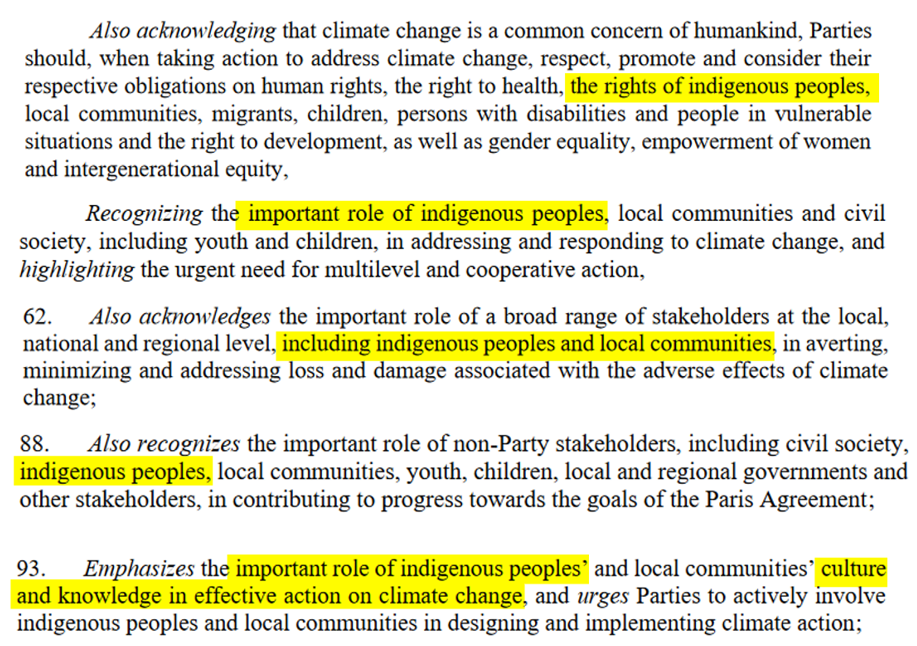
Articles mentioning ‘Indigenous peoples’
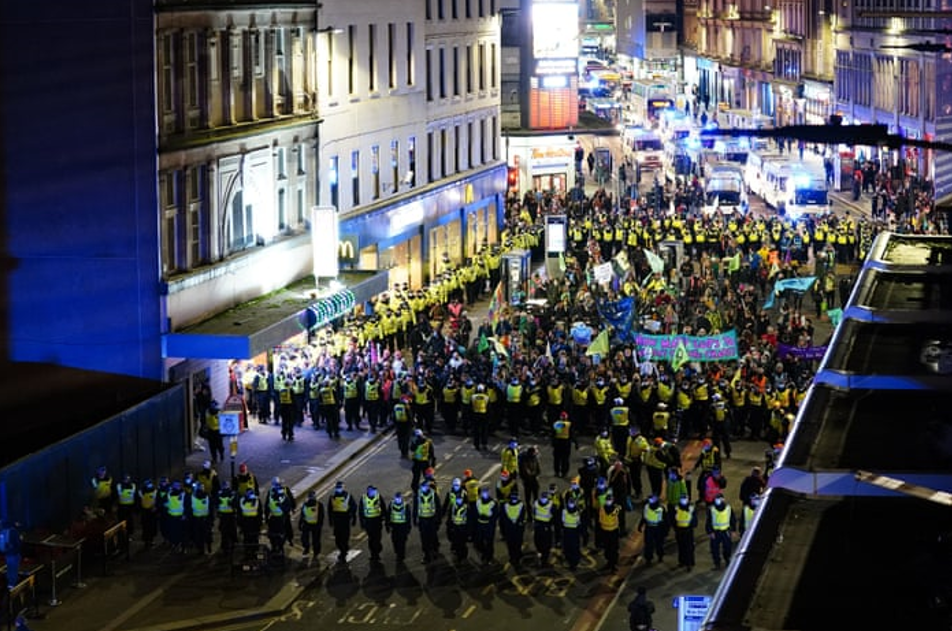
The COP26 summit addressed various issues, including the incorporation of indigenous people when consulting environmental issues. However, what is not mentioned is sometimes more important than what is. Nowhere do they mention who they mean by “indigenous peoples.” How they will consider the opinions of these people remains a mystery. Most absurdly, just outside of the gates of COP26 in Glasgow, a group of indigenous activists were protesting for representation. Ironically, COP26 was blocking out the exact people they promised to listen to.
The dictionary definition of indigenous is to “originate naturally from a particular land.” Under this definition, no race is indigenous to America: we all have migrated from Africa at some point in history. However, only people present in America before Columbus are considered “indigenous.” (We wouldn’t call a white person born in New York an “indigenous New Yorker.”) This implies how “indigenous” is a term coined from a European viewpoint that swipes numerous tribal nations under the carpet.
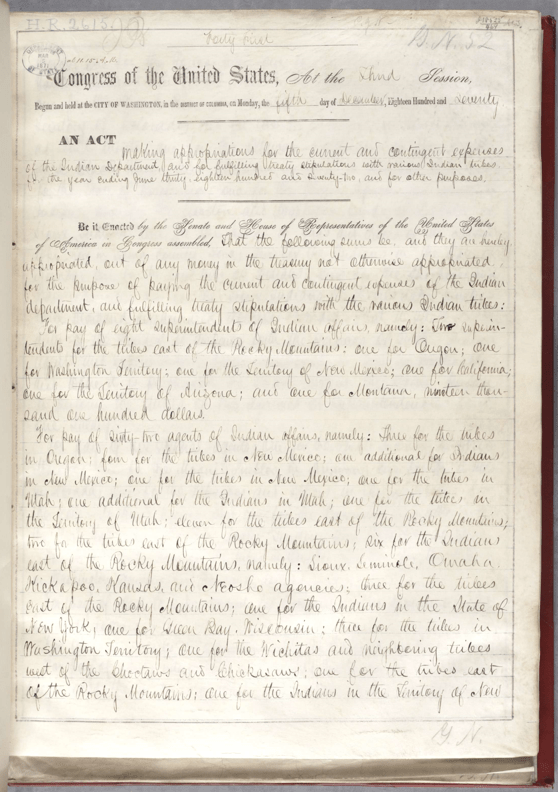
The biggest problem with this term is that, historically, “indigeneity” was used to oppress non-white people. In the nineteenth century, U.S. officials used the fact that these people maintained a lifestyle closer to nature to suggest that they were “backwards” and “primitive.” These racist assumptions were then used to appropriate their lands for U.S. benefit. Policies like the Indian Appropriations Act (1871) were justified on the basis that the “savages” of the tribal nations were not “civilised” enough to rationally use the land. The continuing tendency to view indigenous peoples as close to nature, yetnot consider their voices with political weight implies a significant problem in resolving the climate crisis.
We must think more politically when speaking of the environment. The history of environmentalism shows us that climate justice cannot be achieved by fighting within the conventional concepts made to separate nature from human life. As the conservationists of Leopold’s era were not thinking ethically enough about nature, the Glasgow Climate Pact shows us that we ourselves are not thinking politically enough about the human frameworks that underline the natural, scientific aspects of climate change. The failure of COP26 to represent grassroots protesters proves that we cannot rely on “experts” and heads-of-states to do this rethinking for us.
In this, history can be of useful service. History has the power to denaturalise. By looking at the history of how ideas like ‘ethics,’ ‘indigenous,’ or ‘environment’ were constructed, we can challenge traditional concepts that people often tend to assume as given. As the problem of climate change is always structural than individual, it is not enough to address environmental issues without tackling the political agendas that complicate its solution. We must continue to think beyond the categories we have grown accustomed to for so long. Time is of the essence.
Before we begin, what even is the “environment”? We often think of the environment as synonymous with the natural world of animals, plants, and landscapes, where human civilisation hasn’t had its reach yet. A quick search on Google image reveals pictures of green, sublime images of the natural landscape. The dictionary definition of the environment is “the circumstances, objects, or conditions by which one is surrounded.” But such definitions seem a little absurd. Though we colloquially consider forests, mountains, rivers, and the biomes that inhabit it as part of the ‘natural environment,’ the border between what is natural and what is not becomes less clear-cut when we come closer to our own spheres of life. For instance, the pet dogs, domesticated cats, the eggs in the grocery store, roadside trees in the middle of the city… these are all, by right, part of ‘nature,’ yet we rarely think of them as part of the environment compared to their wild counterparts.
There is, however, one consistency in all these vague definitions of the environment:
that our different depictions of the ‘environment’ are all devoid of humans, and
that the closer natural organisms are to humans, they are considered ‘social’ rather that ‘environmental’ (for instance, leaves on a forest are considered to be part of the environment, whereas the parsley on my pasta for lunch today is not)
Google image search on ‘Environment’ – Where are all the humans?
Rather than having a stable definition in itself, we seem to think of the environment in terms of what it is not. In essence, we seem to think of the environment as anything not human.
In today’s blog post, I wish to complicate this dichotomy a bit further. Studying the history of ideas (or ‘intellectual history’ as academics call it) tells us that there is a history to every abstract category. By looking at how categories such as gender, race, class, or ethnicity have been constructed by the ideas that people attribute to them, we can see how the categories we use colloquially today are not natural but artificial and human-made.
But what about the ‘environment’? Some might consider it heretical to even question this categorisation. After all, the (natural) environment should be a pretty natural one, shouldn’t it? Even in the light of the current climate crisis and the wave of environmentalist movement following it, many would probably object to the act of trying to bring in any ‘human’ elements to the untouched, sublime environment. Still, since when did we start thinking of the environment as something separate from humans? Do we necessarily think about our surroundings the same way that people in medieval Europe did? Since when did we start distinguishing ourselves from our plant and animal counterparts to think of ourselves as part of a greater, super-human “society”? In other words, what is the history of the ‘environment’ as an idea?
Constructing the ‘Wilderness’ – The Case of North America
History reveals that there is nothing ‘natural’ about the environment. Our definition of the environment as something separate from human society is, as it turns out, an extremely Western one. Looking at the history of non-European lands, of non-White oppressed races and nations, we see that the environmental space was constructed with concretely political aims.
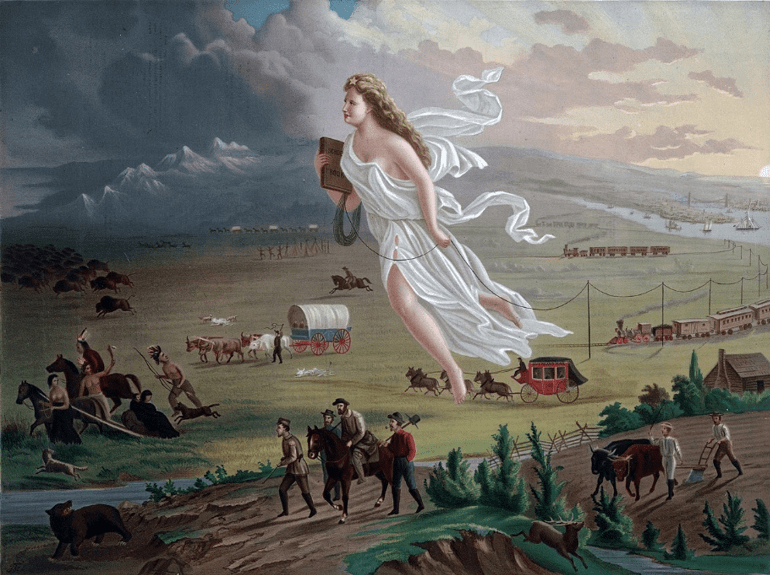
John Gast’s American Progress (1872) embodies the narrative of ‘Manifest Destiny’ as a destined expansion of U.S. civilisation upon the American wilderness.
The history of U.S. expansion in North America is a representative example of one such environmental space was constructed. From the 19th century onwards, the ‘wilderness’ beyond the U.S. Western border was seen as a sublime land untouched by human civilisation. As religious ideals of ‘God within nature’ grew stronger in transcendentalist movements of the 19th century, the North American wilderness became a glorified project for U.S. expansionist politicians. At the heart of this conceptualisation was the idea of an environmental space of the American ‘wilderness’ – a land thought to be untouched, untainted, and thus had yet to be developed by U.S. civilisation.
The problem of ‘wilderness’ is that the lands west of the U.S. were not untouched at all. In reality, the Western part of North America was densely populated by sophisticated societies of non-white tribes and rural farmers. Still, conquering an untouched ‘wilderness’ was easier than acquiring control over a land densely populated by diverse local peoples. As the wilderness was thought to be separate from human society, people in the U.S. did not oblige U.S. expansionist politics regarding the area as a matter of politics. Thus, depicting the western lands as an untouched wilderness enabled a depoliticization of a process that was, in fact, highly political and oppressive.
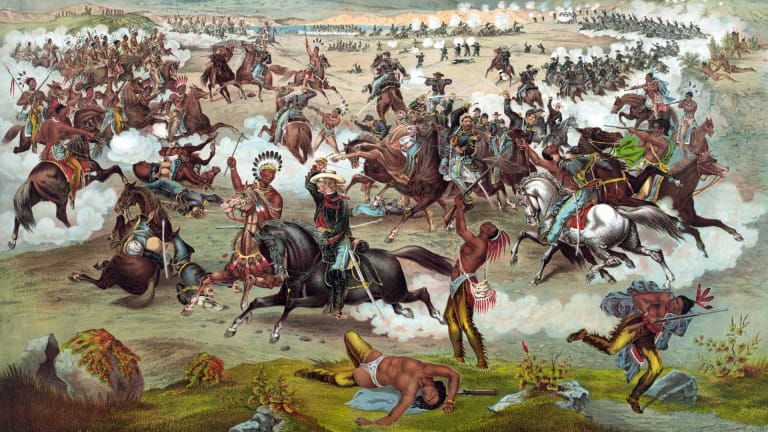
Brief footage of European “discoverers” conquering the American “environment.” (The Battle of Little Bighorn/credit: Buyenlarge/Getty Images)
Claiming an untouched ‘environment’ was easier than claiming a land densely populated by local non-white populations.
The history of ‘indigenous’ land appropriation shows how this ‘environment’ was not natural but in fact had very political repercussions (be mindful that the term ‘indigenous’ is an umbrella term that imposes a Western viewpoint that masks the variety of local tribal nations in the Americas). In 1871, the Indian Appropriations Act declared that ‘no Indian nation or tribe within the United States shall be acknowledged or recognized as an independent nation.’ The 1871 act mandated the forced relocation of these tribes to Indian reserves where they would be segregated and culturally ‘preserved’ from the influence of U.S. civilisation. In the solidification of U.S. nationhood, the existence of ‘savage’ tribal peoples in a ‘civilised’ nation like the U.S. was unacceptable. The frontier between the environmental ‘wilderness’ and society was actually one between diverse local non-whites and the U.S. empire.
Why we should think intersectionally when thinking about the environment
Therefore, environmental history is just about the ‘environment’ per se. The very definition of ‘environment’ (the surroundings in which an actor lives or operates) assumes that there is another subject that is central to its characterisation. Ignoring this component of environmental history by treating it as a discipline that only records facts about nature, biomes, and climates degrades the potential that history holds in an age such as ours. In essence, excluding humans from environmental history dehumanises and, consequently, depoliticises the discipline.
The current climate crisis is a distinctly human-made one and solving the crisis will require distinctly human approaches to the historical and political issues that complicate its solution. We cannot just wait for scientists to save the day. History has revealed that certain individuals or groups hold more responsibility than others in this crisis; ironically, those groups are also the ones that hold more power to bring about change for the better. Environmentalism and the struggle for environmental justice can only be sustainable when people of all races, ethnicities, genders, sexualities, classes, and nationalities have an equal voice in the solution. This is why we must think historically when thinking about the environment.
New Temporalities: Blurring the Environmental and the Political in a Planetary Age
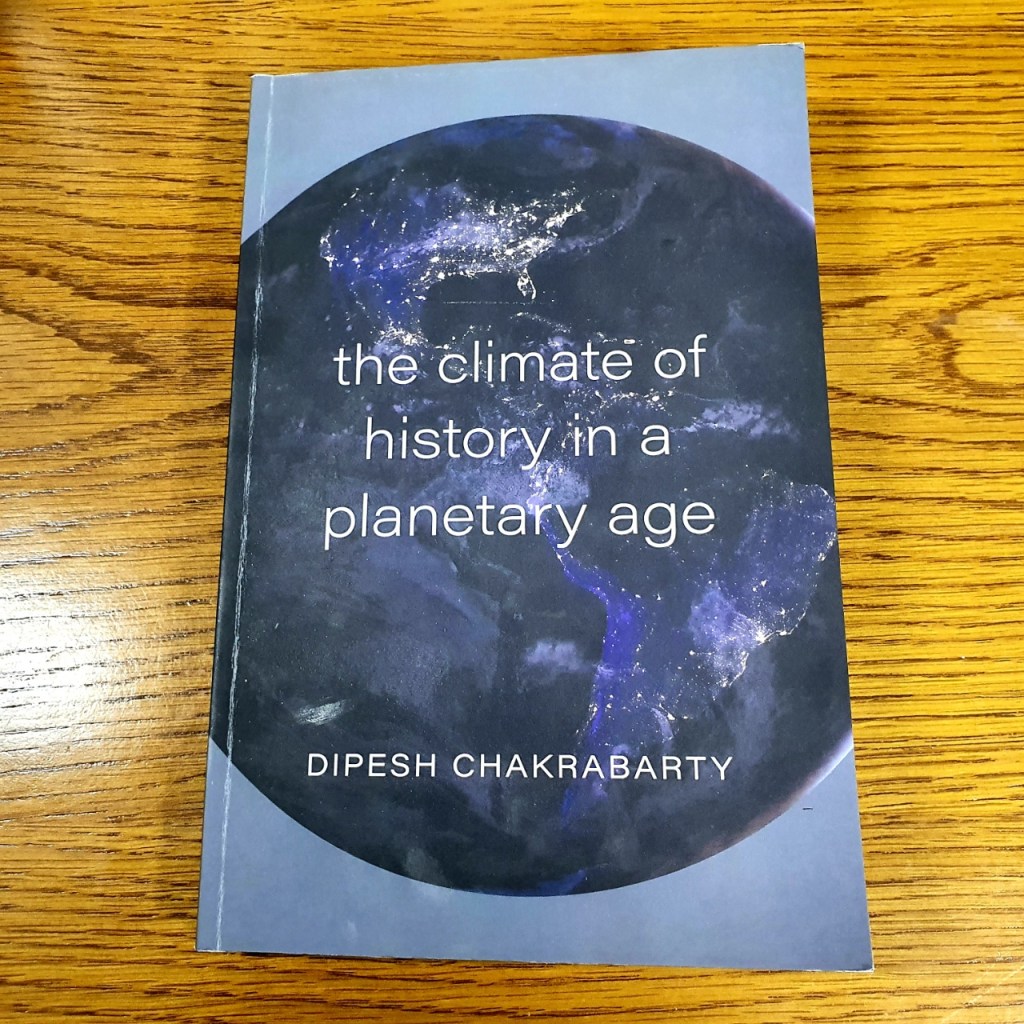
This post is a book review of Dipesh Chakrabarty’s “The Climate of History in a Planetary Age” (2021), with my own opinions on how historians should practice history in a planetary age.
Despite its obvious Eurocentric and parochial shortcomings, the ‘Anthropocene’ is a representative attempt to address the issue of human-induced climate change through history. In his book, The Climate of History in a Planetary Age, Dipesh Chakrabarty proposes that we have entered a new era of writing history as the geological conception of time has converged with the political. According to his thesis, the Anthropocene – the geological definition of our current climactic epoch of humans as geological actors – has coincided with the human-defined periodization of time of ‘modernity’ as the present. As our ability to act as geological agents in the Anthropocene is inseparable from our building of modern political regimes and globalisation, it only makes sense that the geological time of the Anthropocene is also the ‘now time’ of politics and history.
Chakrabarty, Dipesh. The Climate of History in a Planetary Age, 2021.
Such a concept of Anthropocenic ‘temporality’ also reveals the inadequacy of politics under the old definition of ‘time’ to resolve the problem of planetary climate change. The international institutions such as the United Nations made in the twentieth century to combat ‘global’ issues of politics that assume open and indefinite calendars have not at all been designed to deal with planetary climate change which has a finite and definite calendar. Hence, Chakrabarty argues that the convergence of the geological and political ‘present’ requires a reconciliation of the old political concepts that considered politics to be distinctly separate from the environment. Chakrabarty’s book thus promotes a need for thinking beyond the ‘global’ – a human-centric construct – towards a ‘planetary’ in the Anthropocene, a geological time in which historians must begin to think of new ways of writing history.
The Politics of the Environment as a Human Construct
There is nothing ‘natural’ about the environment. The environment is quite an artificial human construct, designed for discrete political purposes. One only has to read works such as William Cronon’s ‘The Trouble with Wilderness’ or Richard Grove’s Green Imperialism to discover that the myth of an untouched natural environmental space as dichotomous to human civilisation was created in the process of exerting European colonial dominion. These ‘untouched’ lands (for instance, the ‘wilderness’ beyond the Western U.S. frontier or the ‘tropical’ environment in Latin America) were, in fact, densely populated by local non-white peoples. However, claiming an ‘untouched wilderness’ was morally more justifiable and convenient than claims upon complex systems of local governance. Thus, the ‘environment’ was used with a distinctly political purpose to depoliticise the imperial subjugation of non-Western civilisations to European empires. The project of Western imperialism necessitated the conceptualisation of an ‘environmental’ space as strictly separate and dichotomous from the ‘social’– a dichotomy whose legacy continues to this day as politicians so easily shrug off the burden of environmental concerns for consumers and individual citizens, while remaining nonchalant about changing their attitudes towards ‘political’ matters of industrial production that lie at the core of our planet’s problems today.
Claiming an untouched ‘environment’ was easier than claiming a land densely populated by local non-white populations. / ‘The Trail of Tears’ (Wikimedia CC)
Rethinking Our Old Conceptions of the ‘Political’
With this in mind, it is not enough for historians to simply do ‘environmental’ history in the wake of the climate crisis. Primarily, thinking of environmental history as a distinct sub-discipline will achieve the exact opposite of what environmental history should and is able to do. By framing the newly-emerging modes of environmental history and the Anthropocene into specialised fields (such as an ‘M.A. or Ph.D. Environmental History’ course), we unequivocally limit the power that environmental thinking promises for history. This is especially the case as the ‘environment’ is so omnipresent in our conceptualisation of every matter that constitutes any historian’s subject of interest. For instance, politics and economics are fundamentally related to questions of how to effectively make out of the land. Race, often expressed through racially-essentialist ideas such as ‘indigeneity,’ took part in the process of ascribing ownership to whoever belongs to that land. Gender was conceptualised from a discourse on who should and could most effectively make out of the land (often through crude definitions of ‘femininity’ and ‘masculinity’) and the power relations that stem from that discourse. Empire was a project of designing a system that could make out of the lands beyond European civilisation for colonial benefit. Hence, we are all inevitably environmentalists in that we are all inseparable from our relationships with the land and our surrounding environment.
Not surprisingly, outspoken ‘environmental’ works of history have often confined themselves to the conventional definition of the environment as a natural space ‘out there.’ Many works of ‘environmental history’ until the 1990s have limited themselves to merely recording histories about human destructions of the natural environment, without critically examining what the categorisation that framed their discipline as ‘environmental’ exactly was. Hence, a distinct sub-discipline of ‘environmental history’ is not something that historians must identify themselves with when thinking about the environment. Ultimately, according to Chakrabarty’s definition of the ‘planetary,’ historians must free themselves from the sub-disciplinary divide of the post-Enlightenment drive of university institutions to examine the environmental underpinnings that nature and science hold for the politics of human affairs.
The Point of History in a Planetary Age
The need to rethink our old conceptions of ‘political’ matters as being exclusively human and discretely separate from the ‘objective,’ ‘value neutral’ spheres of science and the environment is ever more prescient. International institutions designed based on an indefinite conception of time – or a human-centric ‘global’ in the place of a ‘planetary,’ as Chakrabarty puts it – that put excessive faith in humanistic values are not sufficient tools to equip ourselves in the struggle for a sustainable and intersectional climate justice. In this, historians can be at useful service. History has the power to denaturalise. Our discipline does not work with a fixed set of rules of what historians are meant to do; history has the power to question, deconstruct, and ultimately change the concepts that people so often tend to assume as given. Inevitably, all history is the history of the present. Amid a planetary emergency like ours, we as historians must continue to think outside of the Eurocentric, human-centric categories we have inhabited for so long to adapt our ways of political thinking to a ‘planetary’ age of climate change. Time is of the essence.
I am a student of history who wishes to do this type of thing for a living – thinking, writing, educating and, hopefully, changing. I have named my blog the Green ‘Ideologist’ because I believe ideas are central to our world is conditioned and conceived. As a historian my job is to challenge what most people in our age would deem ‘natural’ by deconstructing the narratives we build around it. Ultimately, I tend to show how that which is the most natural to us is that which is constructed. What I mean by this will be clearer in the posts that will follow.
Silhouette, 2021
What the ‘Green’ means in the name of my blog is harder to explain with words. Frankly, I am fine with you associating anything that the word ‘green’ invokes in your mind, except for the one-dimensional portrayal of nature as simply something green and sublime. The point is that I want you to think about what we imagine as we picture the word ‘green’ and why that might be the case. For some reference, taking a look at the short scraps of writings and images on my homepage might help.
Photo credits to my two best photographers Sanghyun (@san_ryu__) and Joseph (@harudo.png).













 The Green Ideology
