Inside the Herbarium at Changgyeong Palace, South Korea
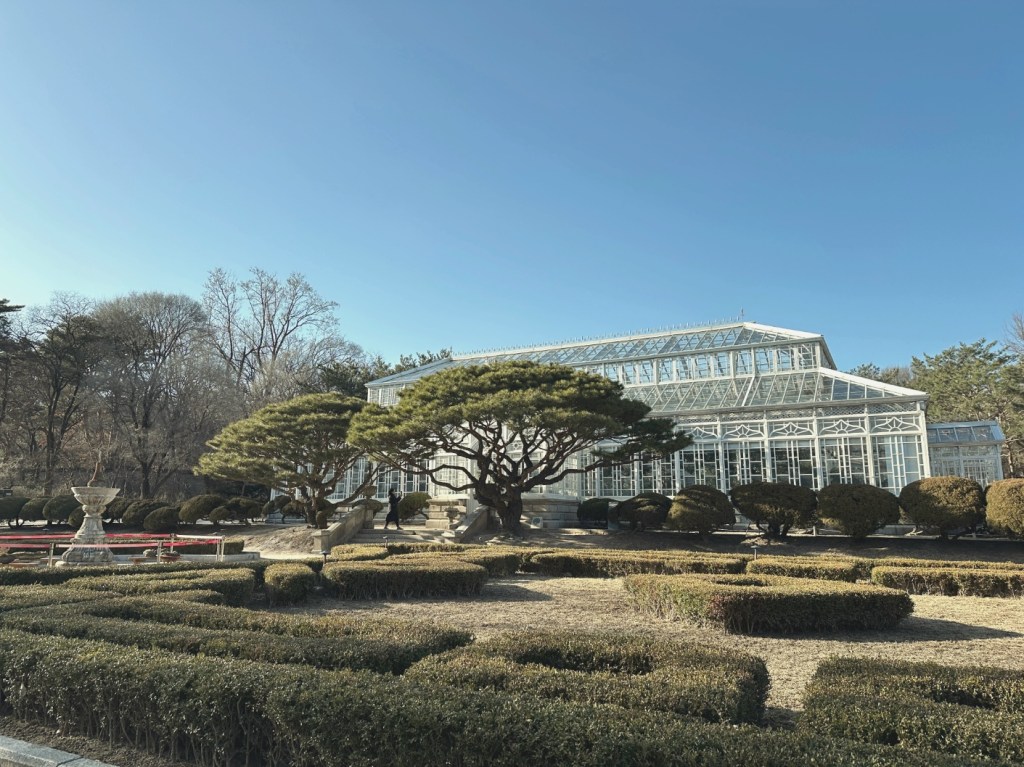
Along the courtyards of Changgyeong Palace (창경궁, one of the five royal palaces of South Korea), an oddly modern anomaly stands out from its early modern background. The herbarium, named the ‘Dae On Sil’ (대온실, which literally translates to ‘Great Greenhouse’), is a relic that contains a history of Japanese colonialism that signalled the end of Korea’s Kingdom.

In 1909, the Japanese Imperial government installed this herbarium along with a zoo inside Changgyeong Palace. This was a highly nuanced move made as an attempt to erase the identity of the Korean monarchy. By 1909, the last Korean King was confined to the palace, deprived of any political sovereignty through a series of coerced treatises. The Dae On Sil and the Imperial Zoo were to serve as ‘entertainments’ for the dispossessed King while serving as a symbol of Japanese occupation in the heart of one of the 500-year-old dynasty’s Royal Palaces.
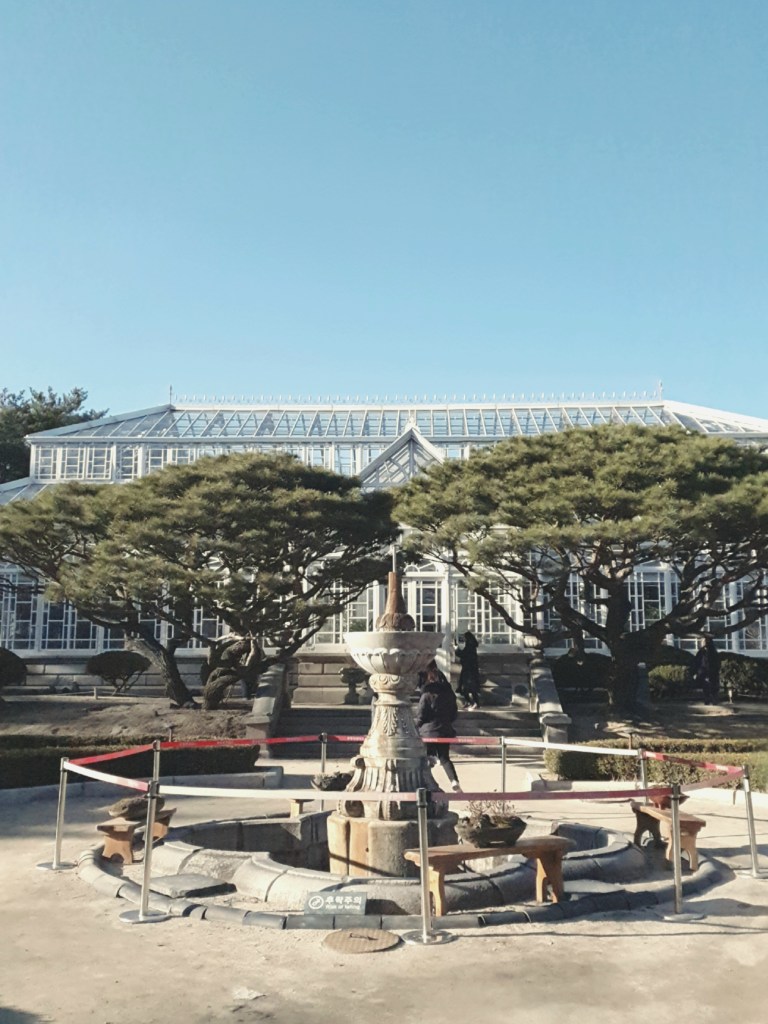
Initially, the herbarium was a collection of tropical plants and specimens from the Southeast Asian regions of the Japanese Empire. Many British visitors familiar with the structure of the Palm House in Kew’s Royal Botanic Gardens, or even the Crystal Palace during the Great Exhibition of the 1850s, would notice the resemblance between it and the Dae On Sil.
Gardens are nature cultivated by humans, presented in the form humans consider the most ‘ideal’ state of nature.
For more on gardens and natural thought, read Emma Spary’s Utopia’s Garden: French Natural History from Old Regime to Revolution (Cambridge, 2000).

It is interesting to see how nature is assembled in the Dae On Sil in comparison to its surroundings. Gardens are nature cultivated by humans, presented in the form humans consider the most ‘ideal’ state of nature. In most parts of the palace, nature is melded with the architecture of the buildings in a way that provides a sort of symbiosis. Shades from the tall pines and the pond in the middle of the palace provide adequate cooling for the palace’s inhabitants during the summer. Meanwhile, endangered animals find refuge within the palace’s greenery, such as the Mandarin Duck that now resides in the palace pond all year-long (Khan, 2012).
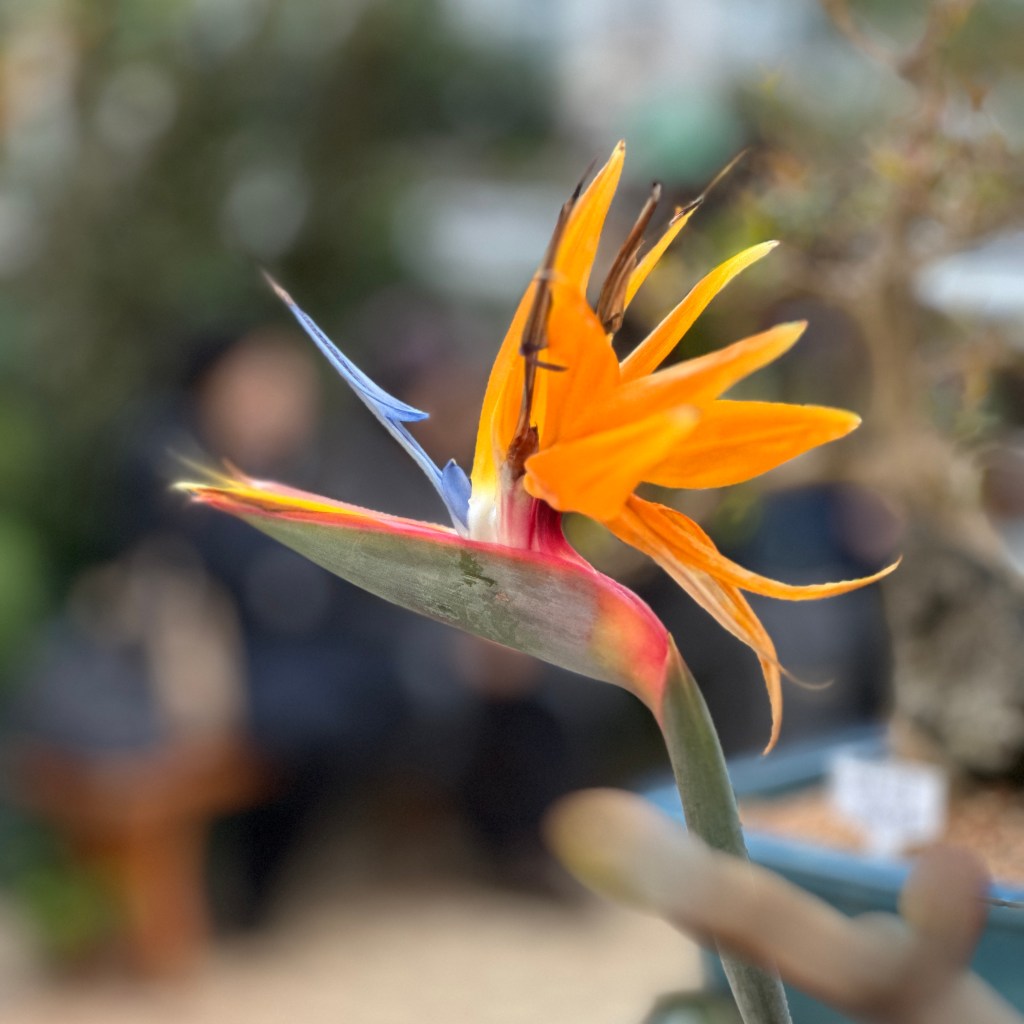
On the other hand, nature presented in the Dae On Sil is somewhat the opposite. Nature is contained and considered as something to be preserved by means of separation from human life. The stark architectural contrast between the Dae On Sil and the rest of the palace suggests that the Japanese Empire was imposing something more than simply just a herbarium through the Dae On Sil: a fundamentally different way of viewing man’s relationship with nature. Quite fittingly, the Japanese Empire enacted policies that deforested much of Korea’s forestry and drove many native large mammals (including the Siberian Tigers, the Amur Leopards, and the Sea Lions) to extinction. To read more about Korea’s industrialisation and deforestation under Japanese Imperial control, look at Conrad Totman’s Pre-Industrial Korea and Japan in Environmental Perspective (2004).
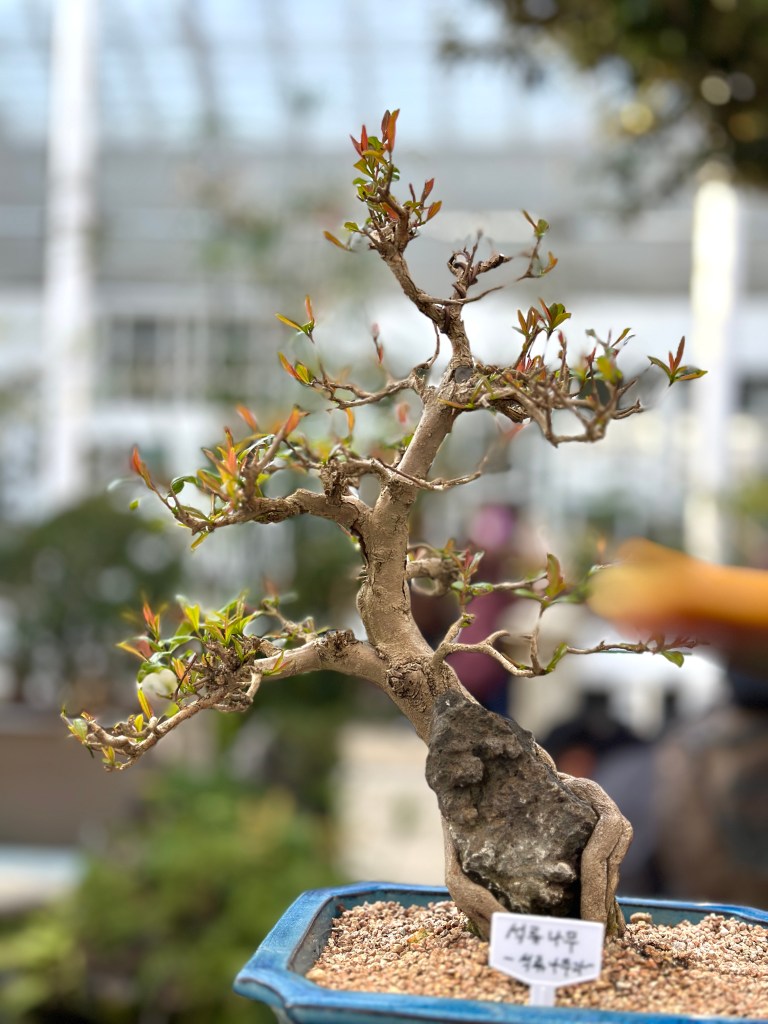
The Dae On Sil today retains little to nothing of what it did in the colonial era. The herbarium has been rebranded to house various endangered plant specimens native to the Korean peninsula. The greenhouse that once symbolized the demise of a country’s monarchy now holds many of the nation’s most treasured specimens for precious scientific research.
 The Green Ideology