
Gwanaksan is a popular mountain near Seoul, known for its hiking trails, temples, and diverse wildlife. On this visit, I documented some notable sights in sequence, focusing on the mix of cultural structures and species observed along the way.
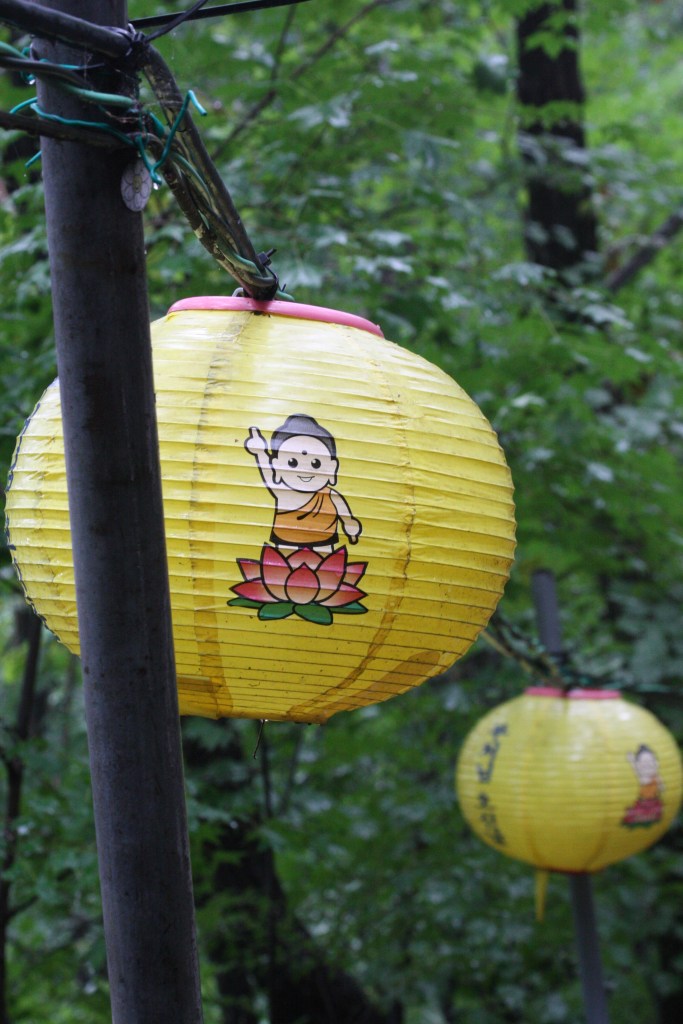
Temple Structure
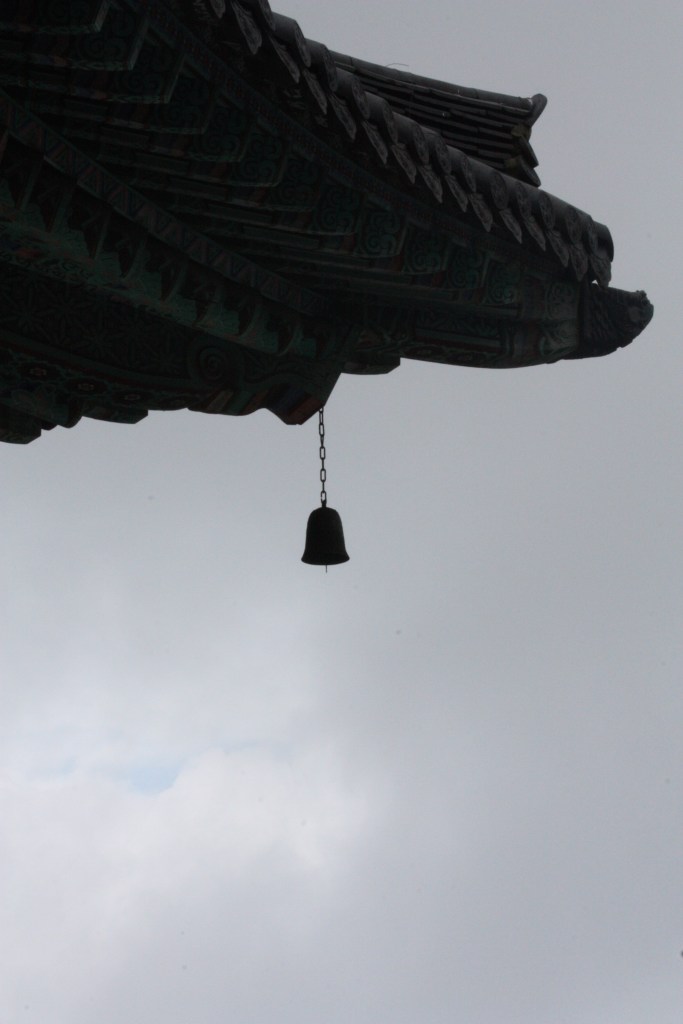
One stop along the trail was a traditional Korean temple located on the mountain slope. The building has a long facade with red pillars and a tiled roof decorated with dancheong patterns. Visitors were resting under the eaves, some with umbrellas set aside, taking shelter from the light rain.
Large-Billed Crows (Corvus macrorhynchos)
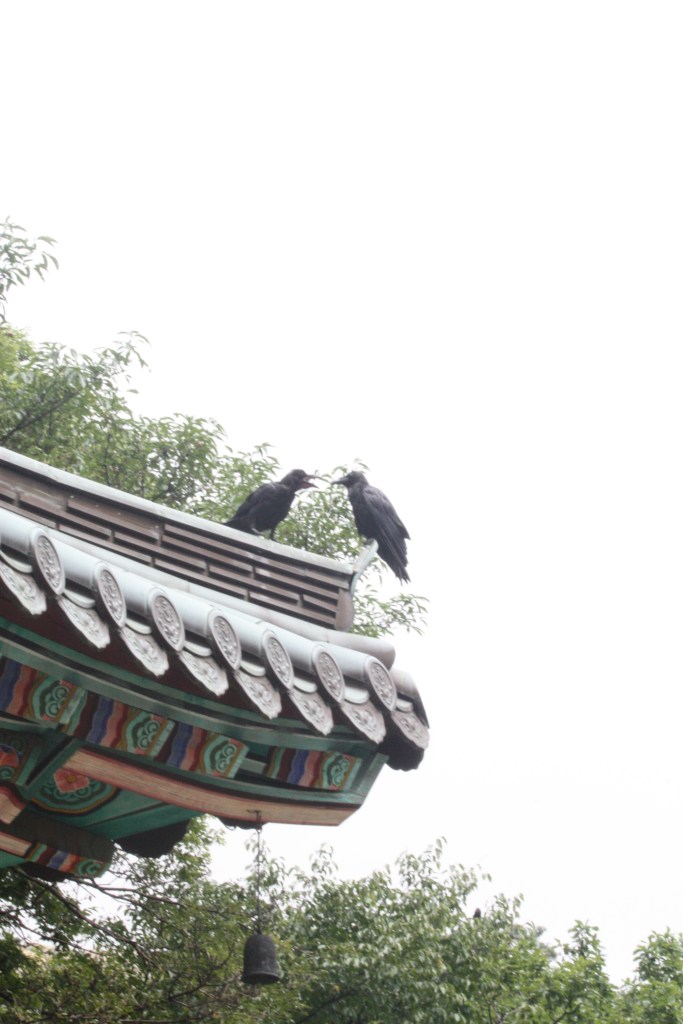
Two individuals were perched on the edge of the temple roof, interacting by touching beaks. This behavior may indicate food sharing or pair bonding.
Onggi Storage Area
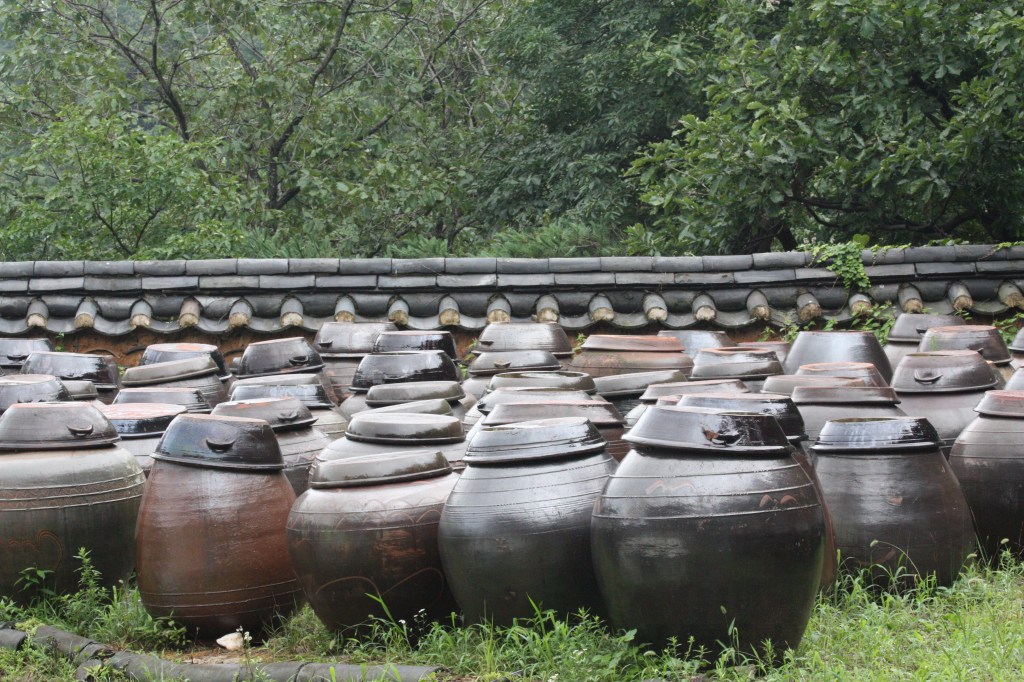
Behind the temple was a storage yard with dozens of onggi, large earthenware jars traditionally used for fermenting food such as kimchi, soybean paste, and chili paste. The jars were arranged in rows and wet from the rain.
Quiet Sign at the Temple Bridge
The first photo shows a small sign in Korean that reads: “기도 중이오니 조용히 해주세요” (“Prayer in progress, please be quiet”). It is positioned at the entrance to a stone bridge near the temple grounds, asking visitors for silence. The placement reflects the area’s dual role as both a public hiking route and a place of religious practice.

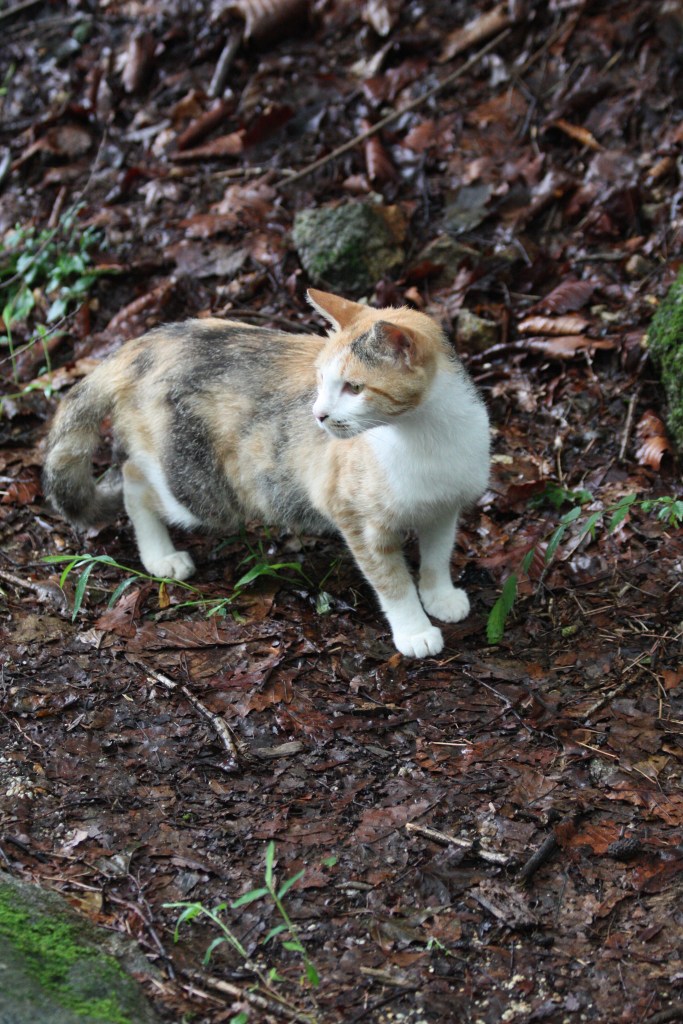
Domestic Cat (Felis catus)
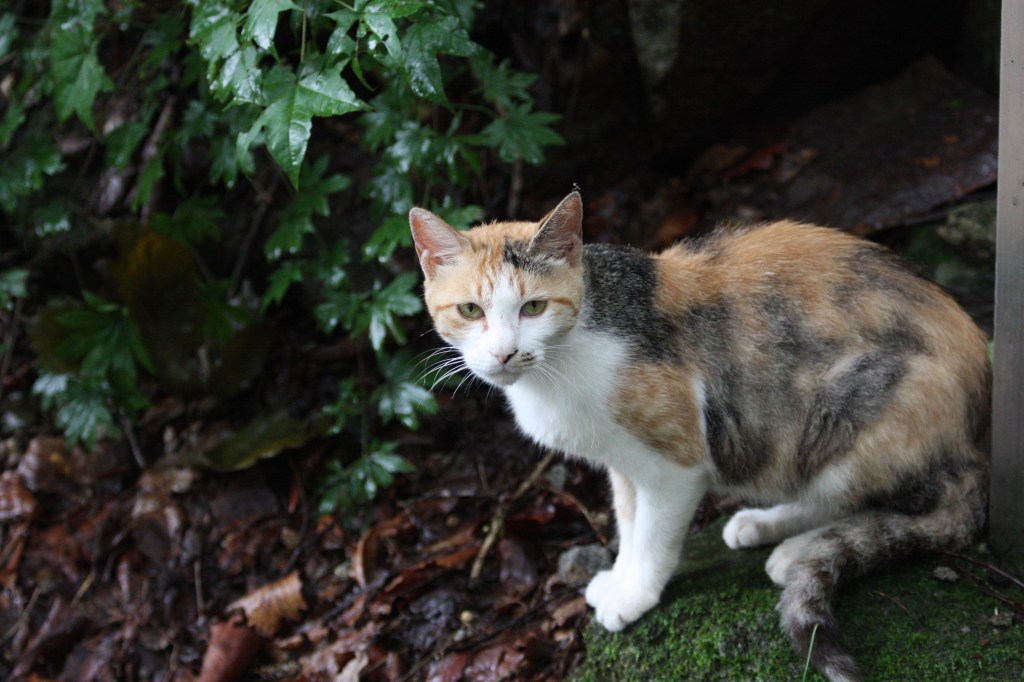
A calico-patterned domestic cat was observed emerging from vegetation near the trail. It remained alert and quickly moved away, indicating a wary, possibly feral or semi-feral disposition.
Eurasian Magpie (Pica pica sericea)
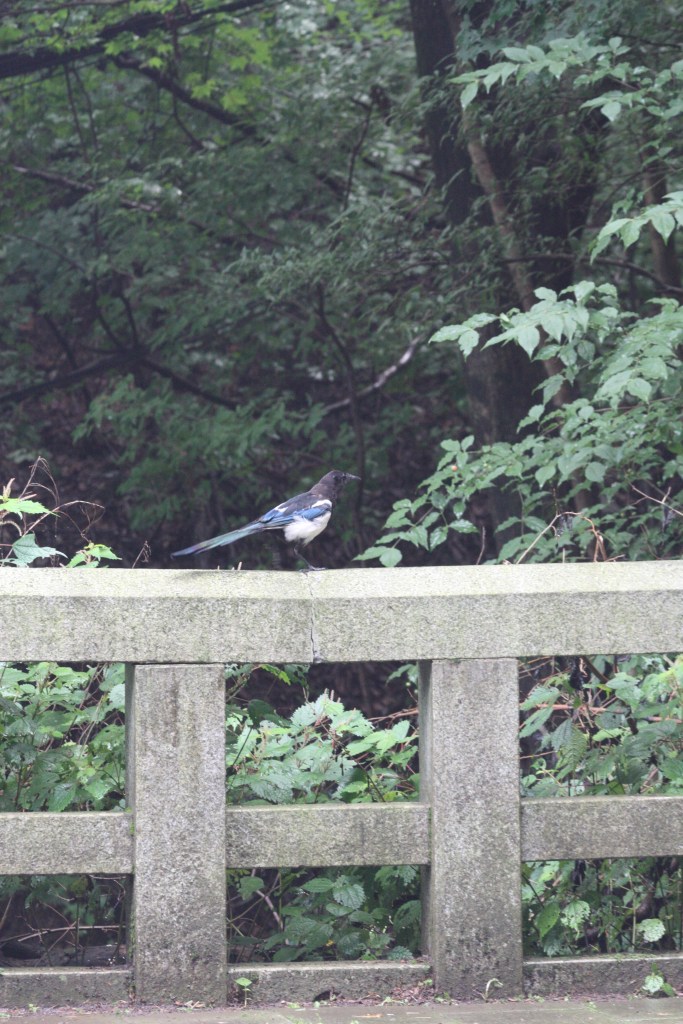
On a stone bridge railing, a single magpie was perched and stationary. This subspecies is common in Korea and is easily recognized by its black, white, and iridescent blue plumage.
Joro Spider (Trichonephila clavata)
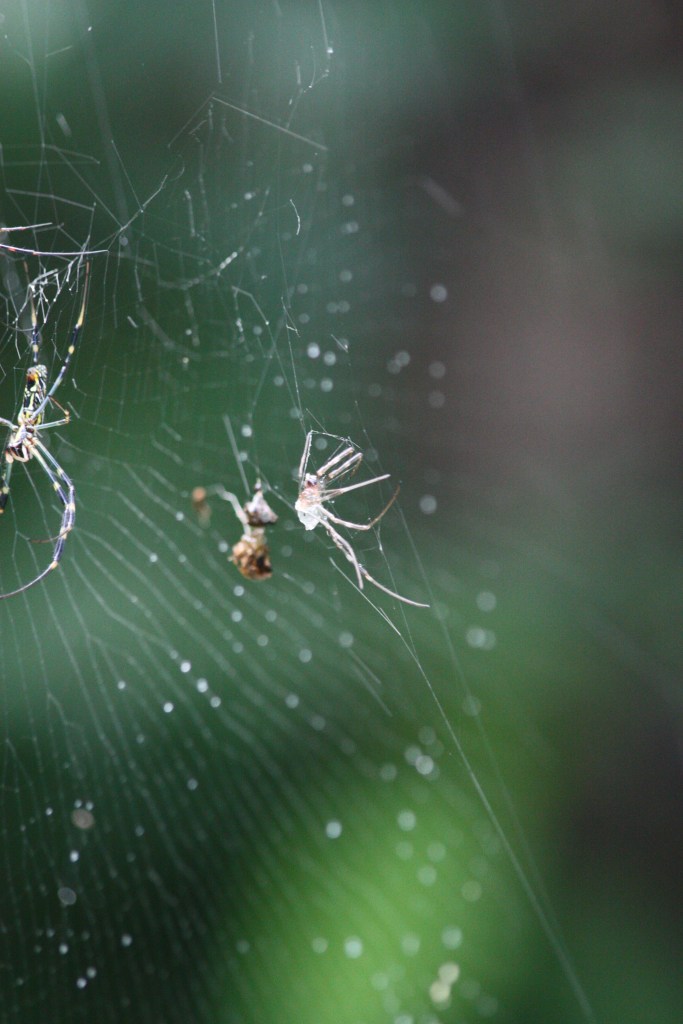
A spider web was observed suspended between a tree twig and a utility pole. The web structure was large and orb-shaped, with a female Joro spider positioned at the center.
Chinese Yellow Swallowtail (Papilio xuthus)

In a clearing with wildflowers, a Chinese Yellow Swallowtail butterfly was feeding from blossoms. The species is identified by its black and yellow wing patterns and relatively large size.
Japanese Chestnut (Castanea crenata)
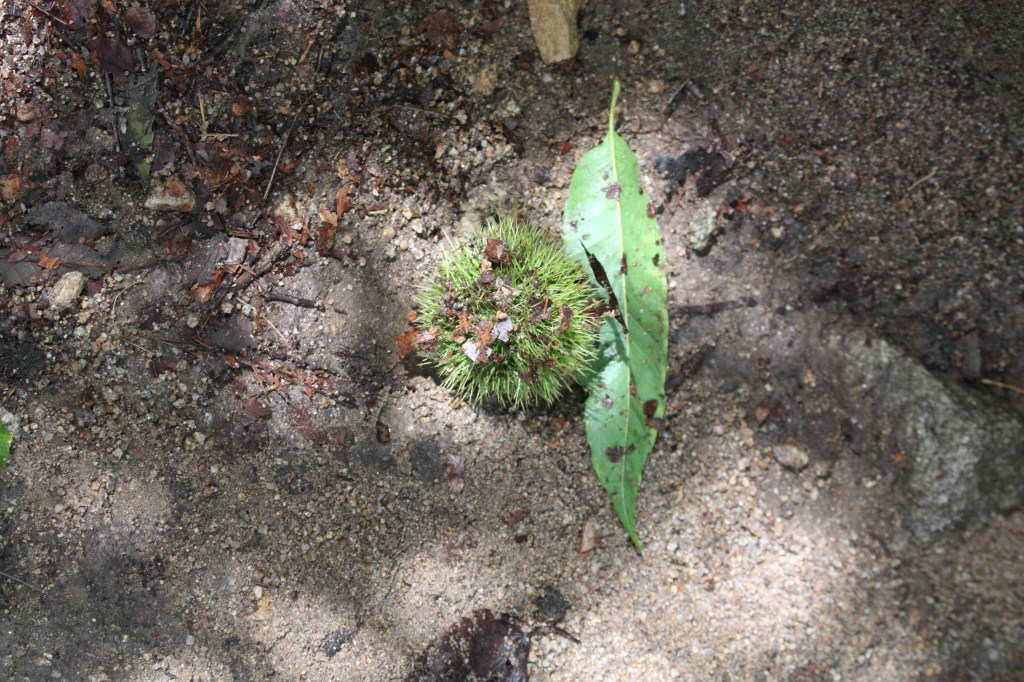
A chestnut burr was found on the ground near a fallen leaf. The burr was green, indicating an unripe stage.
Red-belted Sand Wasp (Ammophila sabulosa) with Silkworm Moth Larva (Bombyx mori)
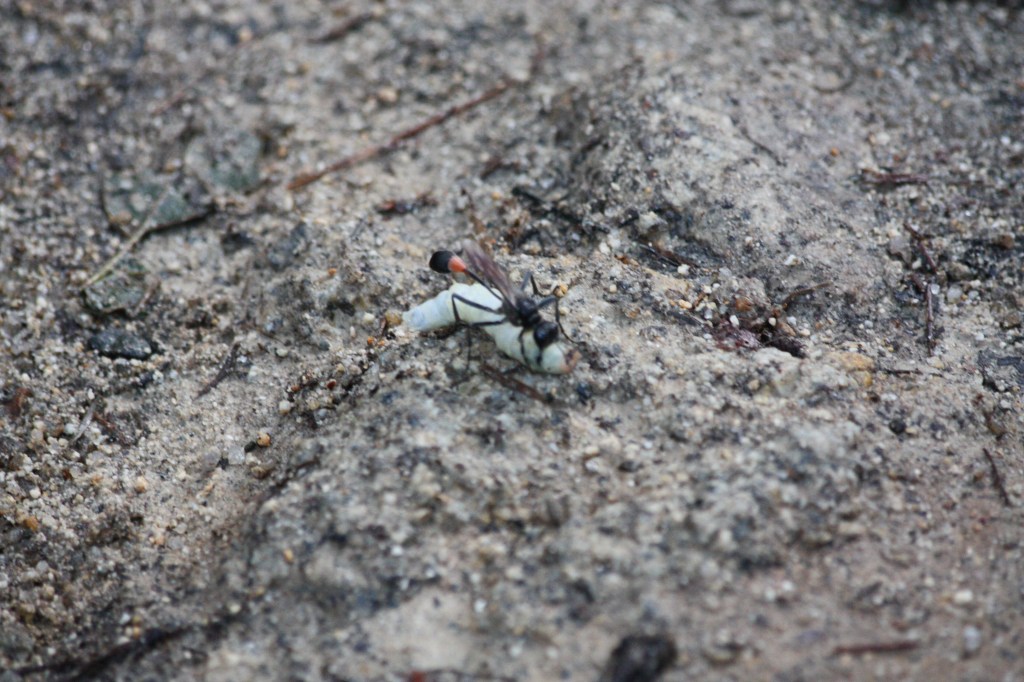
A Red-belted Sand Wasp was documented dragging a silkworm moth larva across a dirt path. This behavior is consistent with prey transport for nesting purposes.
Large Brown Cicada (Graptopsaltria nigrofuscata)
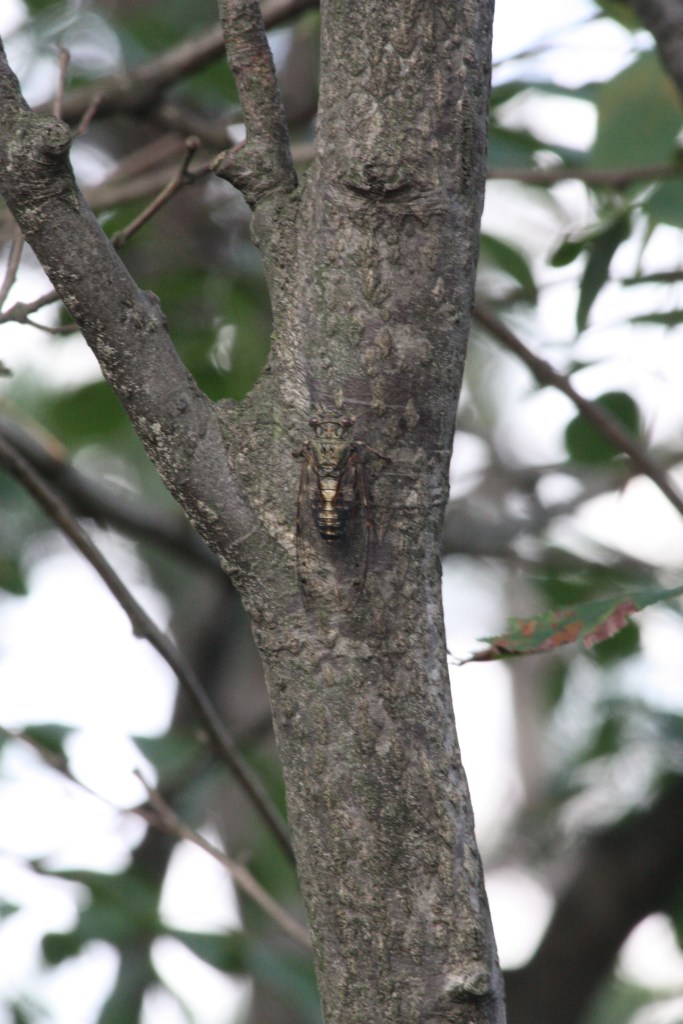
On the trunk of a tree, a large brown cicada was observed in a resting position. This species produces one of the dominant calls in Korean summer environments.
Fallen Pine Tree (Pinus densiflora)
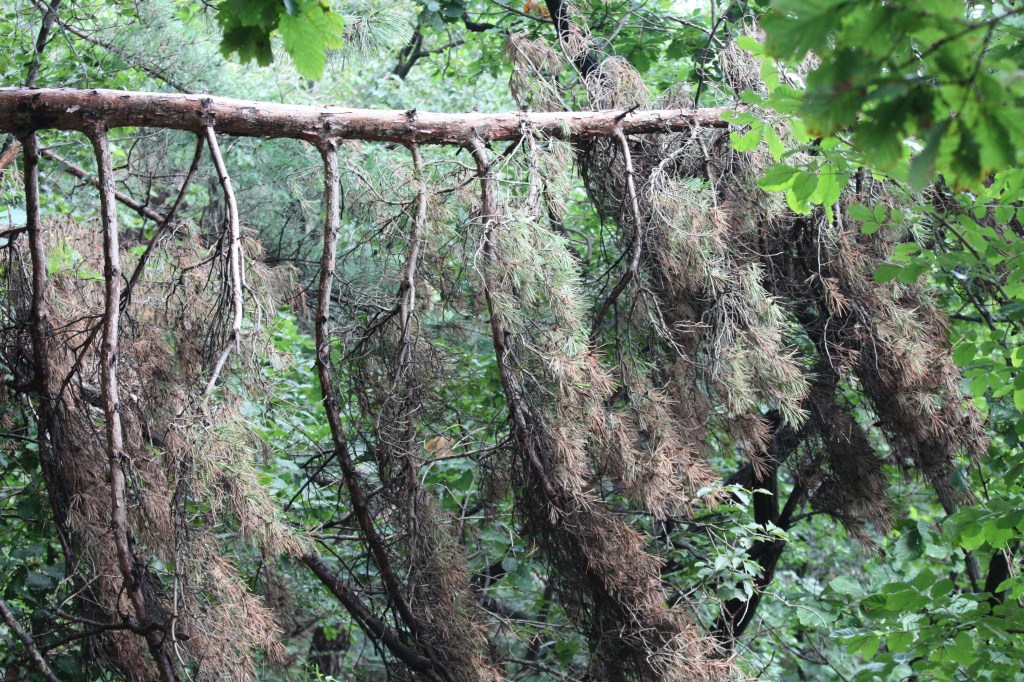
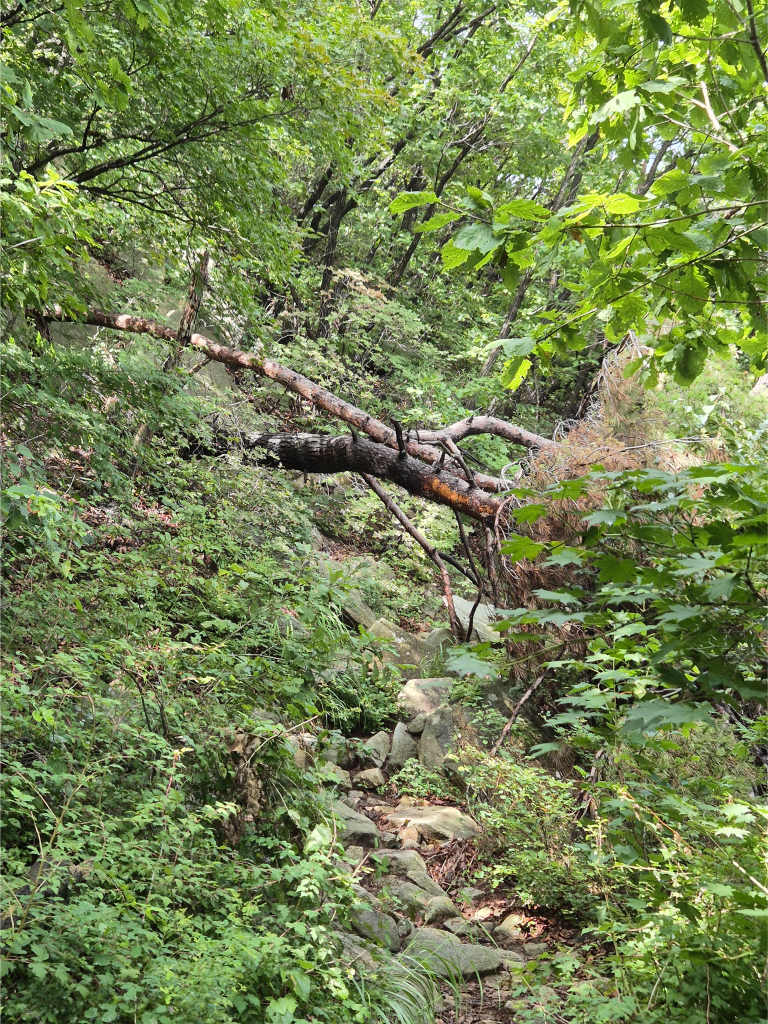
This photo shows a large pine tree bent under stress, with its branches hanging downward. This tree reportedly fell during a heavy snowfall in November. When snow accumulates on evergreen foliage, the added weight can exceed the tree’s structural tolerance, especially if the snow is wet and heavy. Such fallen trees often remain suspended above the forest floor, creating piles of dry branches that can serve as ladder fuels — material that allows fire to climb from the ground into the canopy.
Fallen pine trees like this one can become a significant fire hazard. As time passes, the branches shed dry needles, which ignite very easily and can accelerate the spread of flames. The dense tangle of branches resting on the ground increases the amount of available surface fuel, meaning that if a fire starts, it has far more material to consume. The position of the tree, with its trunk leaning and branches hanging low, can also create a “ladder effect,” which enables ground-level fires to climb upward into the canopy where they become much more destructive. Finally, because Korea’s winters are relatively dry and decomposition occurs slowly, fallen trees can persist for several years without breaking down, leading to an accumulation of combustible material over time.
Ground Beetle (Carabus sp.)

The fourth photo depicts a dark, metallic ground beetle moving across the forest floor. These beetles are important predators of smaller invertebrates and play a role in decomposition cycles. Their presence around decayed logs highlights the link between fallen timber and invertebrate biodiversity.

 The Green Ideology